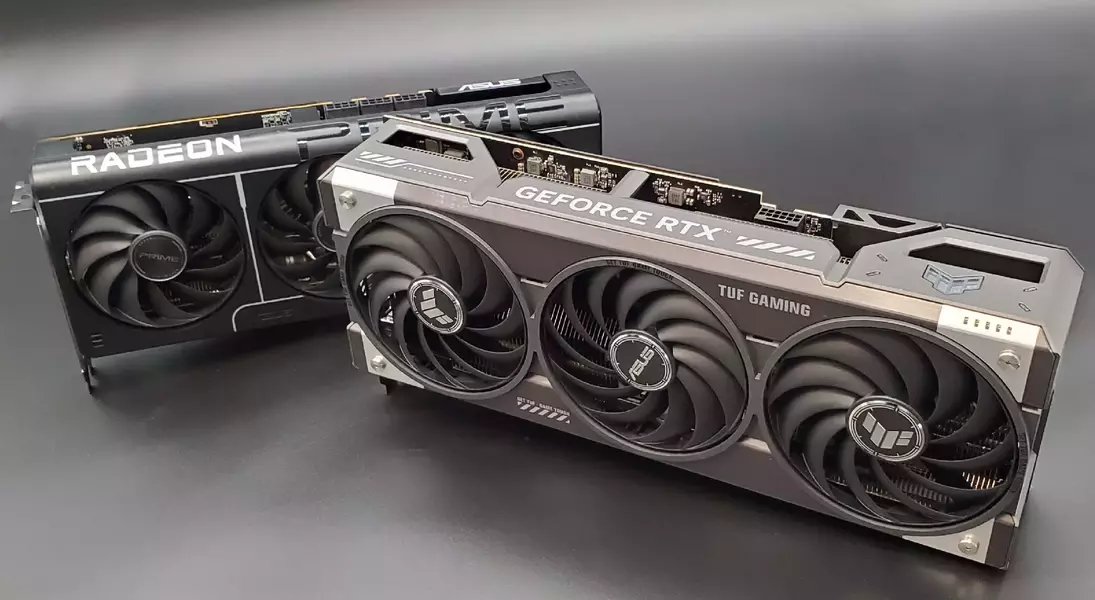
The graphics card market is experiencing significant shifts as reports indicate the Nvidia RTX 5070 Ti is nearing its discontinuation. This development is primarily driven by a global memory shortage, a consequence of the escalating demand for components crucial to AI infrastructure. The scarcity has led to increased costs for memory, particularly VRAM, affecting the production viability of certain graphics cards. As a result, manufacturers are reportedly prioritizing higher-margin products, leaving models like the RTX 5070 Ti with a limited supply and an uncertain future.
Nvidia RTX 5070 Ti Discontinuation Due to Memory Scarcity
Recent insights from industry sources suggest that Nvidia's RTX 5070 Ti graphics card is facing an imminent end-of-life status. This information, corroborated by discussions with retailers and add-in-board (AIB) partners post-CES, points to the current retail stock as the final availability for this model. Asus, a prominent manufacturer, has reportedly confirmed that its RTX 5070 Ti variants are now in end-of-life (EoL) status, attributing this decision to severe supply chain constraints. While other manufacturers have been less direct, they also acknowledge a significant lack of supply for the card.
The root cause of this production halt is a widespread memory crisis. The burgeoning AI sector's insatiable demand for high-performance memory has placed immense pressure on the supply of DRAM, NAND, and critically, VRAM for graphics cards. This surge in demand has driven up prices across the board, making the production of certain GPU models economically unfeasible. The RTX 5070 Ti, which utilizes 16GB of GDDR7 memory and shares the GB203 GPU with the more expensive RTX 5080, has become a casualty of this market dynamic. With the RTX 5080 retailing significantly higher, manufacturers are naturally directing their limited memory resources towards the more profitable high-end cards.
Despite its attractive performance-to-price ratio for gamers—especially given its overclocking potential to rival the RTX 5080—the RTX 5070 Ti's affordability ultimately contributes to its demise in a constrained market. Similarly, the 16GB version of the RTX 5060 Ti is also expected to see reduced production for the same reasons, leaving gamers with a preponderance of 8GB options from Nvidia. The 12GB RTX 5070 might remain the sole mid-range GeForce GPU with reasonable availability, though its $540 price point is still a concern.
In contrast, AMD's RDNA 4 cards, many of which feature 16GB of GDDR6 memory, do not appear to be facing similar end-of-life concerns. With a larger existing stock and a smaller market share compared to Nvidia, AMD might be better positioned to handle the memory crunch. However, even AMD's pricing for cards like the RX 9070 XT has seen increases, reflecting the broader market pressures. Should Nvidia's 16GB options disappear, AMD's offerings could become highly attractive to consumers, potentially testing AMD's manufacturing capacity to meet increased demand.
The evolving landscape of the graphics card market, heavily influenced by the AI sector's memory requirements, underscores a crucial challenge for the gaming industry. As component costs rise and supply chains remain tight, manufacturers face difficult choices about which products to prioritize. This situation highlights the delicate balance between innovation, market demand, and the economic realities of production, ultimately impacting consumer choices and the future direction of gaming hardware development.
