
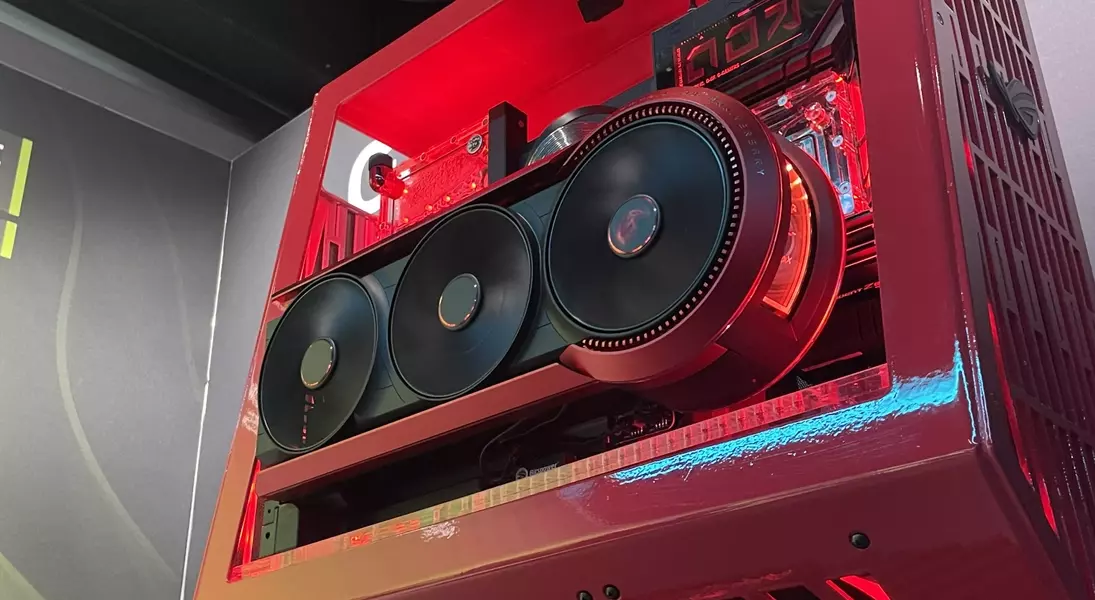
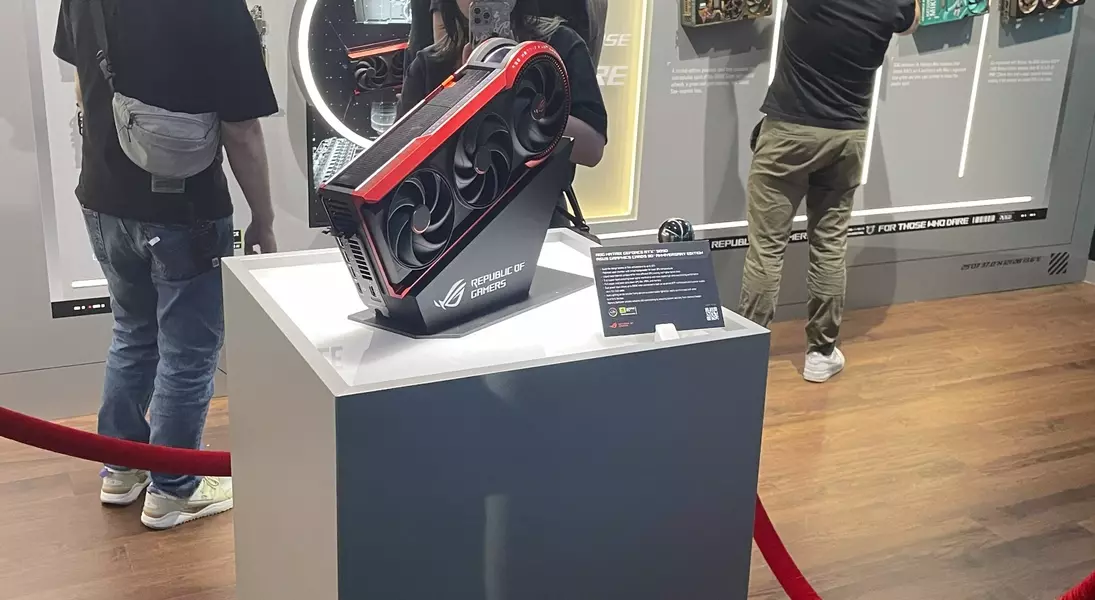
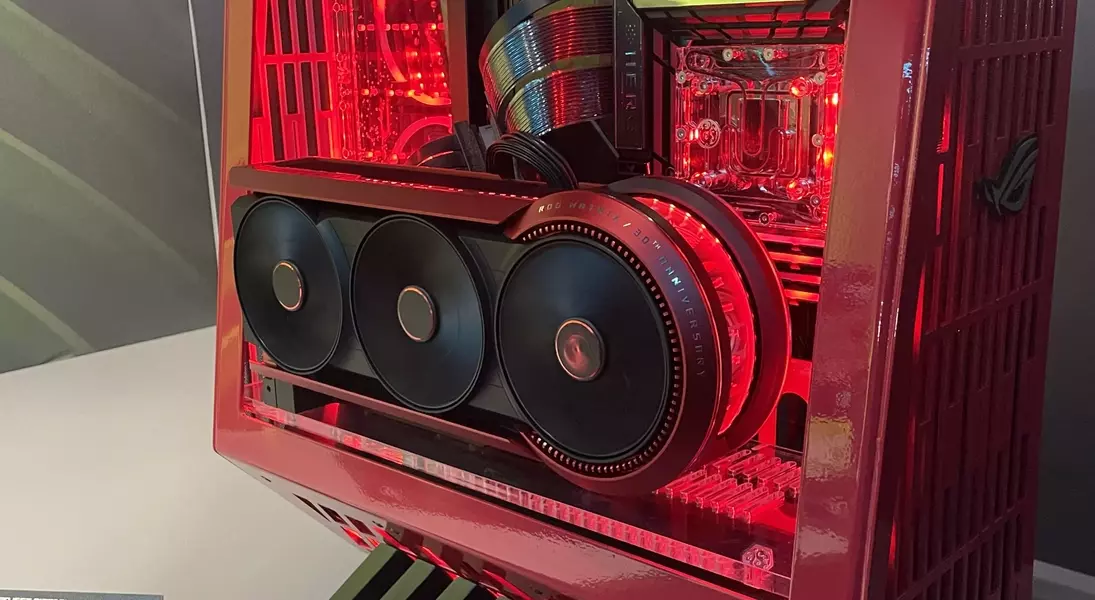
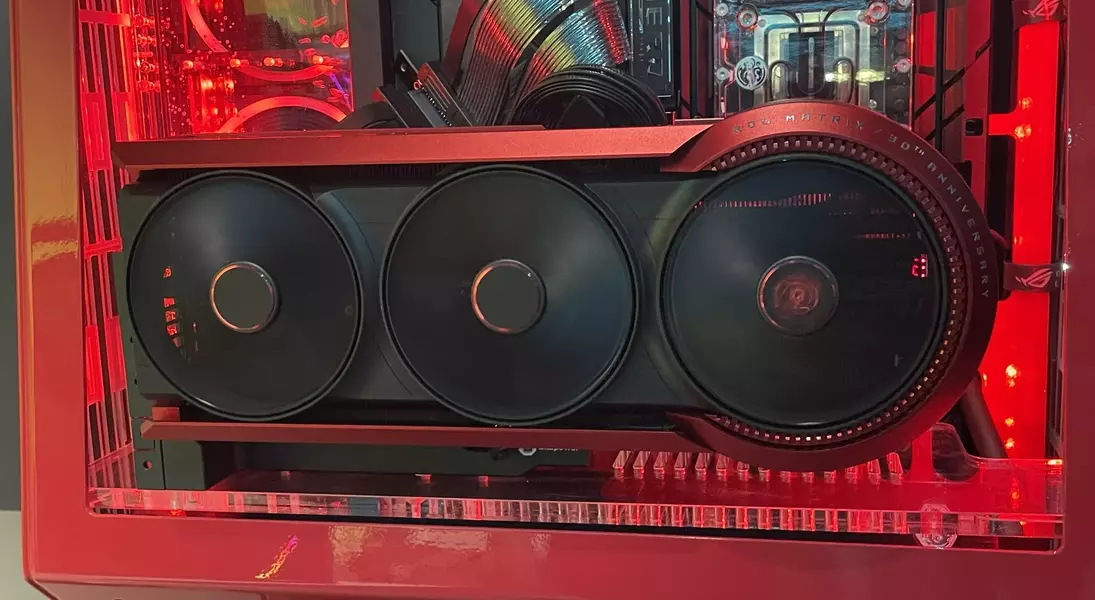
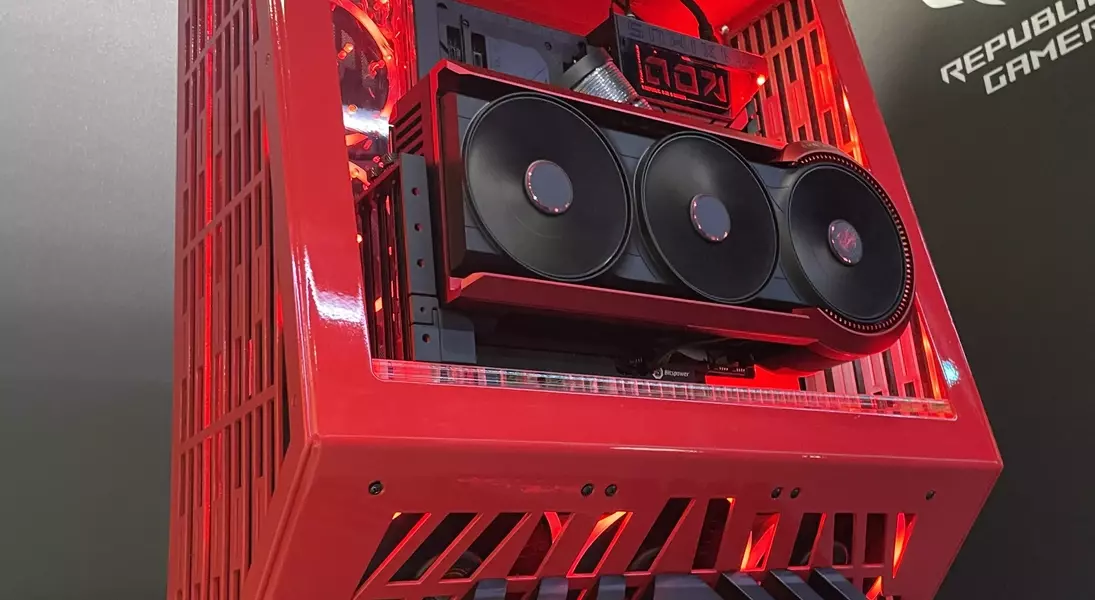
The recently launched Asus ROG Matrix RTX 5090, a special edition graphics card commemorating three decades of Asus in the GPU market, has been introduced with a hefty price tag. While visually appealing and boasting an impressive 800W power capacity, independent evaluations indicate that its performance enhancements are quite limited compared to its significantly higher cost. This disparity in price versus performance has sparked discussions within the PC enthusiast community.
Details of the Asus ROG Matrix RTX 5090 Launch and Performance Analysis
Earlier this year, Asus unveiled the ROG Matrix GeForce RTX 5090, a testament to its 30-year legacy in producing graphics cards. This premium product has now officially hit the market with an asking price of $4,000. This figure positions it notably higher than many other RTX 5090 variants, including the Founders Edition, which typically retails for $2,000 less. However, it remains more affordable than the ultra-luxurious, gold-plated RTX 5090 Dhahab OC, which was priced around $7,000 upon its release in May.
The elevated cost of the ROG Matrix RTX 5090 is attributed to several factors beyond its striking aesthetics and limited production run of 1,000 units. A significant contributor to its price is its formidable 800W power draw. To facilitate this increased power, an additional connection is required, necessitating an “Advanced BTF motherboard” alongside the standard 12V-2x6 PSU. This setup allows the GPU to draw extra power directly from the motherboard via a specialized card edge connector.
Despite these high-end specifications, a thorough review and teardown by Tech YouTuber der8auer revealed that the real-world performance gains are rather marginal. The analysis indicated that the ROG Matrix RTX 5090 consistently consumed approximately 26% more power while delivering only about a 10% increase in speed. Even when power limits and voltage were maximized through software, the GPU's power consumption typically ranged between 680–730W, falling short of its advertised 800W rating, though it did achieve clock speeds exceeding 3,000 MHz.
In practical gaming scenarios, the performance boost was minimal. For instance, in 4K resolution, playing Star Wars Outlaws saw a frame rate increase from 89 fps to 98 fps, and Assassin's Creed Mirage experienced a modest jump from 143 fps to 150 fps. Asus itself acknowledges these incremental gains, stating that the card can achieve up to a 10% performance improvement when paired with a BTF motherboard providing the additional 200W of power. This essentially translates to a 10% performance gain for a 33% increase in power consumption.
This pattern is not uncommon in high-end hardware, where significant price escalations often yield diminishing returns in performance. While the card is undeniably a visual masterpiece with a sleek red and rounded design, running quieter than even Asus’s main high-end offering, the ROG Astral RTX 5090, its overall value is debatable for those prioritizing raw performance per dollar. Der8auer's assessment, while commending its near-perfection in design and quiet operation, pointed out that the application of liquid metal on the GPU could be improved, a minor detail for such a premium product.
The limited stock of 1,000 units has meant that the card quickly sold out, suggesting that its high price did not deter eager buyers. This implies that those still seeking to acquire this exclusive GPU may need to turn to the secondary market, where prices are likely to be even higher than the initial $4,000.
The launch of the Asus ROG Matrix RTX 5090 highlights a recurring dilemma in the high-end hardware market: the trade-off between extravagant pricing, exclusive design, and tangible performance benefits. While the card's aesthetics and limited availability undoubtedly appeal to collectors and enthusiasts, its modest real-world performance gains raise pertinent questions about value for money. It serves as a reminder that "perfection" in product design doesn't always equate to proportional performance leaps. For the majority of users, the substantial investment might not justify the incremental improvements over more standard, and less expensive, alternatives. This product reinforces the idea that true innovation should ideally couple with meaningful advancements, not just aesthetic and power-hungry upgrades.
