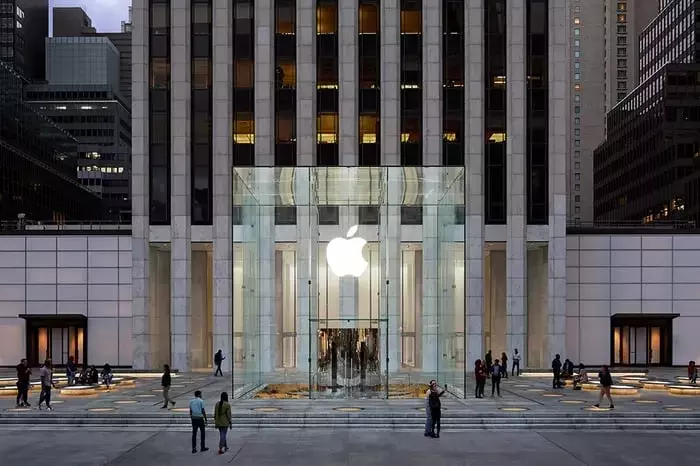
Apple, a global technology titan renowned for its innovative products and strong brand identity, has recently navigated a period of stock market underperformance when contrasted with the broader S&P 500 index. This phase was characterized by decelerating iPhone sales, the disruptive influence of trade tariffs, and a perception of lagging behind in the burgeoning artificial intelligence sector. However, a deeper look into the company's strategic adjustments and recent financial outcomes reveals a stabilizing business trajectory and a promising outlook for the years ahead. Apple's adept pivot towards bolstering its services revenue alongside anticipated advancements in its flagship hardware is poised to reinvigorate its market position and investor confidence.
Apple's Path to Renewed Vigor: Strategic Shifts and Impending Innovations
In the fiscal period concluding in September, Apple's financial composition underscored its enduring reliance on iPhone revenues, which constituted approximately 51% of its total net sales. Its expanding services division, encompassing popular offerings like the App Store and iCloud, contributed a substantial 26%, effectively counterbalancing the more modest sales from its Mac, iPad, and wearable device categories. This strategic emphasis on services, now boasting over a billion paid subscriptions, has been instrumental in mitigating the slowdown observed in hardware sales.
Examining the past few fiscal years, Apple's journey has seen a dynamic interplay between its core business segments. Fiscal year 2022 witnessed a surge in iPhone sales, propelled by the easing of pandemic-related restrictions and supply chain recovery. However, this momentum tempered in fiscal years 2023 and 2024, as the company grappled with market saturation, intensifying competition in China, and a cooling of the 5G upgrade cycle. The absence of compelling new features also deterred many consumers from replacing older devices. Yet, fiscal year 2025 marked a notable resurgence in iPhone sales, spurred by the successful launch of the iPhone 16, particularly its high-end Pro models, and proactive pricing adjustments in key markets like China, including a significant subsidy on eligible devices. Double-digit growth in emerging markets such as India, the Middle East, South Asia, and Brazil further compensated for slower sales in more established regions.
This renewed vigor in iPhone sales has, in turn, amplified engagement with Apple's services ecosystem, a critical driver for sustained growth and a reinforced competitive advantage against other tech industry players. Despite ongoing developments in its AI capabilities, which may not yet rival those of OpenAI's ChatGPT or Alphabet's Google Gemini, Apple's strategic direction remains clear. The company is positioned to leverage its substantial cash reserves—a formidable $133 billion in cash and marketable securities at the close of its most recent quarter—to fund continued share repurchases, consistent dividend increases (a pattern upheld for 12 consecutive years), and strategic acquisitions aimed at expanding its ecosystem. Such financial fortitude provides ample flexibility for future endeavors, including potentially revolutionary hardware developments that could lessen its dependence on iPhone sales.
Looking ahead to the next three fiscal years, from 2024 to 2027, financial analysts project Apple's revenue and earnings per share to achieve compound annual growth rates of 6% and 13%, respectively. Much of this anticipated growth is predicated on upcoming iPhone iterations, with rumors hinting at a complete design overhaul for the iPhone 17 and the potential introduction of foldable or curved models in 2026 and 2027. These significant innovations are expected to catalyze a new wave of upgrades among existing iPhone users. Beyond smartphones, potential catalysts for growth include a more accessible Vision Pro, novel smart home and wearable technologies, and enhancements to its artificial intelligence infrastructure. Apple is also committed to advancing its in-house chip development, a move aimed at reducing its reliance on external suppliers such as Qualcomm. Should Apple meet these ambitious projections and maintain its current earnings multiple, its stock could see a substantial appreciation of approximately 30% to $308 over the next three years, aligning with or even surpassing the historical average returns of the S&P 500.
The narrative of Apple's stock performance over the past few years serves as a compelling reminder of the cyclical nature of market leadership and the importance of adaptability. While the company momentarily lagged behind the S&P 500, its foundational strengths—a loyal customer base, a robust services arm, and a clear vision for hardware innovation—have positioned it for a powerful rebound. This demonstrates that even established giants must constantly evolve and innovate to sustain their competitive edge. For investors and industry observers alike, Apple's journey underscores that temporary headwinds do not necessarily signal a decline, but rather an opportunity for strategic recalibration and renewed growth. The ongoing story of Apple is one of resilience, strategic foresight, and an unwavering commitment to shaping the future of technology.
