

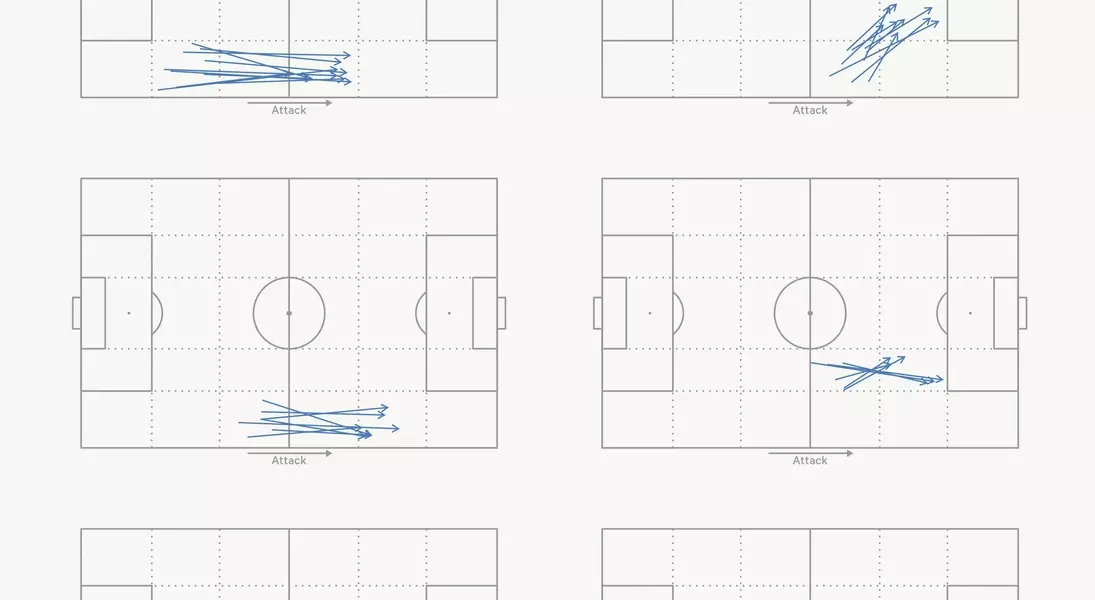

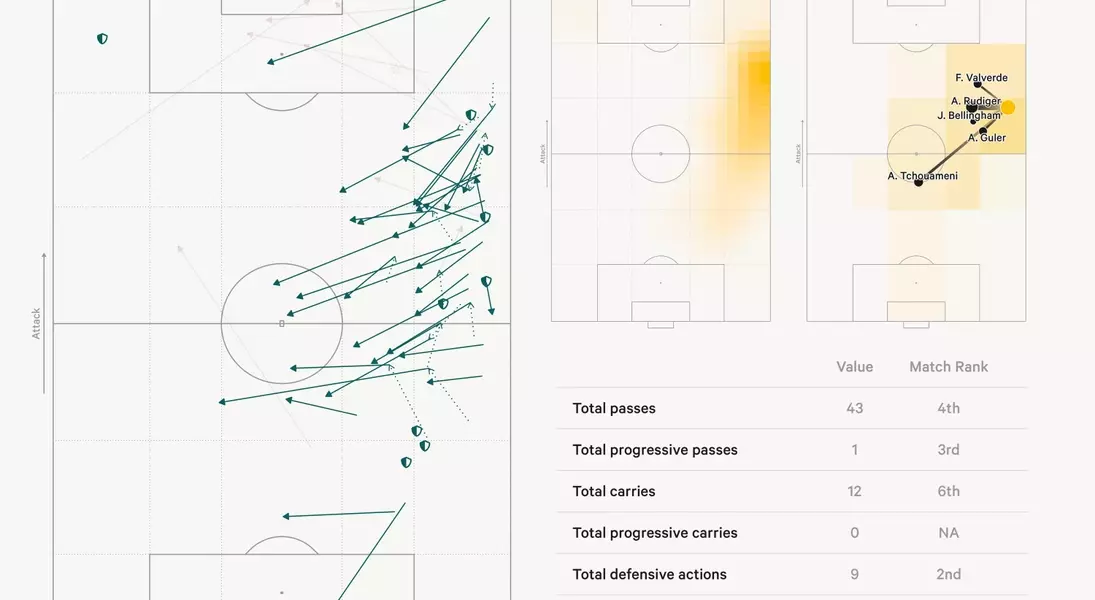





Trent Alexander-Arnold's initial period at Real Madrid under Xabi Alonso has quickly demonstrated the adaptability required of the versatile defender, as the new coaching staff explores various positional deployments. Despite a relatively subdued Club World Cup showing with limited signature long-range passes and an early exit due to injury, his brief appearances have offered valuable insights into his evolving tactical responsibilities. Alonso's willingness to adjust formations based on opposition strengths and weaknesses means Alexander-Arnold's role is far from static, hinting at a dynamic season ahead where his versatility will be key.
During his final season at Liverpool, Alexander-Arnold experienced a shift in his role, often moving into central midfield to aid build-up play. However, upon joining Real Madrid, he has predominantly reverted to a more conventional full-back position, primarily tasked with maintaining width. This tactical adjustment also saw a reduction in his characteristic cross-field passes, aligning with coach Slot's strategy to minimize defensive vulnerabilities during transitions. The early stages of the Club World Cup further indicated a significant change in Alexander-Arnold's responsibilities, as he was frequently positioned wide, sometimes as a wing-back, and often found himself isolated due to Madrid's offensive focus on the opposite flank. This sometimes led to more conservative passing choices, as the team's attacking structures under previous management often saw players congregating on the left, leaving Alexander-Arnold to seek out less direct options.
Alonso's emphasis on collective teamwork and fluid transitions suggests that Alexander-Arnold's personal attacking metrics are secondary to his contribution to the overall team cohesion. While he may be called upon to produce moments of individual brilliance, his primary objective is to fit seamlessly into the team's structure, whether as a traditional full-back or a wing-back. Recent matches, particularly one against Tirol, have shown Alexander-Arnold thriving in a more balanced four-at-the-back formation, where greater attacking support and varied movement from teammates allowed him to utilize his broader passing range and creativity. This flexibility in deployment, contingent on team dynamics and opposition, will be a defining feature of his season, ensuring he remains a crucial, if adaptable, asset to Real Madrid.
This journey underscores a fundamental truth in sports: growth and success often demand adaptability and a willingness to embrace new challenges. Alexander-Arnold's evolving role at Real Madrid serves as a testament to how embracing change, even when it means stepping out of one's comfort zone, can lead to personal and collective advancement. It highlights the importance of teamwork and strategic flexibility, reminding us that true strength lies not just in individual prowess, but in the harmonious interplay of diverse talents working towards a common goal.
