
This article delves into a detailed comparison of two significant players in the artificial intelligence sector, Palantir Technologies and SoundHound AI, evaluating their respective strengths, market positions, and future potential from an investment perspective.
Navigating the AI Investment Frontier: A Head-to-Head Analysis
The Artificial Intelligence Market: A Trillion-Dollar Horizon
The artificial intelligence sector is experiencing unprecedented growth, presenting a wealth of opportunities for investors. AI-powered innovations are rapidly being integrated across diverse industries, from enhancing customer support and smart device functionalities to optimizing manufacturing processes, managing inventory, and facilitating advanced diagnostics. Projections indicate that the global AI market, valued at $279.2 billion in 2024, is set to surge to an impressive $1.81 trillion by 2030, demonstrating a remarkable compound annual growth rate of 35.9%. This explosive expansion underscores why AI-related equities have become such a focal point for investment portfolios.
Palantir's Current State: High Growth, High Valuation
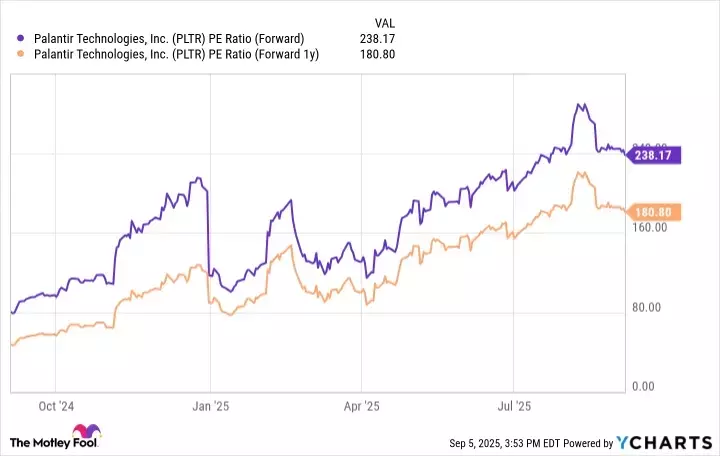
Palantir Technologies, a key player in the AI space, has seen substantial momentum in the past year and a half, though it recently experienced an 18% pullback from its peak. This downturn followed a critical report that questioned the company's valuation metrics. Despite being a strong advocate for Palantir, the author acknowledges the company's striking valuation figures, including a trailing price-to-earnings ratio of 510 and a forward P/E of 238, projected to remain high at 180 even a year from now. However, the author argues that Palantir's appeal lies less in traditional fundamentals and more in its dynamic growth trajectory. The company leverages its advanced Artificial Intelligence Platform to process vast datasets from numerous sources, enabling real-time decision-making for both its commercial and government clientele.
Unpacking Palantir's Diverse Applications and Growth Projections
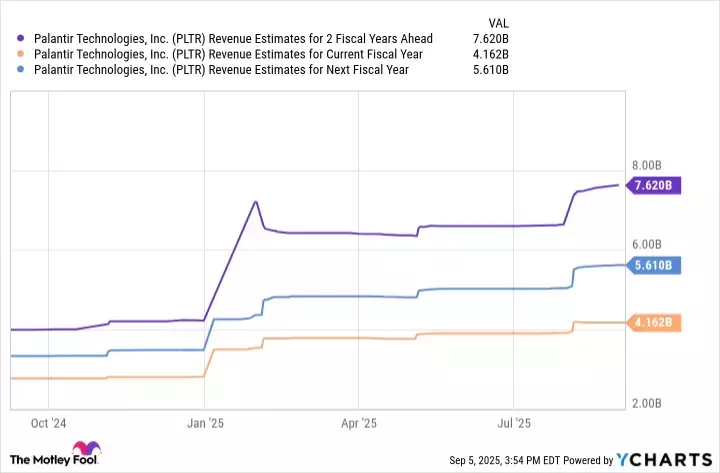
Palantir's AI solutions are broadly applied across various commercial sectors, offering insights into operational workflows, supply chain optimization, and resource allocation. For example, it assists healthcare organizations in clinical trial management, aids retailers in refining store operations and marketing strategies, and supports the aviation industry in navigating complex air traffic. Beyond commercial applications, Palantir is renowned for its governmental engagements, providing crucial data analytics to intelligence agencies and military forces for real-time strategic decisions. Its collaborations with U.S. government entities, including the State Department, Homeland Security, and Health & Human Services, are continually expanding. The company's revenue is forecast to increase significantly, from $4.16 billion this year to $7.62 billion by 2027, with potential for further expansion.
SoundHound AI: A Smaller Player with Significant Potential
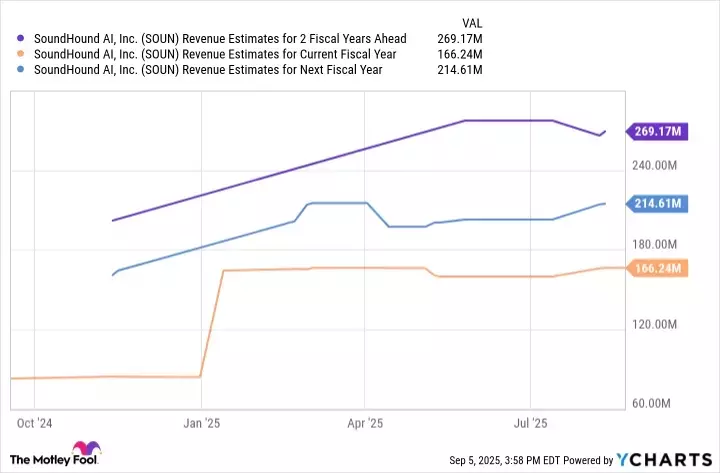
SoundHound AI, while not as large as Palantir, is embarking on its own growth journey in the AI sector. The company specializes in developing AI-powered voice solutions that facilitate natural language interactions with various platforms. SoundHound's client roster includes major automotive manufacturers like Hyundai, Honda Motor, and Stellantis. It collaborates with Block-owned Square to enhance point-of-sale systems and partners with Oracle to create voice-activated ordering software for the restaurant industry. Additionally, companies such as Pandora, Snap, and Motorola Solutions utilize SoundHound's technology to power their voice assistants. While SoundHound's revenue growth is not projected to be as aggressive as Palantir's, it is expected to rise from $166.2 million this year to $214.6 million in the coming year, and to $269.17 million by 2027. However, SoundHound operates in a highly competitive market, facing formidable rivals such as Amazon's Alexa, Alphabet's Google Assistant, and Microsoft Copilot.
The Verdict: Which AI Stock Offers a Better Investment?
The choice between Palantir and SoundHound AI involves weighing Palantir's impressive growth potential against its demanding valuation, versus SoundHound's promising market opportunities within a highly competitive landscape. SoundHound recently reported an exceptional second quarter, with revenue soaring 217% year-over-year to $42.7 million. Palantir also delivered a strong performance in its second quarter, achieving $1 billion in quarterly revenue for the first time and a 48% increase from the previous year. While some investors may be deterred by Palantir's valuation, the author remains confident in the data analytics firm, citing its strong market position, rapid commercial adoption, increasing government utilization, and a distinct competitive advantage. Ultimately, the author leans towards the more established Palantir over the more speculative investment in SoundHound AI.
