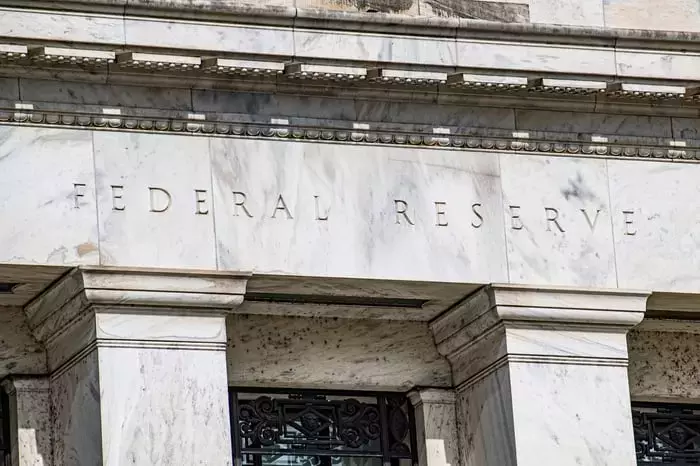

Following a fleeting uplift on Friday, stock markets experienced a downturn as a result of a disappointing employment report. This report highlighted a significant deceleration in the labor market, prompting heightened speculation regarding the Federal Reserve's monetary policy. The persistent sluggishness in job creation has fueled discussions about a potential interest rate reduction, especially considering the S&P 500's current record-high valuation. Investors are now closely monitoring upcoming economic indicators, particularly the Consumer Price Index, which will further inform the Fed's decision-making process. The market's initial reaction to the job data revealed a complex interplay between the desire for lower interest rates and the underlying concerns about broader economic stability and a looming recession.
Federal Reserve Contemplates Rate Cut Following Sluggish Job Growth in August
In the aftermath of an unexpectedly weak August employment report, which revealed a mere 22,000 new jobs against a projected 75,000, financial markets across the globe are keenly observing the Federal Reserve. This figure not only fell short of expert predictions but also marked a continuation of a troubling trend, with job growth averaging less than 30,000 over the past four months—a stark contrast to the healthy benchmark of at least 100,000 monthly additions. The news has intensified expectations for an interest rate cut by the Federal Reserve at its upcoming meeting scheduled for September 16-17.
Historically, the Federal Reserve adjusts interest rates as a mechanism to stabilize the economy, lowering them during periods of weakness to stimulate activity and raising them to curb inflation during overheating. With job figures now persistently underperforming, the likelihood of a rate reduction has substantially increased. Such a move is generally viewed favorably by stock markets, as lower borrowing costs encourage business expansion and make equities more attractive compared to bonds, drawing investment capital into stocks.
Despite this potential boost, the market's response on Friday was mixed. Stock futures initially reacted positively to the increased probability of a rate cut, only to surrender those gains during the regular trading session. All three major indexes concluded the day in negative territory, with the S&P 500 experiencing a 0.5% decline. This volatile reaction underscores investor apprehension that while rate cuts might offer a temporary reprieve, they could also signal deeper economic frailties, including an elevated risk of recession.
Certain sectors are poised to either gain or lose significantly from such a policy shift. Industries highly sensitive to interest rates, such as homebuilders, stand to benefit. For instance, the SPDR S&P Homebuilders ETF saw a 1.6% rise on Friday afternoon, and Opendoor Technologies, a home-flipping company popular with meme stock investors, surged by double-digit percentages on hopes of lower rates. Conversely, cyclical sectors with higher exposure to recessionary impacts, like energy and financials, experienced declines of 2.4% and 2.1%, respectively.
Looking ahead, the August Consumer Price Index (CPI) report, due out on September 11, will be a critical determinant for the Fed's decision. Although inflation has shown signs of creeping up, a cooler-than-expected CPI, combined with the current employment data, could prompt the Fed to implement a more aggressive 50-basis-point rate cut, rather than the standard 25 basis points, as hinted by Fed Chair Powell in his recent Jackson Hole speech. Investors are advised to remain vigilant regarding these pivotal economic announcements and the forthcoming Federal Reserve meeting, as they will undoubtedly shape the market's trajectory in the coming months.
The recent economic developments underscore a crucial lesson for investors: market movements are often a complex dance between various indicators and policy responses. While a Federal Reserve rate cut might seem like a straightforward positive for stocks, the underlying reasons for such a cut—namely, a weakening labor market and rising recession fears—introduce significant uncertainty. This situation highlights the importance of a nuanced investment strategy that looks beyond immediate reactions. Instead of solely focusing on short-term gains, investors should prioritize understanding the broader economic cycle and how different sectors are affected by monetary policy. Developing a resilient portfolio that can withstand both stimulating measures and recessionary pressures is key to long-term success. It also serves as a reminder that market health isn't just about index numbers; it's deeply intertwined with fundamental economic stability, especially job growth and inflation control.
