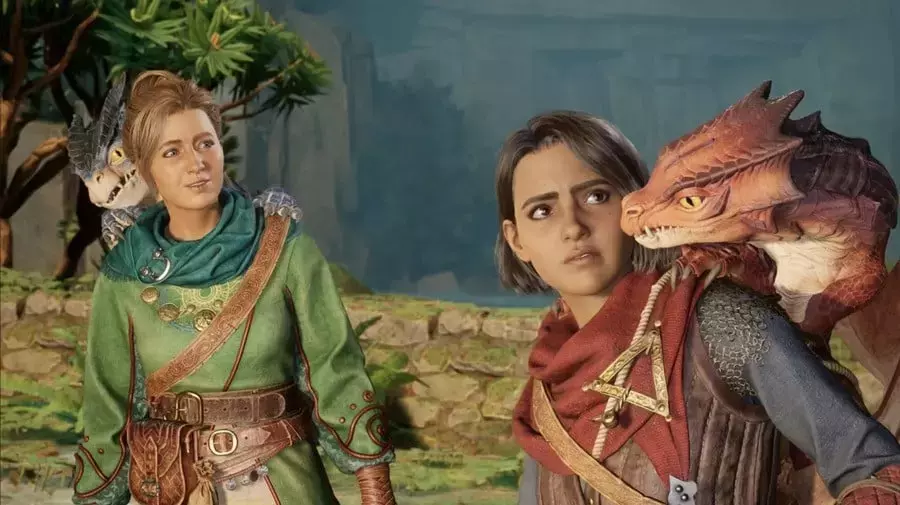
The advent of Artificial Intelligence has sparked considerable debate across various industries, and video game development is no exception. This article delves into the insightful perspectives of Josef Fares, a prominent figure in the gaming world and director of critically acclaimed titles, as he navigates the complex landscape of AI's burgeoning role. Fares offers a balanced viewpoint, recognizing the practical applications of AI while staunchly defending the indispensable element of human ingenuity and artistic direction in crafting compelling interactive experiences. His commentary provides a timely reflection on whether AI is merely a sophisticated tool or a potential successor to human creativity within the realm of game creation.
Guiding the Digital Canvas: Human Vision in the Age of AI
The Pervasiveness of Artificial Intelligence in Contemporary Society
Artificial Intelligence has permeated nearly every facet of modern life, with its presence becoming increasingly undeniable. Recent events, such as the Consumer Electronics Show (CES) 2026, underscored the widespread adoption and continuous evolution of AI technologies. This ubiquity naturally extends to the video game industry, prompting considerable discussion among developers regarding AI's current and future implications.
Josef Fares' Perspective on AI in Game Creation
Josef Fares, the imaginative force behind Hazelight Studios and the director of successful games like "Split Fiction" and "It Takes Two," recently engaged in a conversation about AI's role with Christopher Dring at The Game Business. While Fares readily admits the long-standing use of AI in game development for specific functions, he draws a clear distinction, particularly concerning generative AI. He expresses skepticism about its capacity to completely revolutionize the creative landscape, steadfastly believing that a unique human vision or conceptual framework remains paramount for any game's success.
Examining Generative AI's Potential and Limitations
Fares elaborates on his reservations regarding generative AI, contrasting its initial awe-inspiring capabilities, such as those demonstrated by tools like Midjourney, with its perceived stagnation in subsequent years. He ponders whether such technologies have reached an inherent limit, suggesting that while they can assist, they may not possess the intrinsic ability to generate truly groundbreaking concepts. He questions the long-term impact of generative AI, implying that its progress might not be as exponential as some predict, and reiterates that the fundamental spark of an original idea must still originate from human intellect.
The Enduring Importance of Human Ingenuity
Ultimately, Fares underscores the critical need for a guiding human hand in game development. He firmly asserts that AI will not usurp the creative director's role, as the essence of a compelling game stems from a singular vision and innovative ideas. Despite the rapid advancements in AI, he maintains that human creativity remains irreplaceable in shaping the core identity and artistic direction of interactive entertainment. While acknowledging the uncertainties of future technological progress, his conviction in human-led creativity remains unshaken.
Industry Dialogue and Nintendo's Stance on AI Imagery
The discussion surrounding AI's influence in game development extends beyond individual developers to major industry players. The concept of AI "taking over" is often framed as an inevitable outcome, yet many believe that developers retain agency in how they choose to integrate these tools. The article highlights the ongoing debate, emphasizing that the gaming community has a choice in shaping AI's future. Notably, Nintendo recently addressed concerns regarding AI usage, clarifying that images for its "My Mario" collection were not generated by AI, signaling a conscious decision to delineate its creative processes.
The Future Landscape of AI in Gaming
As AI continues its rapid evolution, the question of its role in game development persists. Will it become an indispensable component, or will developers collectively establish boundaries for its use? This evolving dialogue underscores the critical juncture at which the industry finds itself, balancing technological advancement with the preservation of human creative expression. The ongoing conversation invites stakeholders to consider the ethical and creative implications of AI, ensuring that technology serves as an enhancement rather than a replacement for artistic vision.
