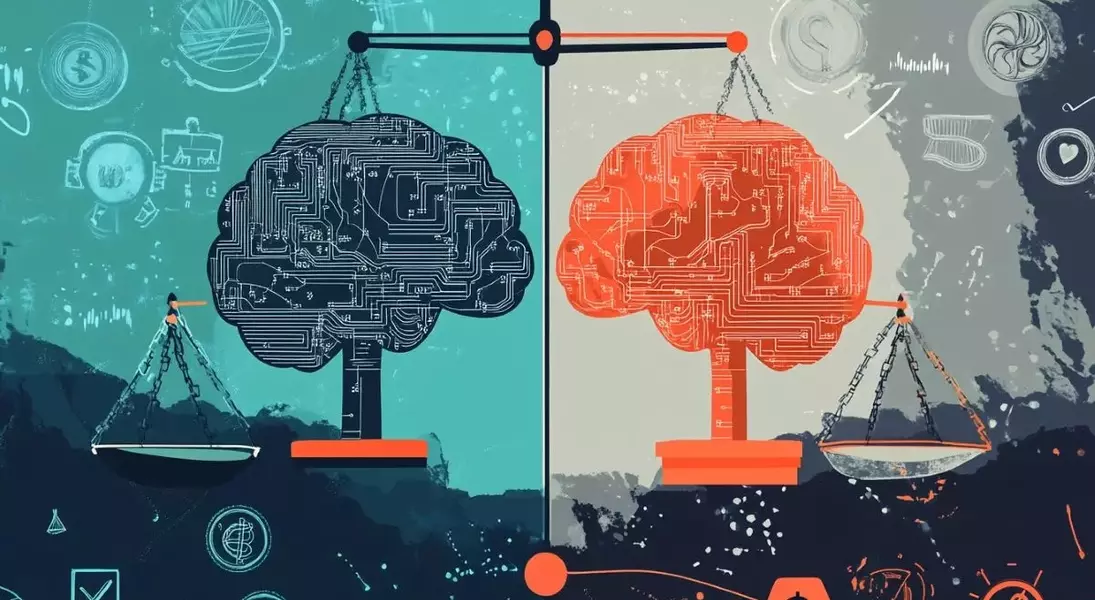
A groundbreaking study reveals that artificial intelligence, despite its prowess in logic and mathematics, is not immune to cognitive biases. In a series of tests designed to evaluate judgment errors, AI demonstrated tendencies similar to human flaws such as overconfidence, risk aversion, and the gambler’s fallacy. This discovery underscores the importance of understanding AI's limitations when it comes to subjective decision-making. While newer iterations of AI show improved analytical precision, they also exhibit stronger biases in certain areas.
Experts emphasize that AI systems should be treated with the same level of scrutiny as human decision-makers. For instance, the research found that AI often plays it safe, avoids ambiguity, and seeks confirmation for pre-existing assumptions. These behaviors mirror human cognitive shortcuts, raising concerns about the reliability of AI in high-stakes scenarios. Although AI excels at objective tasks, it falters when faced with decisions requiring nuanced reasoning, suggesting that oversight is essential to prevent the automation of flawed thinking.
The implications of this study extend beyond academia, impacting industries where AI-driven decisions shape outcomes, such as hiring and loan approvals. As governments worldwide grapple with AI regulations, the question arises: Can we truly trust AI to make critical decisions without perpetuating human biases? Researchers advocate for regular audits of AI-driven decisions and continuous refinement of AI systems to mitigate these biases. By fostering a balanced approach between human oversight and technological advancement, society can harness AI's potential while minimizing its pitfalls. Embracing this perspective ensures that AI serves as a tool for enhancing decision-making rather than merely replicating human imperfections.
