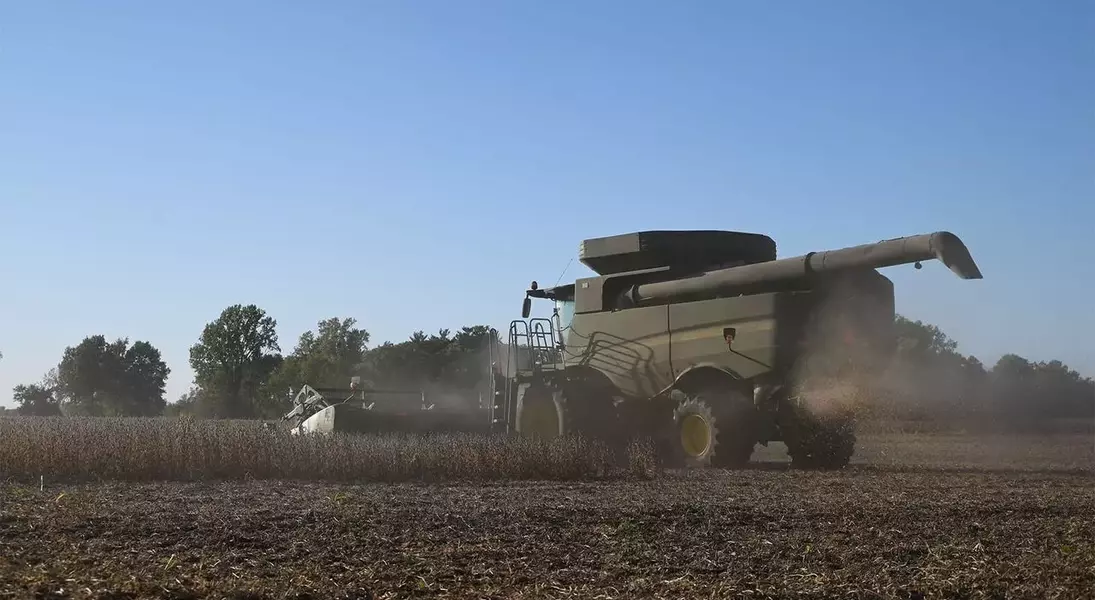
Farmers are increasingly recognizing the substantial advantages of forgoing fall tillage after soybean harvest, opting instead to leave the stubble undisturbed. This innovative approach yields numerous benefits, including a significant reduction in soil erosion, substantial cost savings by eliminating additional passes, and decreased wear on farming equipment. Furthermore, the practice promotes healthier soil by improving nutrient distribution and maintaining optimal soil temperatures. By prioritizing even residue distribution and integrating strategic fall herbicide applications, growers can effectively manage weeds, paving the way for a more streamlined and environmentally conscious planting season.
This method not only enhances ecological sustainability but also contributes to economic efficiency in agricultural operations. The transition away from conventional tillage practices, particularly in sensitive post-soybean fields, marks a crucial shift towards more resilient and productive farming systems.
The Environmental and Economic Advantages of Minimizing Tillage
Refraining from fall tillage after soybean harvesting presents a multitude of benefits, particularly in mitigating soil erosion. Soybean stubble, being inherently fragile, provides crucial protection against wind and water erosion when left intact. Farmers who adopt this practice observe a marked improvement in soil stability, which is vital for long-term land productivity. Beyond the environmental gains, the financial incentives are equally compelling. Eliminating the need for repeated tillage passes significantly reduces fuel consumption, labor costs, and the overall operational expenses associated with machinery maintenance. This shift in practice transforms potential expenditures into savings, enhancing the economic viability of farming operations.
Furthermore, the reduced machinery use translates into less wear and tear on agricultural equipment, prolonging its lifespan and delaying costly repairs or replacements. This conservation-focused strategy also facilitates improved soil structure, leading to better water infiltration and nutrient retention. The undisturbed stubble acts as a natural cover, enriching the soil with organic matter as it decomposes, thereby fostering a healthier microbial environment. This comprehensive approach underscores how thoughtful land management can concurrently achieve both ecological preservation and economic prosperity for agricultural enterprises.
Optimizing Residue Management and Weed Control for No-Till Success
The successful implementation of a no-till system hinges on two critical factors: achieving an even spread of crop residue and employing effective weed management strategies. Proper residue distribution ensures a uniform protective layer across the field, which is essential for consistent soil temperature, moisture retention, and nutrient cycling. Advanced combine technologies, such as specialized tailboards and disc spreaders, play a pivotal role in achieving this uniformity. Farmers continuously experiment with different spreading systems to find the most efficient and reliable methods for their specific field conditions, recognizing that simplicity often leads to better outcomes. This meticulous attention to residue management is fundamental for creating an ideal seedbed for subsequent crops, promoting healthy germination, and preventing localized nutrient deficiencies.
Alongside residue management, aggressive weed control is paramount in a no-till environment, especially after soybeans, which leave minimal residue. Fall burndown herbicide applications are a cornerstone of this strategy, effectively suppressing weed growth before winter and reducing pressure in the spring. This proactive approach not only keeps fields cleaner but also allows farmers to optimize herbicide use, potentially reducing spring application rates and associated costs. While the absence of tillage means the soil may warm up slower in the spring, the long-term benefits of enhanced soil health—including improved organic matter, water infiltration, and reduced compaction—outweigh this minor delay. Embracing this system requires a shift in mindset and patience, but the rewards of sustainable and economically sound farming practices are substantial.
