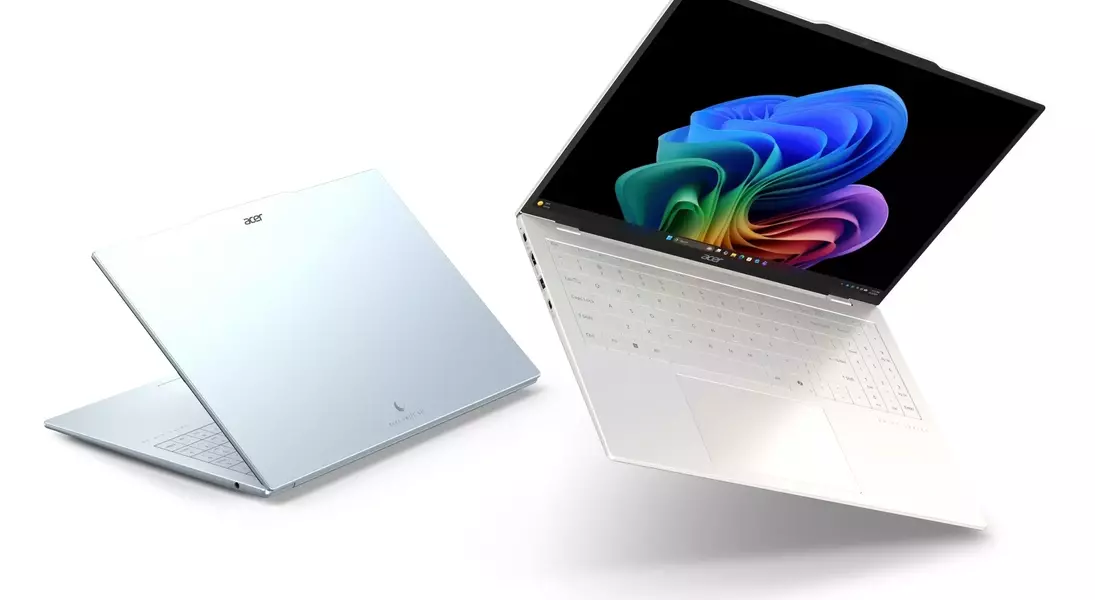

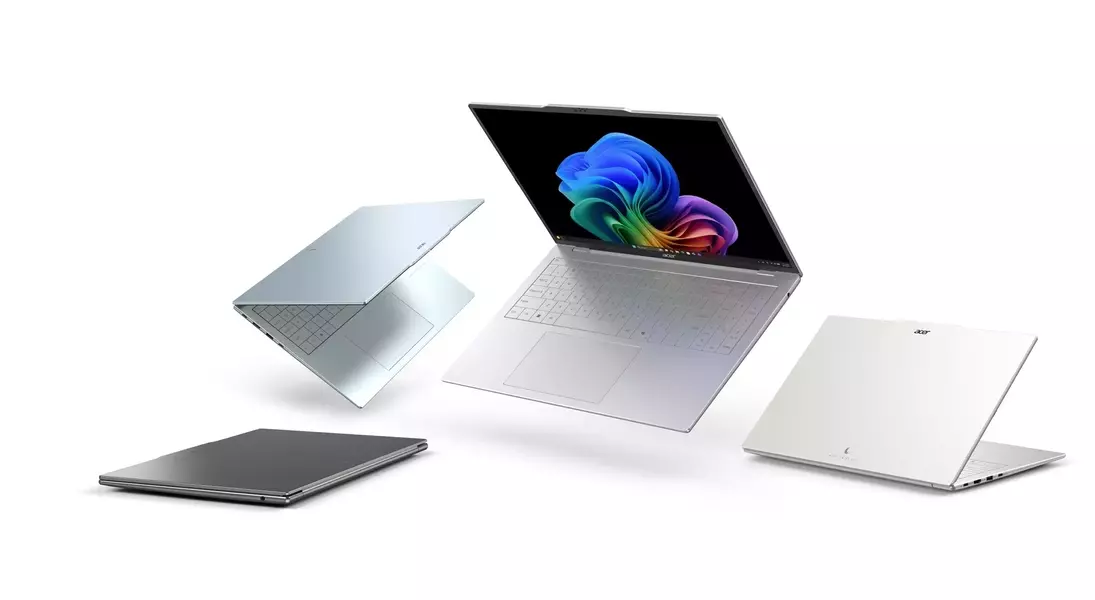
Acer is making waves with its new Swift Air 16, a laptop that redefines portability in the 16-inch category. Unveiled at the prestigious IFA 2025, this device stands out for its incredibly low weight, rivaling and even surpassing the lightness of smaller notebooks like the 13-inch MacBook Air. While its slender profile and powerful AMD Ryzen AI processors promise efficiency for daily tasks, potential buyers should note its comparatively modest battery capacity and an older HDMI standard. This blend of cutting-edge portability and some compromises in connectivity and endurance presents an intriguing, albeit mixed, proposition in the competitive laptop market.
Acer's Swift Air 16: A Glimpse into the Future of Lightweight Laptops
In a significant announcement at the highly anticipated IFA 2025, Acer officially unveiled its latest innovation, the Swift Air 16. This ground-breaking laptop, slated for an autumn 2025 release, is set to redefine expectations for screen size versus portability. The Swift Air 16 impressively weighs in at a mere 2.18 pounds (0.99kg) for its IPS display variant, with the OLED version slightly heavier at 2.43 pounds (1.1kg). This makes it astonishingly lighter than the 13-inch MacBook Air, a benchmark for thin and light computing.
The new Swift Air 16 will arrive in Europe with an attractive starting price of €999 in November, though North American pricing and availability are yet to be confirmed. Its port selection includes two USB-C ports, a USB-A 3.2 port, and a 3.5mm audio jack, providing a decent range of connectivity options. However, a notable point of contention is the inclusion of an HDMI 1.4 port, a standard that is considered outdated for 2025, especially for a laptop in this price range, as it restricts external display output to 4K resolution at a suboptimal 24 or 30Hz.
Under the hood, the Swift Air 16 is powered by AMD's latest Ryzen AI 300-series chips. The entry-level configuration features the Ryzen AI 5 330, with the top-tier model sporting the more powerful Ryzen AI 7 350. While these processors are certainly capable for everyday productivity and even some light gaming, previous tests with similar AMD chips have shown them to be less power-efficient than Apple's M4 chip, which also delivers superior performance.
Despite offering either a 1920 x 1200 IPS display or an optional 2880 x 1800 OLED screen with a 120Hz refresh rate, the Swift Air 16’s 50Wh battery raises concerns about its endurance. This is significantly smaller than the battery found in its 13-inch MacBook Air counterpart and considerably less than the 75Wh battery in Acer’s own 14-inch Swift 14 AI, a model praised for its extended battery life. Acer's own promotional data projects only 13 hours of video playback for the Swift Air 16, a stark contrast to the 27 hours advertised for the Swift 14 AI.
Furthermore, the laptop's thickness, measuring 0.63 inches (15.9mm) for the IPS model and 0.65 inches (16.5mm) for the OLED version, is notably greater than the 0.44-inch and 0.45-inch profiles of the 13- and 15-inch MacBook Airs, respectively. Adding to the design observations is the unusual 'gapless' keyboard, a feature that may appeal to some but could be a point of adjustment for others.
In conclusion, the Acer Swift Air 16 makes a bold statement in laptop lightness, a feat that is genuinely impressive. However, this achievement appears to come at the cost of battery longevity and modern display output capabilities. While the machine's overall performance with the new AMD Ryzen AI chips is promising, the compromises might make it a niche product for those prioritizing extreme portability above all else. Acer’s decision to brand this laptop as “Air” inevitably invites direct comparisons to Apple’s well-established line, setting a high bar for expectations.
The Weight of Innovation: A Balancing Act Between Portability and Practicality
The unveiling of Acer's Swift Air 16 prompts a fascinating discussion about the relentless pursuit of lightness in portable technology. As a fervent enthusiast of technological advancement, I find Acer's engineering prowess in crafting such a featherweight 16-inch machine truly commendable. It's a testament to how far design and material science have come. The idea of a laptop with a large screen that feels almost imperceptible in a bag is incredibly appealing for professionals and students constantly on the move.
However, as a discerning user, this innovation also highlights a critical trade-off: what are we willing to sacrifice for ultimate portability? The reduced battery life and the dated HDMI port on the Swift Air 16 are significant concessions. In an era where 4K external displays are becoming standard and all-day battery life is increasingly expected, these compromises could diminish the user experience for many. It's a reminder that true innovation isn't just about pushing one boundary, but about achieving a harmonious balance across all crucial aspects. Perhaps future iterations will integrate more advanced components without adding substantial weight, truly revolutionizing the portable computing landscape.
