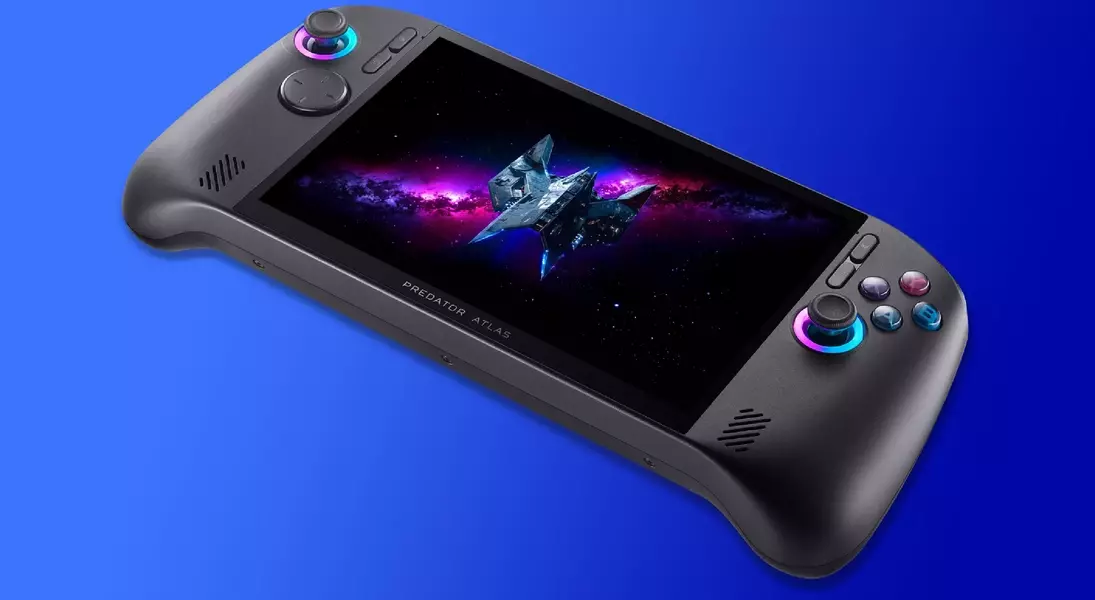
A few months ago, Intel introduced its new Arc G3 and G3 Extreme chips specifically designed for portable gaming computers. This announcement generated considerable excitement, as the market for these devices had long relied on similar internal components. However, I voiced concerns at the time that these new offerings might come with steep price tags, and unfortunately, the recent pricing revelation for Acer's Predator Atlas 8 handhelds confirms those predictions.
According to reports and confirmed details, the upcoming Acer Predator Atlas 8 handhelds, equipped with the latest Intel Panther Lake chips and set for an October release, will be priced between £1,000 and £1,500 in the UK. The base model, featuring a standard G3 chip, 16 GB of memory, and a 512 GB SSD, sits at the lower end of this spectrum. An additional £100 will upgrade the memory to 24 GB. Higher-tier models, including a G3 Extreme version with a 1 TB SSD and 24 GB of memory, will retail for £1,300, while opting for 32 GB of RAM pushes the price to the maximum of £1,500. When converted to US dollars, these prices approximate $1,300 to $2,000, underscoring their premium positioning. This pricing structure aligns with other high-end devices in the market, such as the MSI Claw 8 EX AI+ CG3EM, which also features a G3 Extreme chip and sells for around $1,800. While the G3 Extreme chip offers impressive performance, particularly at 1080p, these prices signify a significant shift in the portable gaming PC landscape.
What was once envisioned as a potential gateway into PC gaming is now evolving into an exclusive, high-end segment. Devices like the Asus ROG Xbox Ally X, initially considered pricey at $1,000, are now viewed as a more accessible option compared to the increasing cost of newer models. This trend suggests that the handheld gaming PC market is moving further into a luxury category, catering to a niche audience willing to invest in top-tier portable gaming experiences rather than serving as an entry point for a broader range of PC gamers.
The evolution of the handheld PC market towards a luxury segment highlights the constant innovation and progression in technology, pushing boundaries for performance and design. While these advanced devices offer unparalleled gaming experiences on the go, they also serve as a reminder that cutting-edge technology often comes at a premium. This trend encourages a deeper appreciation for both technological advancements and the diverse market that caters to varying needs and budgets within the gaming community.
