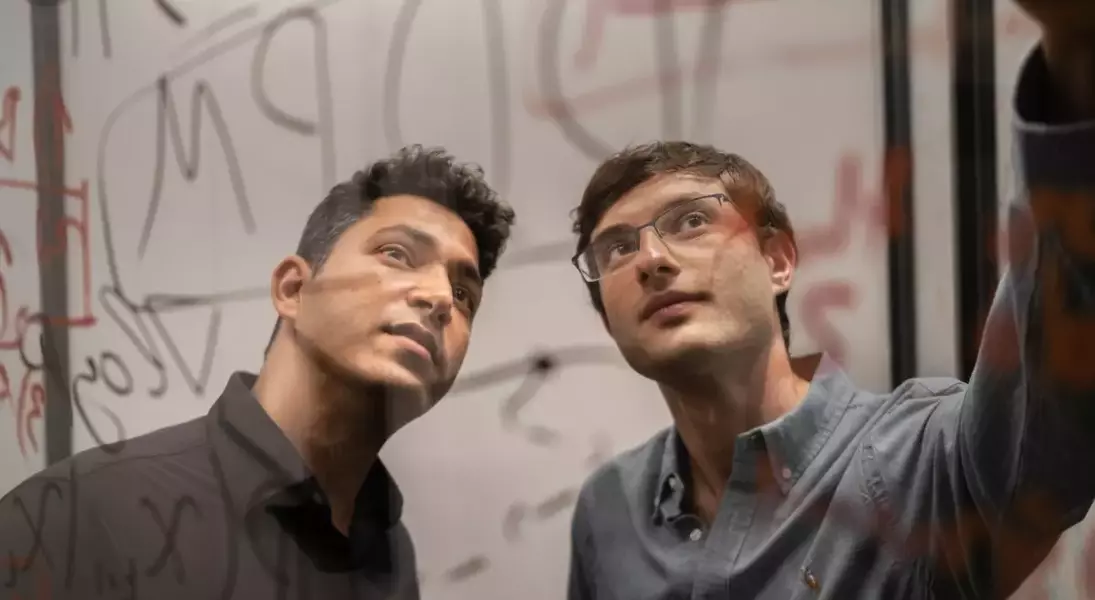
A young startup that emerged from stealth just a couple of months ago, backed by notable names and having grand aspirations, is once again in the spotlight. Decart, led by CEO and co-founder Dean Leitersdorf (pictured above, right), is constructing what he describes as a "fully vertically integrated AI research lab" along with enterprise and consumer products based on the lab's efforts.First Enterprise Product: Optimizing GPU Use
Its first enterprise product focuses on optimizing GPU use, and it has already started generating millions of dollars in revenue. This software helps reduce the operational costs associated with building or using artificial intelligence models. Leitersdorf humorously mentioned that workloads that usually cost $100 per hour can be brought down to a mere 25 cents per hour using their software. This innovation has definitely caught the attention of many companies.First Consumer Product: Oasis - The Playable AI Model
Decart's first consumer product is the playable "open world" AI model called Oasis, which was released when the company came out of stealth. It already claims to have "millions" of players. This Minecraft-like AI generates real-time, responsive audio and visual interactions. The plan is to launch more such experiences like an upgraded Oasis game and others powered by generative AI. It's interesting to note that with generative AI, they can potentially bring value even before the hardware is fully ready.Series A Funding and Post-Money Valuation
Based in San Francisco with operations in Israel, Decart has raised another $32 million in a Series A round led by Benchmark. This comes less than two months after it raised a seed round of $21 million from Sequoia and Zeev Ventures, with these two firms also participating in this latest round. TechCrunch understands that Decart's new post-money valuation is now over $500 million, which is a significant increase from the just over $100 million valuation in the seed round.Leitersdorf's Background and Journey
Leitersdorf, a youthful 26-year-old, is full of energy and moving quickly. Born in Israel, he spent his early years there before moving with his family to Switzerland and then Palo Alto following his parents' work (they are doctors and researchers). As a teen at Palo Alto High School, he managed to get his diploma in just two years and then went on to study computer science at the Technion in Israel. There, he completed his undergraduate, masters, and PhD in just five years, overlapping with his military service.His co-founder, Moshe Shalev (pictured above, left), has an impressive background as well. He came to computer science during his time in the IDF and showed a natural talent for it. He helped establish, build, and run AI operations for the IDF's 8200 intelligence unit for nearly 14 years. There is a third co-founder with an equally remarkable background, but his name is not being disclosed yet due to existing commitments.Decart's Focus Areas
Decart is currently concentrating on three main areas: systems (currently focusing on infrastructure optimization), models (AI algorithms), and data (applications that ingest and return data). The first product launched while in stealth this year is in the systems camp, helping optimize how GPU processes work during training and running inference workloads on AI models.Empowering Creativity and Reducing Costs
Victor Lazarte, a general partner at Benchmark who led the deal, stated that Decart's innovation makes AI generation not only more efficient but also more accessible for any type of user. By removing barriers to entry and significantly reducing costs, they are enabling a new wave of creativity and practical applications. This is another reason why venture capitalists are interested in the company.Current Business and Future Plans
Although the optimization product is currently driving the startup's bottom line, it is not the primary focus. Leitersdorf said they built it to finance the business during the stealth period based on research he did as a student. The company's second product is in line with its future goals. They aim to continue launching more experiences powered by generative AI and bring more value to users across the platform.The focus seems to be on getting more people interested in their work and turning that interest into revenue. Leitersdorf emphasized that the real king makers are the users as they are the ones that truly matter.TechCrunch has an AI-focused newsletter! Sign up here to get it in your inbox every Wednesday.