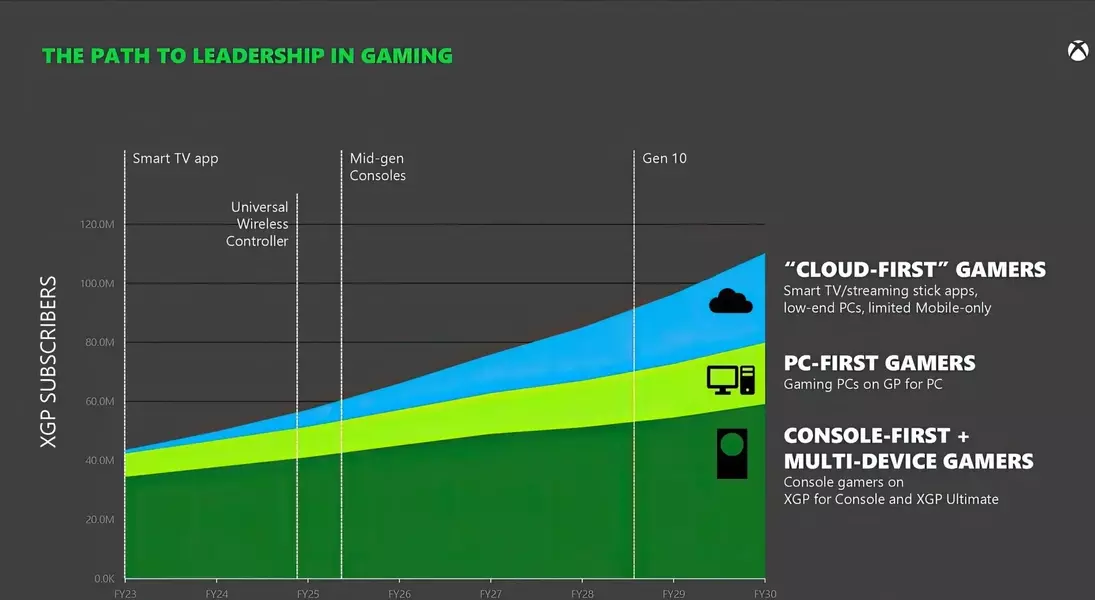
Xbox's gaming division appears to be struggling, marked by the recent announcement of 3,200 job cuts. A key factor in this downturn, as revealed by Xbox CEO Asha Sharma, is the slower-than-anticipated growth of Game Pass. The subscription service currently boasts 30 million subscribers, a figure significantly below the ambitious target of 77 million subscribers by July 2026 that was outlined during the Federal Trade Commission’s review of Microsoft’s acquisition of Activision Blizzard.
These numbers cast a shadow on earlier, more optimistic projections made by former Xbox CEO Phil Spencer. During the FTC investigation, Spencer had suggested that if Game Pass did not surpass 40 million console-only subscribers by fiscal year 2027, the company might consider exiting the gaming business entirely. While Spencer’s statements could have been strategic exaggerations to influence regulatory decisions, the current subscriber count indicates that Game Pass is indeed far from its envisioned success. This struggle is further compounded by the fact that Microsoft has not released updated Game Pass subscriber figures since February 2024, when the service reported 34 million users, a decline attributed to price increases in October 2025.
Despite a recent statement from Sharma in June indicating renewed growth after months of decline, Game Pass still has a considerable journey ahead to meet the high expectations set by Xbox executives. The challenges faced by the service, including slower growth and a struggle to regain lost users, highlight the intensely competitive and dynamic nature of the gaming industry. Moving forward, a revised strategy focused on innovation and subscriber retention will be crucial for Xbox to solidify its position and achieve its long-term goals in the global gaming market.
In the evolving landscape of digital entertainment, companies must continuously adapt and innovate. The struggles faced by Xbox Game Pass underscore the importance of realistic projections, sustained growth, and a clear vision for success. This period of reflection and restructuring provides an opportunity for Xbox to redefine its approach, learn from past challenges, and forge a path toward a more resilient and prosperous future in the gaming industry.
