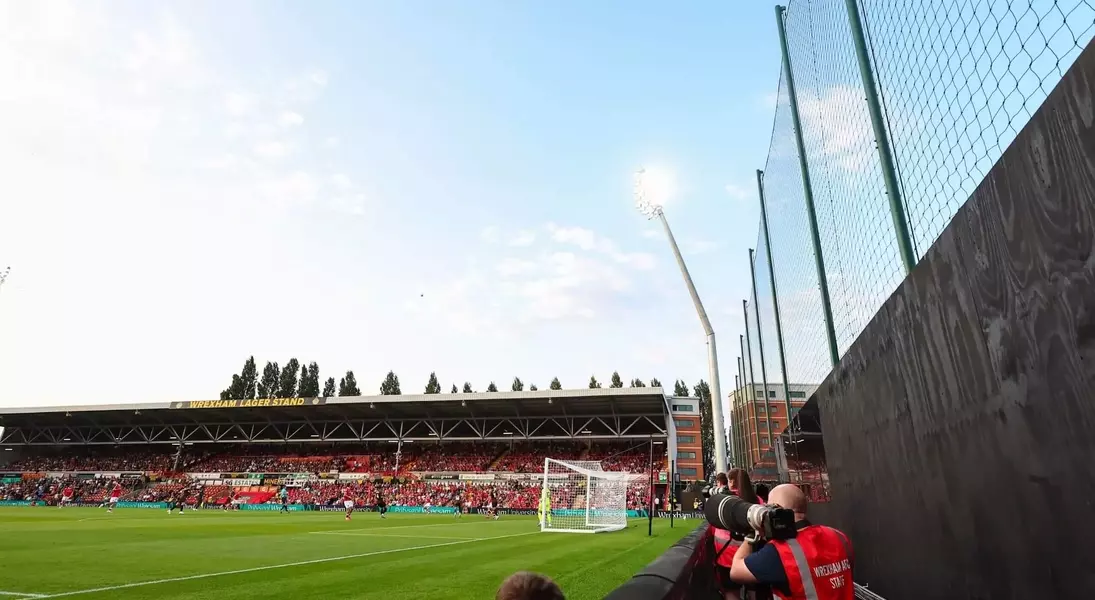
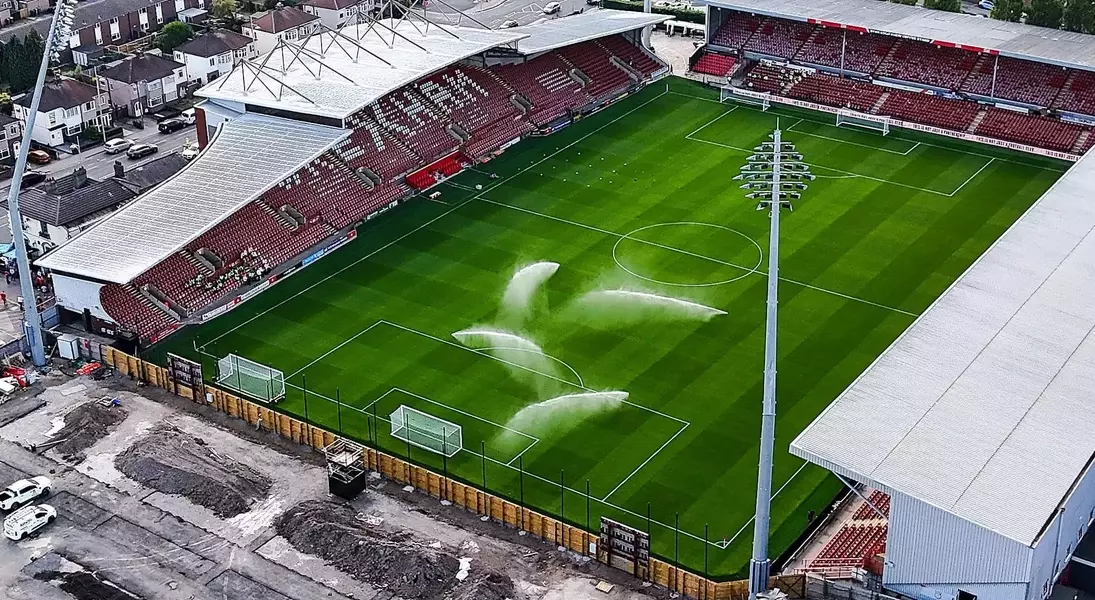

The venerable home of Wrexham Football Club, the SToK Cae Ras, has recently undergone a sweeping transformation. This ambitious refurbishment project, completed in a tight 100-day window, marks a pivotal moment for the historic stadium, enhancing its facilities to meet modern footballing demands. The extensive upgrades demonstrate the club's commitment to continuous improvement, both on and off the field, as they ascend through the league ranks.
Detailed Improvements at the Racecourse Ground
In a remarkable feat of planning and execution, Wrexham’s cherished SToK Cae Ras stadium, the world's oldest international football ground, has been meticulously revamped. This summer, under the strategic guidance of Aidan Miller, the club's strategy and projects director, the stadium witnessed a comprehensive overhaul aimed at propelling it into the contemporary era of sports venues. The jewel in the crown of this revitalization is a state-of-the-art playing surface. A substantial £1.7 million investment has yielded a lush, new pitch, fortified with advanced undersoil heating and an improved drainage system, ensuring optimal playing conditions regardless of the weather.
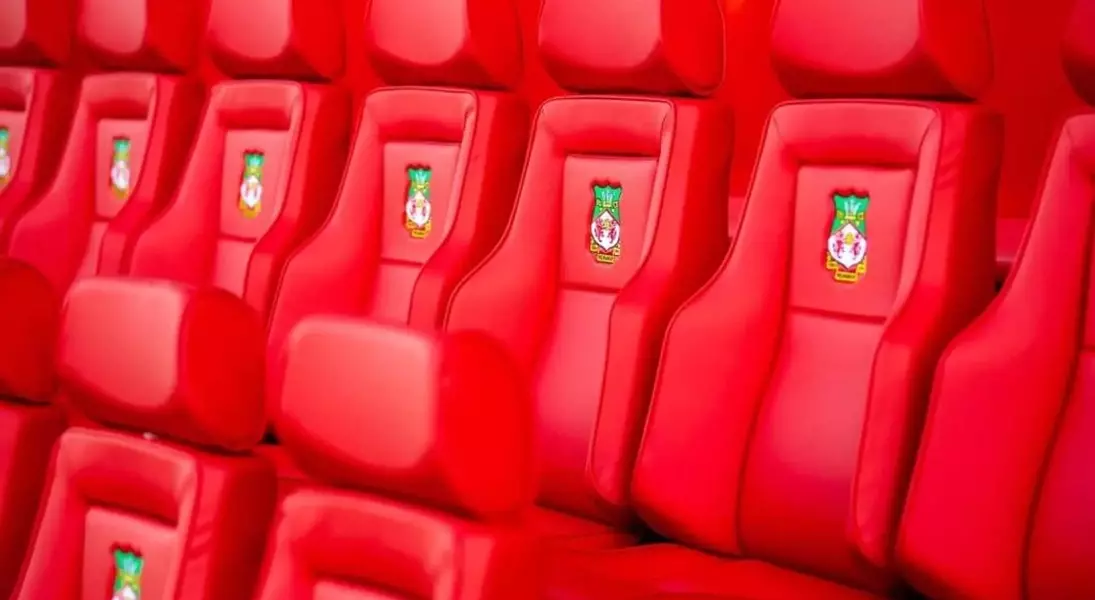
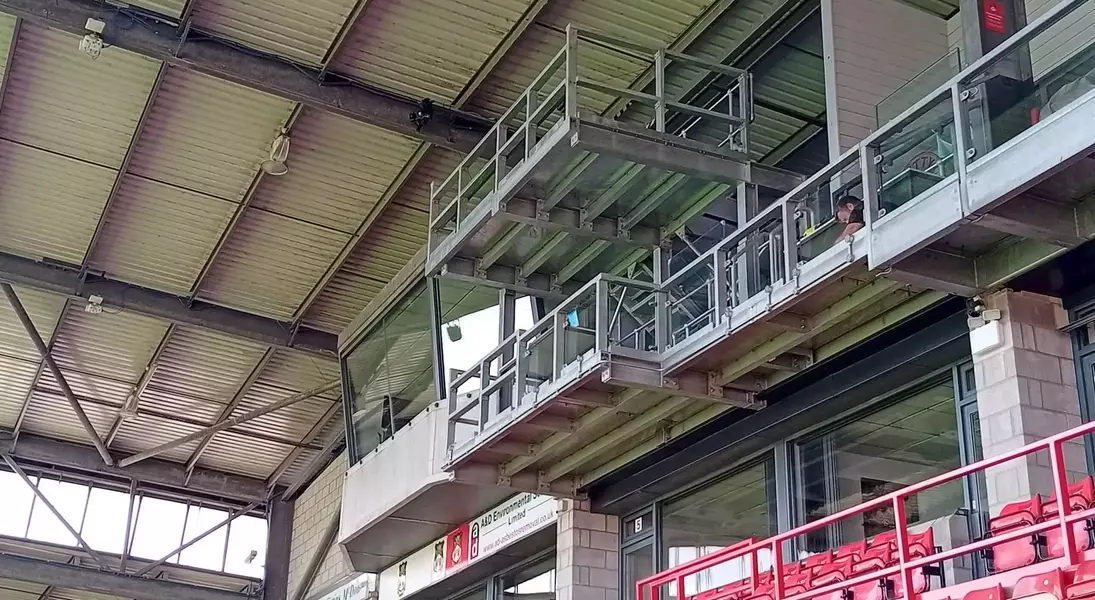
Beyond the pristine turf, a multitude of changes have reshaped the stadium's infrastructure. Both team dugouts have been strategically relocated to the opposite side of the pitch, now featuring heated seating to provide enhanced comfort for coaching staff and substitutes in colder conditions. This relocation has also freed up space, allowing for the conversion of the old dugout areas into additional fan seating. Furthermore, a brand-new two-level television gantry has been constructed, alongside a second gantry on the opposing side, ensuring compliance with UEFA and top-tier league standards for camera positions. The old scoreboard has been removed, replaced by two towering new TV screens at one end, enhancing the spectator experience. The stands have been reconfigured to accommodate an additional 224 seats in the Tech End, improving sightlines for fans. Crucially, goal-line technology has been integrated, bringing the stadium's officiating capabilities up to current professional league requirements. Preparatory work has also been diligently carried out for the highly anticipated 7,500-capacity Kop stand, which is slated to begin construction in the autumn and is expected to be ready for the UEFA Under-19 Championship in June 2026. This comprehensive renovation, spanning a mere 100 days between the club's promotion celebration and the recent Carabao Cup tie against Hull City on August 13th, 2025, underscores a monumental effort. The team, including contractors Cleveland Land Services (CLS), worked tirelessly, overcoming logistical challenges such as the deactivation of a live electrical cable beneath the old Kop to facilitate future development. Aidan Miller, who joined Wrexham in early 2025 after extensive experience with Everton’s new stadium project, emphasized the meticulous planning required, likening the process to building a house where each phase must be perfectly synchronized. This extensive project signals Wrexham's ambition to match its on-field success with world-class facilities, transforming the Racecourse Ground into what Miller proudly describes as feeling like a "Championship ground."
The impressive modernization of the Racecourse Ground offers a compelling narrative of ambition and strategic foresight. It highlights how sporting success, particularly Wrexham's recent ascent, necessitates a corresponding elevation in infrastructure. This transformation serves as a blueprint for other clubs striving to blend rich history with contemporary demands, proving that meticulous planning and dedicated execution can achieve remarkable results in a short timeframe. It's a clear statement that Wrexham is not just building a team, but a sustainable, forward-looking institution ready for bigger challenges and a global audience.
