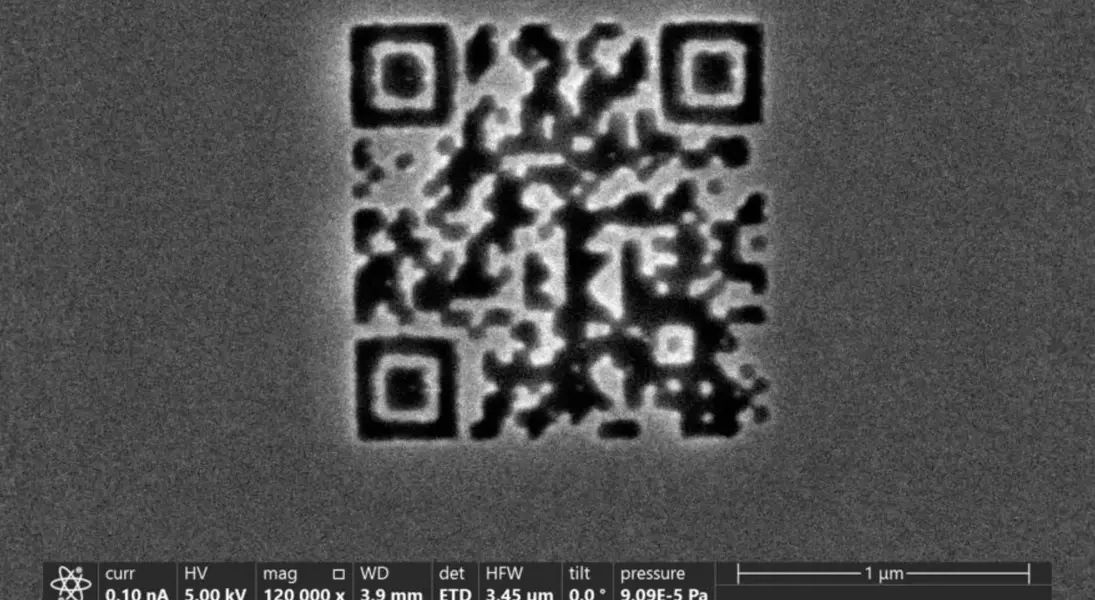
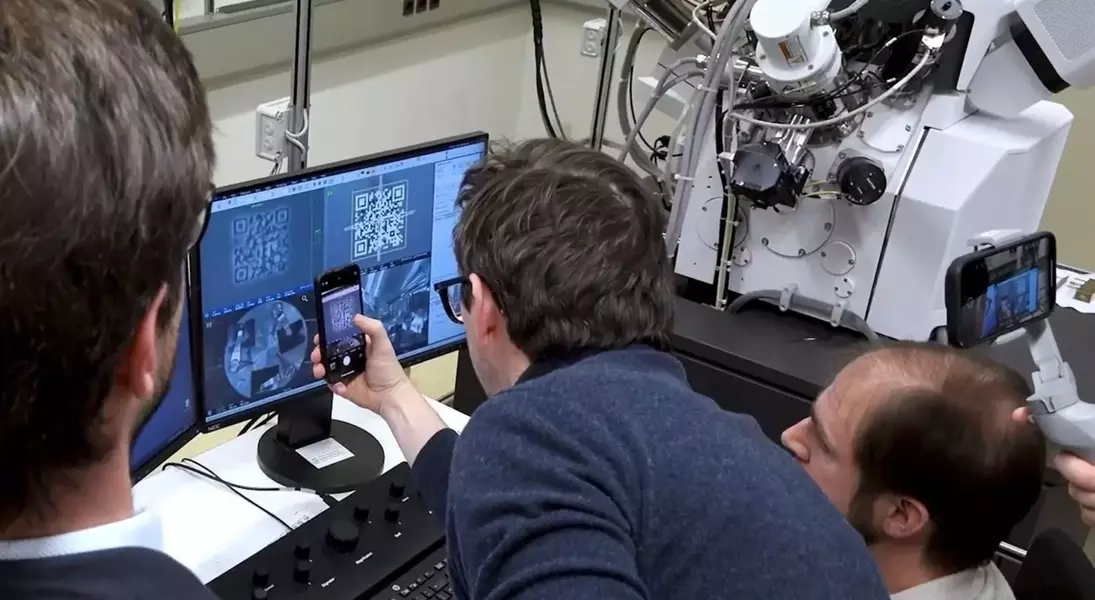
A breakthrough in miniature technology has been announced by scientists at TU Wien in Vienna, Austria, who have successfully engineered the world's smallest QR code. This microscopic marvel spans an area of just 1.98 square micrometers, making it smaller than the majority of bacteria. This achievement, recently recognized by Guinness World Records, was detailed in a blog post by TU Wien.
The creation process involved etching the QR code onto a ceramic film, with each pixel meticulously crafted to a size of only 49 nanometers. This collaboration with Cerabyte, a company specializing in ceramic-based data storage solutions, pushes the boundaries of information encoding. Given its extraordinary dimensions, which are approximately ten times smaller than the wavelength of visible light, the QR code is imperceptible to the unaided human eye and can only be observed and scanned using an electron microscope.
Dr. Alexander Kirnbaure from TU Wien's Thin Film Materials Science Division emphasized the long-term implications of this technology, noting that ceramic storage media offer exceptional stability and longevity. He drew parallels to ancient inscriptions that have endured through millennia, suggesting that this method could preserve data for future generations without requiring constant energy input or cooling, thus contributing to reduced global CO2 emissions. While current mobile phone technology is not equipped to scan such minute codes, this development paves the way for remarkably durable and efficient data storage advancements.
This pioneering research underscores humanity's relentless pursuit of innovation, demonstrating how ingenuity can overcome seemingly insurmountable physical barriers. By miniaturizing data storage to an unprecedented scale, scientists are not only setting new benchmarks in technology but also ensuring the enduring legacy of information for generations to come, fostering a future where knowledge is preserved efficiently and sustainably.
