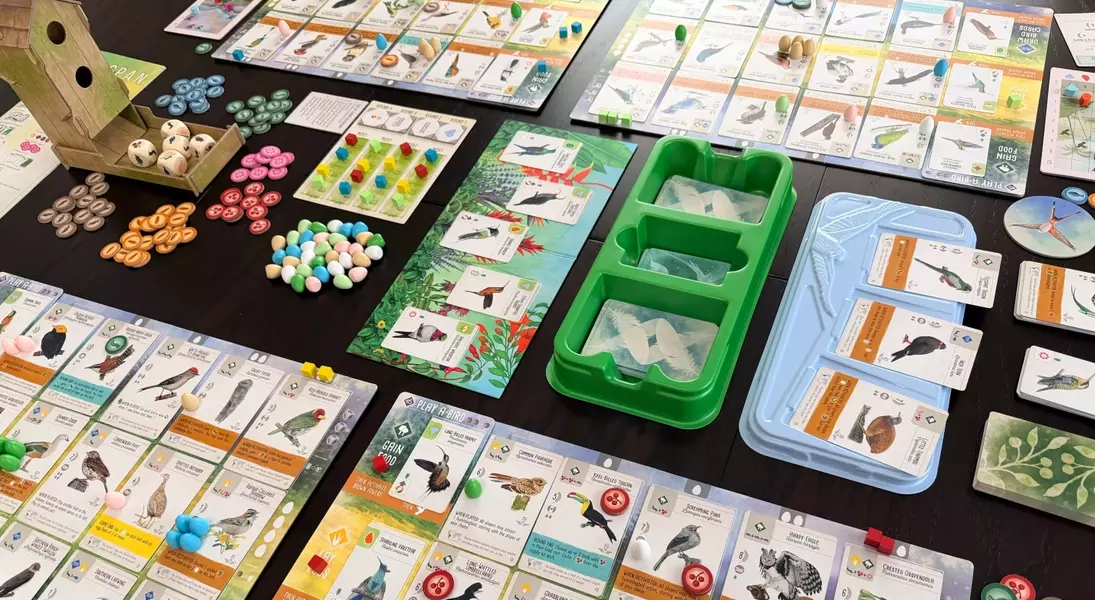
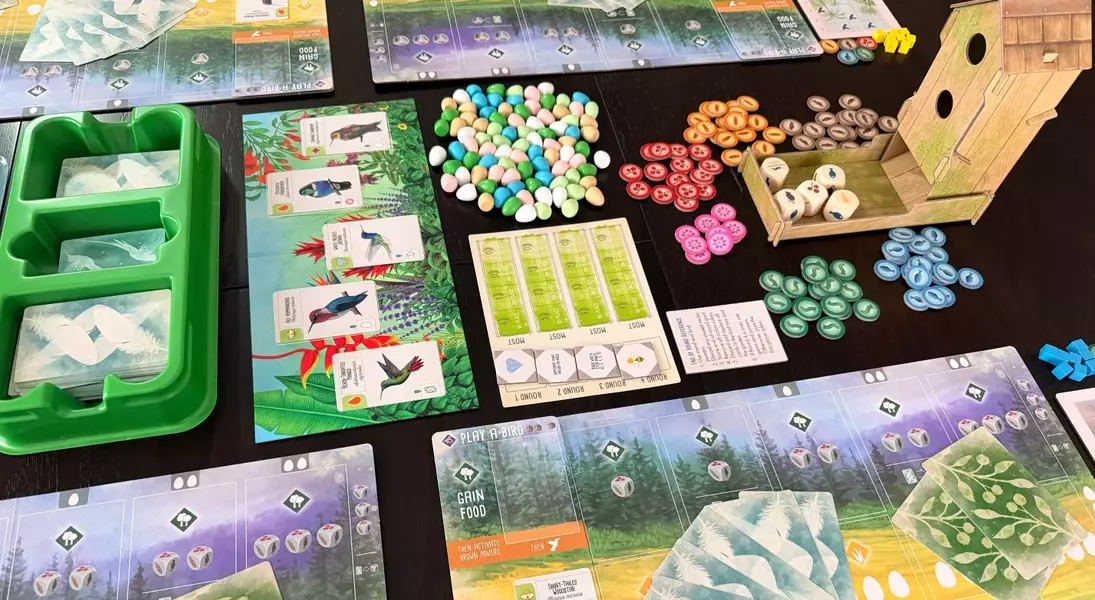
"Wingspan," Elizabeth Hargrave's acclaimed board game, has captivated enthusiasts with its intricate gameplay centered on bird collection and habitat building. Its latest expansion, "Wingspan Americas," not only broadens the avian roster with 111 new species from Mexico, Central America, South America, and the Caribbean but also introduces innovative mechanics, most notably the dynamic hummingbirds. This expansion enriches the strategic landscape, offering players more complex choices and a more interactive experience, making each game unique and engaging, particularly during spring when birdwatching enthusiasm is high.
The core of "Wingspan" involves players assuming the role of ornithologists, dedicated to cultivating a vibrant wildlife sanctuary. Actions include acquiring food, drawing bird cards, deploying these cards into designated habitats, and laying eggs to score points. The game operates as an 'engine-building' system, where initial turns are straightforward but evolve into more intricate sequences as additional birds are introduced, amplifying the impact of subsequent actions. This design allows for the construction of elaborate combos.
Birds are strategically placed in three distinct habitats, each linked to specific game actions. Some birds offer immediate benefits, like drawing additional cards, while others contribute significantly to end-game scoring without active abilities. Critical to success are birds with activated abilities, which can trigger during a player's turn or in response to an opponent's action, providing extra resources or scoring opportunities. For example, a basic 'gather food' action might net a single food token. However, placing a blue-gray gnatcatcher in the forest habitat, with its ability to gain an invertebrate food token, provides this bonus every time the 'gather food' action is taken. Mastering the placement of various bird types across habitats is crucial for optimizing actions and maximizing efficiency.
"Wingspan" is known for its accessibility, despite the growing complexity as more cards enter play. The gameplay is profoundly gratifying, encouraging players to develop unique strategies while remaining attuned to competitors' moves to leverage triggered actions and manage resource contention. Each round presents a distinct scoring objective that influences strategy and competitive dynamics. Additionally, every player holds a secret bonus objective that can yield substantial points at the game's conclusion. An educational element is also present, as each bird card features a beautiful illustration and an interesting fact about the species.
The game's popularity has led to several expansions, including "Wingspan European" and "Wingspan Oceania," which introduced new species and unique mechanics. "Wingspan Asia" expanded player count options, allowing for one to seven players. "Wingspan Americas" further refines the experience, particularly by adding depth to the game's initial, simpler turns through its hummingbird mechanic.
The "Americas" expansion introduces 111 new bird species, ensuring considerable variety in gameplay. Its most significant innovation is the introduction of hummingbirds, governed by their own rules and board. Unlike other birds that remain in a player's preserve, hummingbirds move dynamically between player boards and a central hummingbird garden, making the game flow more fluidly. Whenever a player executes an action to draw cards, gather food, or lay eggs, a corresponding hummingbird action is also triggered in the relevant habitat. Incoming hummingbirds might provide resources such as an extra egg or card, while departing ones allow players to advance on a special hummingbird track, potentially earning more points by the game's end. Progressing on these tracks can also grant additional hummingbird actions, further aiding resource accumulation and point scoring. This additional layer accelerates the game's engine, offering even struggling players a boost.
The "Americas" expansion also increases player interaction. The movement of hummingbirds across boards necessitates careful observation of which birds are entering or leaving the garden, as this could benefit or hinder players and their opponents. The activation of hummingbirds can extend turn times, a point acknowledged in the rulebook, which suggests that larger groups might reduce the number of actions per player to prevent excessively long game sessions. Despite the potential for longer playtimes, the "Americas" expansion integrates new rules seamlessly without overwhelming players with excessive complexity, enriching the overall "Wingspan" experience for both new and veteran players alike.
