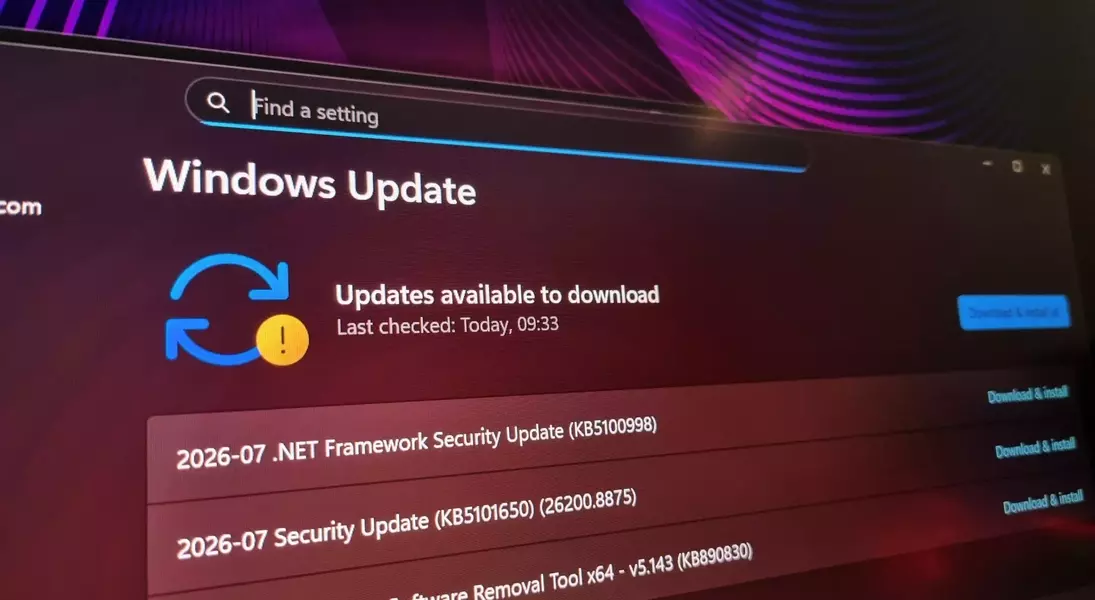
A recent Windows 11 software update, identified as KB5101650, is reportedly causing display anomalies for certain users. This particular update is notable for leveraging artificial intelligence in its vulnerability detection process, leading to an unprecedented 570 security patches. However, despite the comprehensive fixes, some individuals are experiencing adverse effects on their monitor functionality.
The author of this piece encountered firsthand issues with their 400 Hz monitor following the update's installation. At its native refresh rate, the display frequently flickered and temporarily lost signal. While lowering the refresh rate mitigated the problem to some extent, it did not eliminate it entirely, with stable operation only achieved at 240 Hz. This personal experience is echoed by various discussions on online forums, where other users, especially those with AMD graphics hardware, report similar graphical disruptions. Microsoft has acknowledged certain compatibility conflicts with specific Dell computer models, which could lead to performance degradation, increased power consumption, or general system instability, and has temporarily halted the update's rollout for these devices.
As of now, official statements from Microsoft or AMD directly addressing these widespread display issues are pending. The author emphasizes the inconvenience of being compelled to operate hardware at reduced capabilities due to a system update, underscoring the need for a prompt resolution. Whether these problems stem from a flaw in the AI-driven bug detection process or an oversight in the deployment of numerous patches, a timely fix is crucial for maintaining user satisfaction and system integrity.
This situation highlights the ongoing challenge of software development and deployment in an increasingly complex technological landscape. While advancements like AI-assisted bug detection promise greater security and stability, they also introduce new avenues for unexpected complications. It serves as a reminder that robust testing and user feedback mechanisms are essential to ensure that progress in one area does not inadvertently create setbacks in another.
