
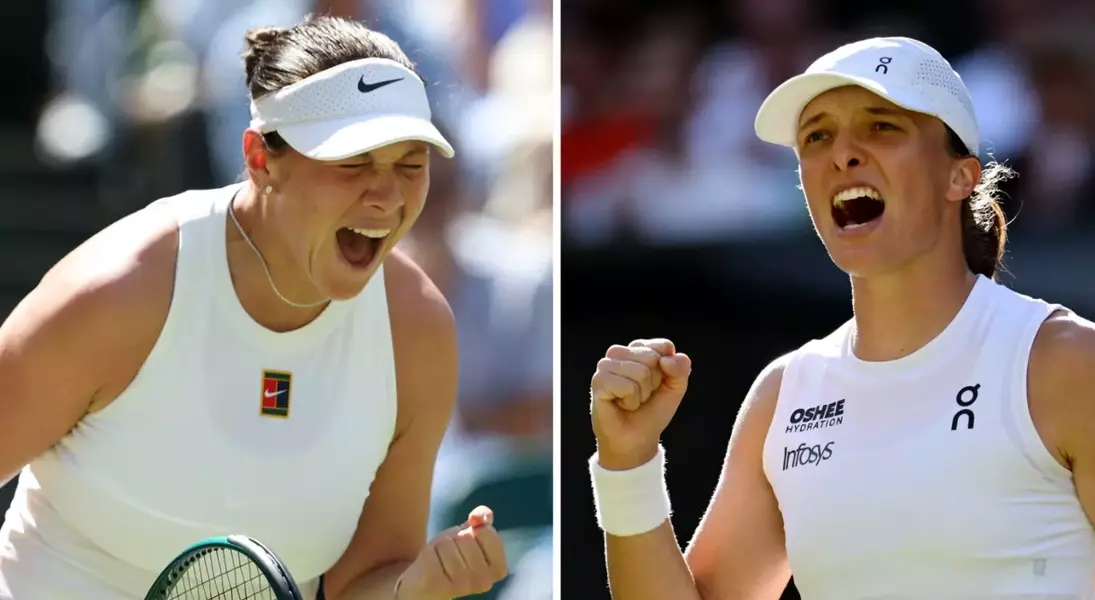
The much-anticipated Wimbledon women's final features a compelling matchup between two athletes with distinct narratives and playing styles. Iga Swiatek, a five-time Grand Slam champion, despite her decorated career, has often found grass courts to be a challenging surface. In stark contrast, Amanda Anisimova, once a teenage sensation, is now realizing her immense potential after bravely stepping away from the sport to prioritize her mental well-being. Both players are making their debut in a Wimbledon final, setting the stage for a historic showdown where their unique journeys will intertwine on court.
A critical factor determining the outcome will be each player's ability to navigate the immense pressure of a Grand Slam final. Anisimova, despite showing visible signs of nerves in earlier rounds, managed to compose herself as matches progressed. This suggests a growing resilience that could prove vital. Swiatek, with her extensive experience in major finals and a history as a former world number one, possesses a clear psychological advantage in managing high-stakes environments. However, Anisimova, entering the final as the underdog, has the luxury of playing without the weight of expectation. This freedom might allow her to unleash her naturally aggressive game, while Swiatek, as the higher-ranked player, may feel increased pressure to perform. The adaptability to grass courts, known for their quick transitions, will also be crucial. Both players have strategically participated in pre-Wimbledon grass-court tournaments, gaining valuable experience and fine-tuning their game for this specific surface, which can be a game-changer given the short grass-court season.
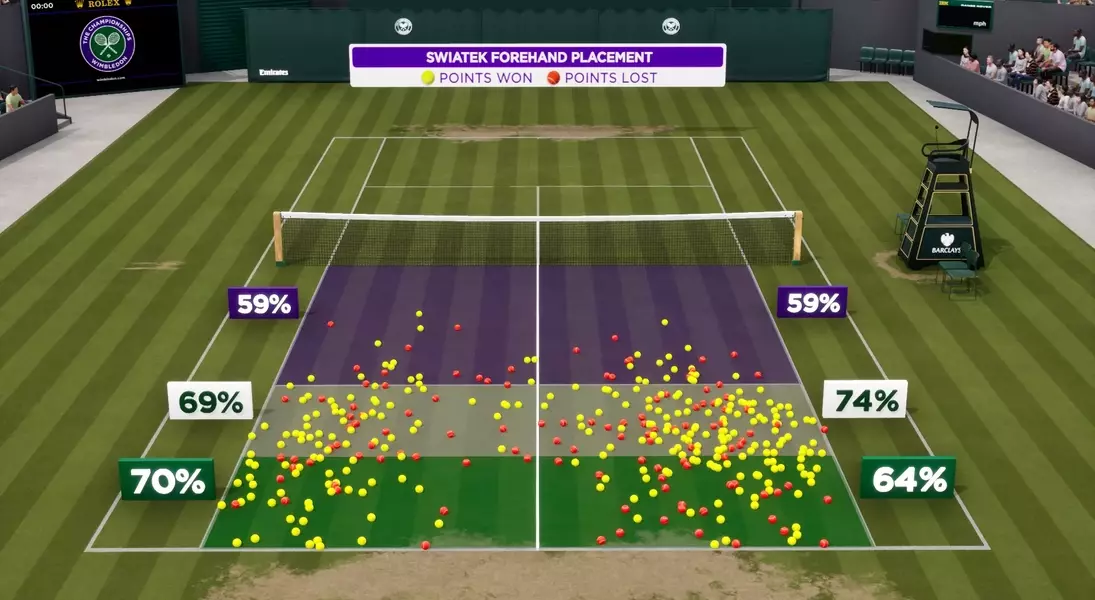
Tactically, the match is poised to be a fascinating strategic battle: Anisimova's potent backhand against Swiatek's formidable forehand. Anisimova's strategy will likely center on asserting control early in rallies with her powerful groundstrokes, aiming to dictate play from the outset. Her tall stature allows her to strike the ball with significant downward force, a tactic that proved effective against her semi-final opponent. Swiatek, on the other hand, excels with her heavy topspin forehand, a shot that has been instrumental in her success on clay and which she has adapted for grass by adjusting her court positioning. The success of each player will hinge on who can more effectively execute their primary weapon and strategically exploit their opponent's weaker wing. The contest promises to be a strategic chess match, with each point reflecting a careful balance of aggression and precision.
Ultimately, this Wimbledon final is more than just a tennis match; it's a testament to perseverance, mental fortitude, and the relentless pursuit of excellence. Regardless of who lifts the trophy, both Swiatek and Anisimova have demonstrated remarkable dedication and growth, inspiring countless individuals through their respective paths to the sport's pinnacle. Their commitment to their craft and ability to overcome personal and professional hurdles serve as a powerful reminder that true success is found not only in victory, but also in the courage to compete at one's highest level, driven by passion and integrity.
