Welcome to TechCrunch's in-depth exploration of the ever-evolving world of AI. In this regular newsletter, we bring you the latest news, research, and developments from the forefront of artificial intelligence. Stay tuned as we dive into the exciting advancements and challenges in the AI landscape.
Unveiling the Truths and Trials of AI
OpenAI's Advanced Voice Mode with Vision
Last week, OpenAI made a significant leap with the launch of Advanced Voice Mode with Vision. This innovative feature feeds real-time video to ChatGPT, granting it a new level of contextual awareness. Imagine being able to have a chatbot that "sees" beyond the confines of its app layer! It was pitched as a step towards AI as depicted in the Spike Jonze movie "Her," with promises of superpowers like solving sketched-out math problems and reading emotions. However, during my first try, it lied to me. When I held up my phone and asked it to describe our living room, it mistook the ottoman for a couch. But when corrected, it gracefully admitted its mistake and still maintained a positive tone. It's been nearly a year since this feature was first demoed, and while it has achieved some remarkable things, it hasn't solved ChatGPT's biggest issue - reliability. In fact, it seems to make the bot's hallucinations more obvious. At one point, I enabled it to offer fashion pointers and it rated my outfit, but consistently missed my brown jacket. This isn't an isolated incident; even OpenAI's president Greg Brockman faced a mistake on "60 Minutes" when calculating the area of a triangle. So, the question remains: what good is "Her"-like AI if you can't trust it?OpenAI's 12 Days of "Shipmas"
OpenAI's 12 days of "shipmas" is in full swing! They are releasing new products every day until December 20. It's an exciting time as we keep a close eye on all the announcements and updates. This continuous flow of innovation shows OpenAI's commitment to pushing the boundaries of AI.YouTube's Creator Choices
YouTube is giving creators more control over how their content is used to train AI models. Creators and rights holders can now flag for YouTube if they permit specific companies to train models on their clips. This gives them the power to decide who can access and use their content, ensuring their rights are protected.Meta's Smart Glasses Upgrades
Meta's Ray-Ban Meta smart glasses have received several exciting AI-powered updates. Now, users can have an ongoing conversation with Meta's AI and even translate between languages. These upgrades enhance the user experience and open up new possibilities for using smart glasses in our daily lives.DeepMind's Video-Generation Challenge
Google DeepMind, the flagship AI research lab, is determined to beat OpenAI in the video-generation game. On Monday, they announced Veo 2, a next-gen video-generating AI that can create two-minute-plus clips in resolutions up to 4k. This is a significant step forward in video generation and shows DeepMind's ambition in the AI space.OpenAI Whistleblower's Fate
A former OpenAI employee, Suchir Balaji, was recently found dead in his San Francisco apartment. In October, he raised concerns about OpenAI breaking copyright law during an interview with The New York Times. This incident has raised questions about the ethical and legal aspects of AI development.Grammarly's Acquisition of Coda
Grammarly, renowned for its style and spell-check tools, has acquired productivity startup Coda. Shishir Mehrotra, Coda's CEO and co-founder, will now take on the role of the new CEO of Grammarly. This merger brings together two powerful forces in the digital space and promises to bring new features and improvements to users.Cohere's Partnership with Palantir
TechCrunch exclusively reported that Cohere, the enterprise-focused AI startup valued at $5.5 billion, has partnered with data analytics firm Palantir. Palantir's work with U.S. defense and intelligence agencies has always been a topic of discussion, and this partnership adds another layer to the AI landscape.Anthropic's Clio System
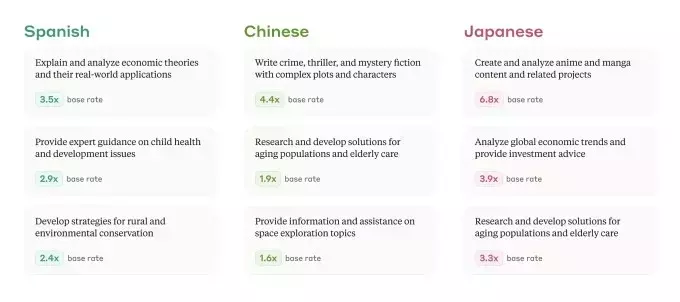
Anthropic has revealed Clio ("Claude insights and observations"), a system that helps them understand how customers are using their AI models. Clio is compared to analytics tools like Google Trends and provides valuable insights for improving the safety of Anthropic's AI. By compiling anonymized usage data, Anthropic is able to gain a deeper understanding of user behavior and make informed decisions to enhance their AI.AI Startup Pika's Next-Gen Model
AI startup Pika released its next-gen video generation model, Pika 2. This model allows users to create clips by supplying a character, object, and location. Users can upload multiple references, and Pika 2 will "intuit" the role of each reference before combining them into a single scene. While the model is impressive, it's not perfect. As seen in the anime created by Pika 2, there is still some aesthetic weirdness present in generative AI footage. But the tools are rapidly improving, and this is just the beginning.The Future of Life Institute's AI Safety Index
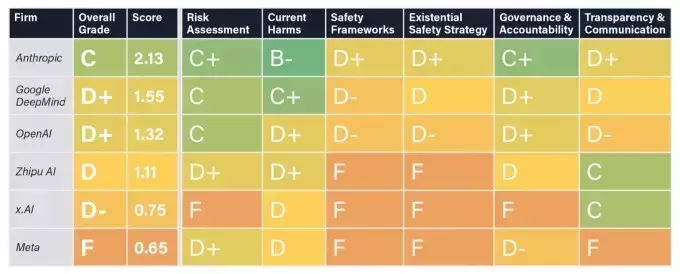
The Future of Life Institute released an "AI Safety Index" to evaluate the safety practices of leading AI companies. Meta scored the worst with an overall F grade, while Anthropic managed a C. This highlights the need for continuous improvement in AI safety and governance.