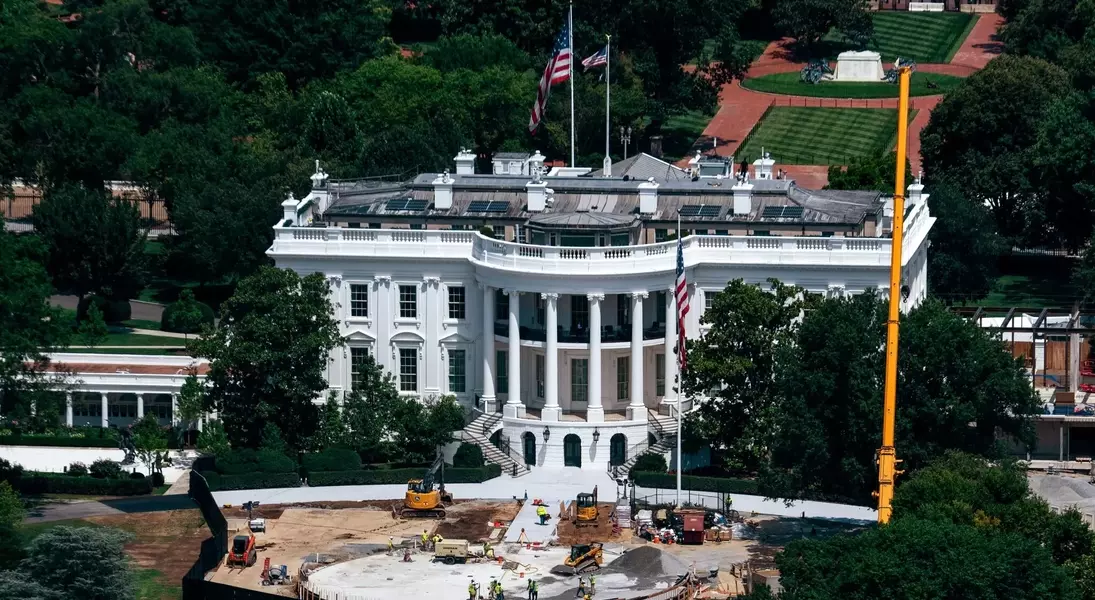
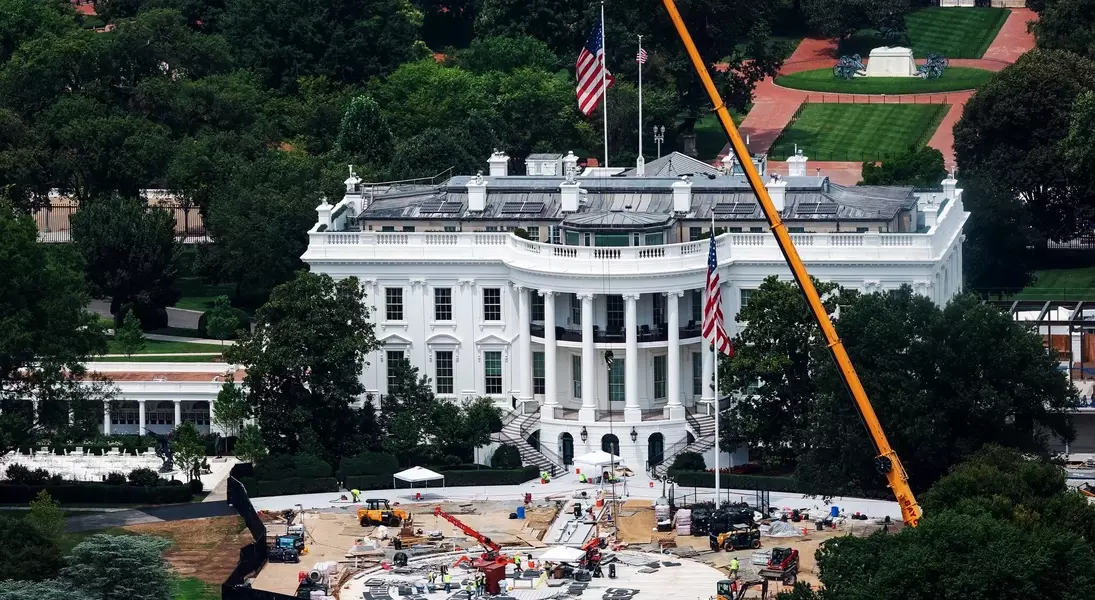
A recent construction endeavor at the White House, involving a new helipad, has reportedly faced a significant setback. Initiated in June, the project saw the development of a 100-foot-diameter circular pad on the South Lawn, with workers diligently applying the presidential seal's granite lettering. However, the anticipated completion took an unforeseen turn when elements of the seal began to disappear, leading to the full removal of the granite insignia by Tuesday, leaving behind a bare concrete surface.
Reports suggest that this reversal was a direct consequence of former President Trump's dissatisfaction with the helipad's design, particularly its noticeable slope, which mirrored the natural gradient of the South Lawn. Despite the considerable effort and time invested in the construction, the project was ordered to be redone. A White House spokesperson refrained from providing specific details regarding the changes or the reasons behind the removal of the lettering, adding to the mystery surrounding the project's sudden halt and redesign.
This helipad, proposed to accommodate a new generation of Marine One helicopters whose hot exhaust could damage the lawn, was announced as a necessary 'operational upgrade' by the White House. Funded by Lockheed Martin as a donation, with an estimated cost between $5 million and $6 million, the project proceeded without seeking external approval from Congress or architectural review panels, citing its operational nature. The unexpected redesign, however, underscores the complexities and potential inefficiencies in large-scale infrastructure projects, especially those under public scrutiny. It highlights the importance of thorough planning and communication to avoid costly revisions and ensure that public resources, whether donated or allocated, are utilized effectively towards their intended purpose.
