
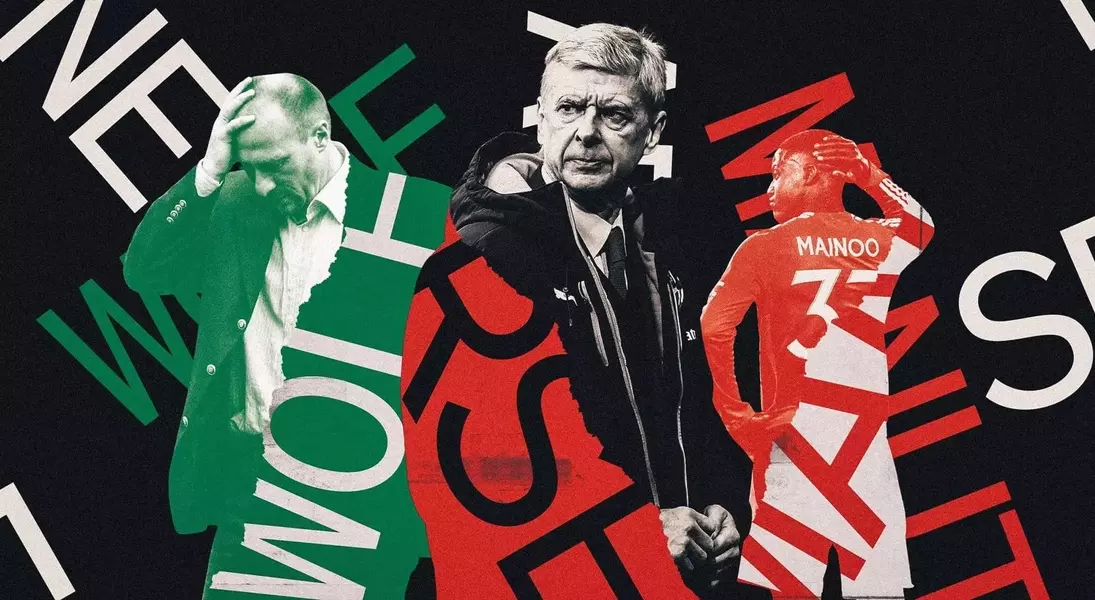

In the expansive world of football, an amusing and often uncanny pattern emerges: the curious alignment between individuals' names and their professional trajectories. This phenomenon, often termed nominative determinism, suggests that a person's name might subtly, or not so subtly, influence their chosen path. This exploration delves into various instances across football history where players and managers seem to have been drawn to clubs or roles that resonate with their surnames, creating a tapestry of coincidences and ironic twists that add a unique flavor to the sport's narrative. From the iconic figures to the lesser-known names, the narrative unfolds how sometimes, a name isn't just a label but a harbinger of a footballing fate.
The concept of nominative determinism finds fertile ground in football, offering numerous compelling examples. Consider the case of James Trafford, a goalkeeper whose recent move to Manchester City, a club intrinsically linked to the Trafford area, including the famous Old Trafford stadium (home to City's arch-rivals), epitomizes this quirky coincidence. Although Trafford will not play for Manchester United, the irony of his surname's association with significant Manchester landmarks and rival grounds is notable. This situation mirrors other instances, such as Gerard Pique Bernabeu, a Barcelona legend whose full name includes 'Bernabeu,' the name of Real Madrid's stadium. Despite his strong family ties to Barcelona, the name linkage provides an amusing, albeit coincidental, juxtaposition for one of Real Madrid's fiercest adversaries.
Another striking example is Arsene Wenger's legendary tenure at Arsenal. The club's vice-chairman, David Dein, famously felt a sense of destiny when he first met Wenger, believing that a man named 'Arsene' was fated to manage 'Arsenal.' This intuition proved remarkably accurate, as Wenger led the club to an era of significant success, including multiple Premier League titles and FA Cups. Such instances are not limited to players or high-profile managers; for example, Wolfgang Wolf managed Wolfsburg, a perfectly matched scenario. Similarly, John de Wolf played for Wolves, and David Moller Wolfe recently joined the club, highlighting a recurring theme of players with 'wolf' in their names gravitating towards the team. These anecdotal links, while not scientifically proven, undeniably add a layer of intriguing narrative to the sport.
Beyond club affiliations, names have also seemingly influenced player positions or characteristics. Mark De Man, a Belgian player, almost exclusively played in defense, living up to his name. John Utaka, whose surname phonetically suggests 'attack,' excelled as an attacker for Portsmouth, even contributing to an FA Cup victory. While not all names directly correlate with destiny—Gareth Barry never played for Barry Town, for instance—the recurring patterns are too frequent to ignore. Even Mat Sadler found his home at Walsall, affectionately known as 'the Saddlers,' where he played and now manages, perfectly aligning his name with the club's identity. These delightful coincidences enrich the lore of football, reminding us that sometimes, life imitates art, or in this case, names predict careers.
The numerous examples within football suggest a playful, yet undeniable, connection between names and individual fates. From goalkeepers joining clubs associated with their surnames to managers finding their perfect match in identically named teams, the concept of nominative determinism adds a fascinating dimension to the sport. These instances, whether purely coincidental or subtly influential, continue to captivate fans and observers alike, underscoring the rich tapestry of stories that make football endlessly engaging.
