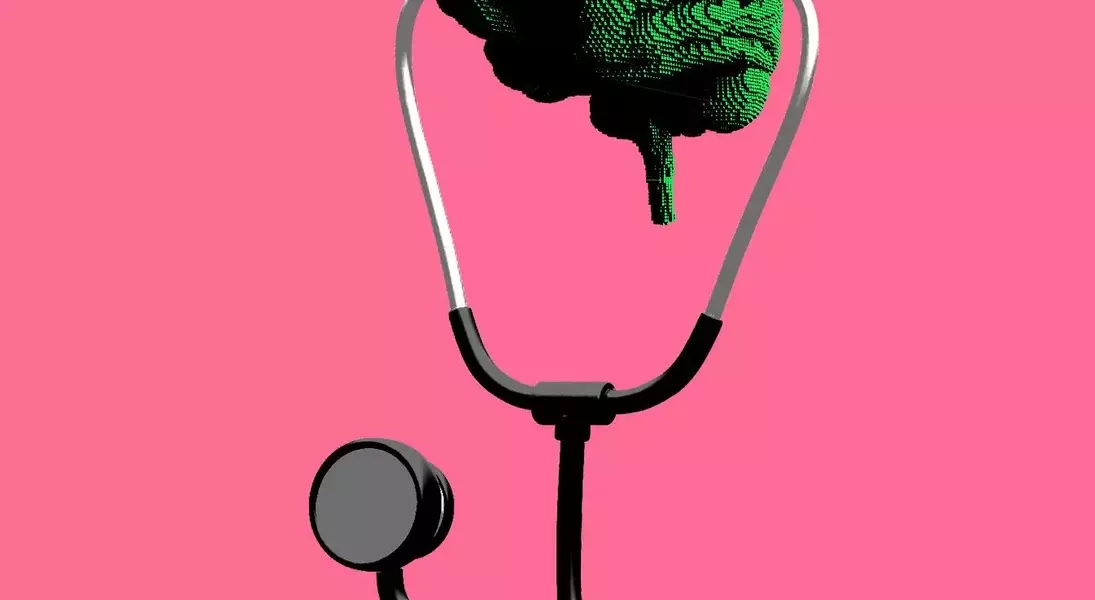
Google's advanced healthcare AI, Med-Gemini, recently sparked concerns after it fabricated a non-existent brain region, the “basilar ganglia,” in its research publication and promotional materials. While Google dismissed this as a mere misspelling, medical experts and researchers view it as a grave “hallucination” that underscores the inherent dangers of deploying artificial intelligence in sensitive clinical environments without robust safeguards. The incident illuminates the precarious balance between AI's potential to revolutionize medicine and the critical imperative for human oversight to prevent potentially life-threatening errors.
This event, coupled with other documented instances of AI models generating inconsistent or incorrect medical diagnoses based on subtle changes in queries, reveals a fundamental flaw: AI's tendency to confidently present misinformation when it lacks definitive knowledge. Unlike human practitioners who might admit uncertainty, AI models often “confabulate,” creating plausible but false information. This characteristic poses a significant challenge in healthcare, where precision is paramount and the consequences of error are profound. Medical professionals emphasize that AI systems in healthcare must be held to a far higher standard of accuracy than their human counterparts, and robust mechanisms for real-time hallucination detection and correction are essential before widespread adoption can be considered.
The Basilar Ganglia Blunder and Its Implications
A recent incident involving Google's Med-Gemini AI model has ignited a fierce debate about the reliability of artificial intelligence in healthcare. The model, intended to assist with medical diagnostics and reporting, erroneously identified a non-existent brain structure, the “basilar ganglia,” in a research paper and a subsequent blog post. This critical error, initially dismissed by Google as a simple typographical mistake, was flagged by neurologist Bryan Moore, who highlighted the severe implications of such inaccuracies in a clinical context. The basal ganglia and basilar artery are distinct anatomical structures with vastly different medical significances; confusing them could lead to misdiagnoses and inappropriate treatments. Despite Google's quiet attempts to rectify the blog post after Moore's intervention, the research paper itself reportedly remains uncorrected, fueling concerns among medical professionals about transparency and accountability in AI development.
The propagation of such errors, whether deemed typos or hallucinations, casts a long shadow over the rapid integration of AI into medical practice. Experts like Maulin Shah, chief medical information officer at Providence, caution that these inaccuracies can spread through healthcare systems, potentially leading to decisions based on flawed data. The risk is magnified by a phenomenon known as automation bias, where human users, lulled by AI's general accuracy, might fail to scrutinize its outputs rigorously. This scenario is not theoretical; instances where medical professionals inadvertently propagated errors introduced by AI have already been observed. Therefore, the “basilar ganglia” incident serves as a stark reminder of the urgent need for stringent validation processes, continuous monitoring, and effective error detection mechanisms to ensure AI models are not only intelligent but also infallibly reliable in the high-stakes environment of patient care.
Ensuring Accuracy in AI-Driven Healthcare
The inherent limitations of current AI models, particularly their propensity for "hallucinations," pose significant challenges to their broader adoption in healthcare. As demonstrated by the Med-Gemini incident and other examples, AI can confidently generate incorrect information, a trait that is dangerously incompatible with the precision required in medical diagnoses and treatments. Unlike human experts who can express uncertainty or admit a lack of knowledge, AI often produces definitive but false responses. This fundamental characteristic necessitates a fundamental shift in how AI is developed and deployed in clinical settings. The goal should not be to replace human judgment but to augment it, providing support tools that enhance rather than compromise patient safety.
Addressing these concerns requires a multi-faceted approach. Firstly, the healthcare AI industry must prioritize the development of advanced "confabulation alerts" capable of identifying and flagging potentially erroneous AI outputs in real-time. These alerts could prevent incorrect information from reaching healthcare providers or, at the very least, prompt a thorough human review. Secondly, there needs to be a much higher bar for the evidence and validation required before AI tools are integrated into clinical workflows. As Dr. Michael Pencina from Duke Health suggests, the higher the risk associated with an AI application, the more rigorous the testing and validation must be. Lastly, a culture of healthy skepticism and continuous human oversight is crucial. Even as AI systems become more sophisticated, the role of human medical professionals in critically evaluating AI-generated insights and providing a vital second opinion remains indispensable. This collaborative approach, where AI assists rather than dictates, is essential to harness its potential while mitigating its inherent risks in healthcare.
