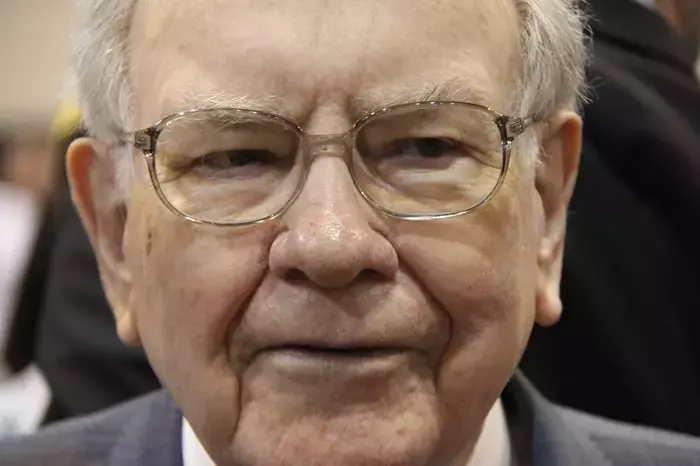
Warren Buffett, celebrated for his exceptional investment returns and transparent sharing of his business insights, will soon conclude his six-decade tenure as CEO of Berkshire Hathaway. Over this period, his leadership has generated a cumulative gain of approximately 6,140,000% for Berkshire's Class A shares, far surpassing the S&P 500's total return of around 43,300% over the same timeframe. Investors widely admire Buffett not only for his impressive financial achievements but also for his willingness to disclose the attributes he seeks in companies for long-term investment.
Buffett's strategic patience and unwavering optimism have been instrumental in Berkshire's remarkable success. At the core of his philosophy lies a commitment to value investing, evident in his recent sentiment: \"Often, nothing looks compelling.\" This statement, found in Berkshire's latest annual shareholder letter, underscores his reluctance to acquire stocks when their valuations appear inflated. With the \"Buffett Indicator\"—a measure of total U.S. market capitalization to GDP—reaching an unprecedented 214% recently, finding undervalued opportunities has become increasingly challenging. Consequently, Buffett has been a net seller of stocks for the past eleven consecutive quarters, accumulating a near-record $344.1 billion in cash, cash equivalents, and U.S. Treasuries, signaling a cautious stance in the current market environment.
The wisdom embedded in Buffett's approach highlights the significant rewards of patience in the stock market. He understands that despite economic downturns and market corrections, the U.S. economy and stock market tend to grow over the long run. This long-term optimism allows him to capitalize on \"price dislocations\"—moments when asset prices deviate from their intrinsic value. Notable examples include his timely investment in Bank of America in 2011, when its common stock traded at a significant discount, and his early investment in Apple in 2016, recognizing its undervalued status despite consistent growth. These examples demonstrate that by waiting for opportune moments, Buffett and his team, or his successor Greg Abel, are consistently positioned to make astute investment decisions that yield substantial gains.
Ultimately, Warren Buffett's enduring success is a testament to the power of patience, disciplined value investing, and an unwavering belief in the long-term growth trajectory of the economy. His legacy encourages investors to cultivate foresight, avoid impulsive decisions driven by market hype, and instead, focus on fundamental value and enduring quality. By adhering to these principles, investors can navigate the complexities of the market with confidence and build sustainable wealth, contributing positively to their financial well-being and fostering a resilient investment landscape.
