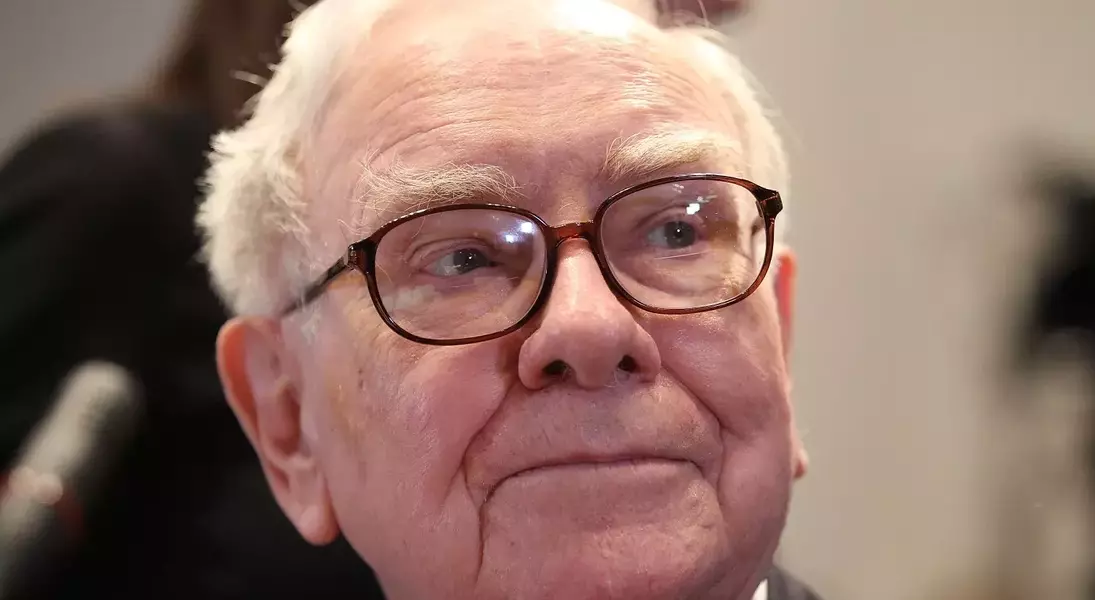
Warren Buffett, a titan in the investment world, presents a seemingly contradictory stance: he refutes the Efficient Market Hypothesis (EMH) but champions index fund investing for most individuals. This approach, however, highlights his nuanced understanding of market dynamics and investor psychology. While he firmly believes in the potential for skilled investors to outperform the market through rigorous analysis and disciplined value investing, he acknowledges that such a demanding strategy is not universally applicable. For the average person, he advocates for the simplicity and effectiveness of low-cost index funds, underscoring the importance of a consistent, emotion-free investment approach to capture the market's long-term growth.
The Oracle's Investment Insights: Deconstructing Efficient Markets and Practical Advice
In the dynamic realm of financial markets, the Efficient Market Hypothesis (EMH) posits that asset prices inherently reflect all available information, thereby rendering consistent market outperformance through active strategies virtually impossible. This theory suggests that any attempt to "time the market" is futile, as all relevant data is already integrated into stock valuations.
However, the esteemed investor Warren Buffett has vociferously challenged the EMH. He dismisses the notion of perfectly efficient markets as an academic ideal, arguing that real-world markets often exhibit "foolish prices," both inflated and undervalued. Buffett substantiates his position by citing the enduring success of value investors, including his mentor Benjamin Graham, who have consistently achieved superior returns by identifying and acquiring undervalued assets. Buffett's own remarkable track record with Berkshire Hathaway, consistently surpassing market averages over extended periods, further underscores his belief that dedicated analysis and astute investment practices can indeed lead to exceptional performance.
Despite his skepticism towards the EMH and his personal triumph in active investing, Buffett offers pragmatic advice for the average investor: embrace low-cost index funds, particularly those tracking the S&P 500. This seemingly contradictory recommendation is rooted in his recognition that successful active value investing requires a rare combination of time, specialized knowledge, and robust emotional discipline—qualities that most individual investors may lack. Instead, he advocates for dollar-cost averaging, a strategy that involves regular, fixed investments into index funds, regardless of market fluctuations. This disciplined approach eliminates emotional biases, ensuring that investors steadily participate in the market's long-term upward trajectory. As Buffett famously articulated in a 2013 letter to shareholders, the objective for non-professional investors should not be to meticulously select winning stocks, but rather to own a diversified portfolio of businesses that collectively are poised for success, a goal effectively met by a low-cost S&P 500 index fund.
Buffett's insights offer a profound lesson in financial wisdom: while markets may not always be perfectly rational, and opportunities for astute investors exist, the path to wealth for most lies in simplicity, discipline, and a long-term perspective. His dual philosophy acknowledges the complexities of market behavior while providing a clear, actionable strategy for individuals seeking financial stability and growth.
