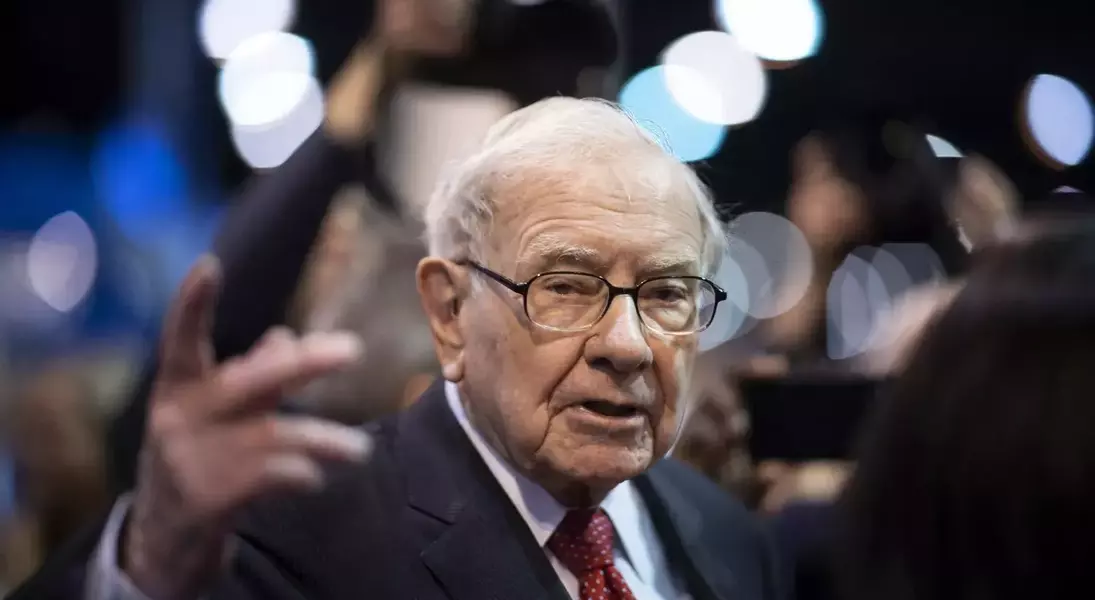
Legendary investor Warren Buffett has consistently expressed skepticism about gold's long-term investment value, famously calling it an 'unproductive asset.' Despite his reservations, gold prices have recently soared to unprecedented levels, driven by concerns over inflation, economic instability, and geopolitical tensions. This renewed interest prompts a closer look at Buffett's stance, Berkshire Hathaway's unexpected, albeit short-lived, investment in a gold mining company in 2020, and the strategic role gold might play in a diversified portfolio.
Current Gold Market Dynamics and Buffett's Philosophy
In early 2026, the global financial landscape witnessed a significant surge in gold prices, reaching all-time highs. This upward trend was primarily fueled by a confluence of factors: persistent inflation, heightened macroeconomic risks, and growing apprehensions regarding the autonomy of the Federal Reserve. Both individual investors and central banks have increasingly turned to gold as a traditional hedge against these uncertainties.
However, this bullish gold market stands in stark contrast to the long-held investment philosophy of Warren Buffett, chairman and CEO of Berkshire Hathaway. Buffett has consistently articulated a critical view of gold, famously describing it in his 2011 shareholder letter as an asset that is "neither of much use nor procreative." His core argument centers on gold's inability to generate income or intrinsic value over time, unlike productive assets such as businesses or real estate. He further elaborated in a CNBC interview that same year, characterizing gold as an investment driven by "fear," where its value is primarily determined by market sentiment rather than underlying economic productivity. For Buffett, true wealth creation stems from assets that produce cash flow and compound their value over extended periods.
Despite his deeply ingrained skepticism, Berkshire Hathaway made a notable, albeit brief, departure from this principle in the second quarter of 2020. During this period, the company acquired a $565 million stake in Barrick Gold Corp., one of the world's leading gold mining companies. This move, which surprised many observers given Buffett's prior comments, was widely speculated to be influenced by either Ted Weschler or Todd Combs, two of Berkshire's portfolio managers. The investment, however, proved to be temporary, with Berkshire Hathaway divesting its entire position in Barrick Gold by the end of the fourth quarter of 2020.
The current economic environment, marked by elevated inflation—even after a significant drop from its June 2022 peak of 9% to 2.4% in January 2026—continues to draw investors to gold. While this environment differs from the low-inflation period at the outset of the COVID-19 pandemic when Berkshire invested in Barrick Gold, gold's appeal as a safe-haven asset in uncertain times remains. Nevertheless, financial experts like Laura DiFiglio of Northwestern Mutual suggest that while gold can serve as a hedge against inflation and market volatility, its allocation within a long-term portfolio should be modest. She advises a maximum of 2.5% of the equity portion in a 90-10 stock-bond split for growth and income-focused investors. Ray Dalio, founder of Bridgewater Associates, echoed this sentiment at the World Governments Summit in Dubai, highlighting gold's effectiveness as a diversifier, despite its recent fluctuations.
Ultimately, while gold's recent price performance may appear enticing, Buffett's enduring lesson underscores the importance of focusing on assets that generate sustained value and cash flow. For a Buffett-inspired investor, gold may offer a tactical hedging mechanism, but it should not eclipse a fundamentally sound, value-oriented investment strategy designed for long-term growth.
Warren Buffett's unwavering skepticism towards gold, despite its recent market triumphs, serves as a profound reminder of his investment philosophy: prioritize productive assets over speculative ones. His brief, almost uncharacteristic, foray into gold mining during the pandemic, and its swift exit, further underscore his fundamental belief in businesses that generate tangible earnings and compound value over time. In a world grappling with economic uncertainty, the allure of gold as a safe haven is undeniable. However, as investors navigate these turbulent waters, Buffett's wisdom encourages a balanced perspective. While a modest allocation to gold might act as a prudent hedge against inflation or market volatility, it should never overshadow the diligent pursuit of assets with intrinsic growth potential. The true path to sustainable wealth, as taught by the Oracle of Omaha, lies in owning a piece of businesses that contribute to the economy, rather than merely holding a gleaming metal whose value is predominantly dictated by fear and sentiment. This principle, more than ever, offers a beacon for investors seeking enduring prosperity.
