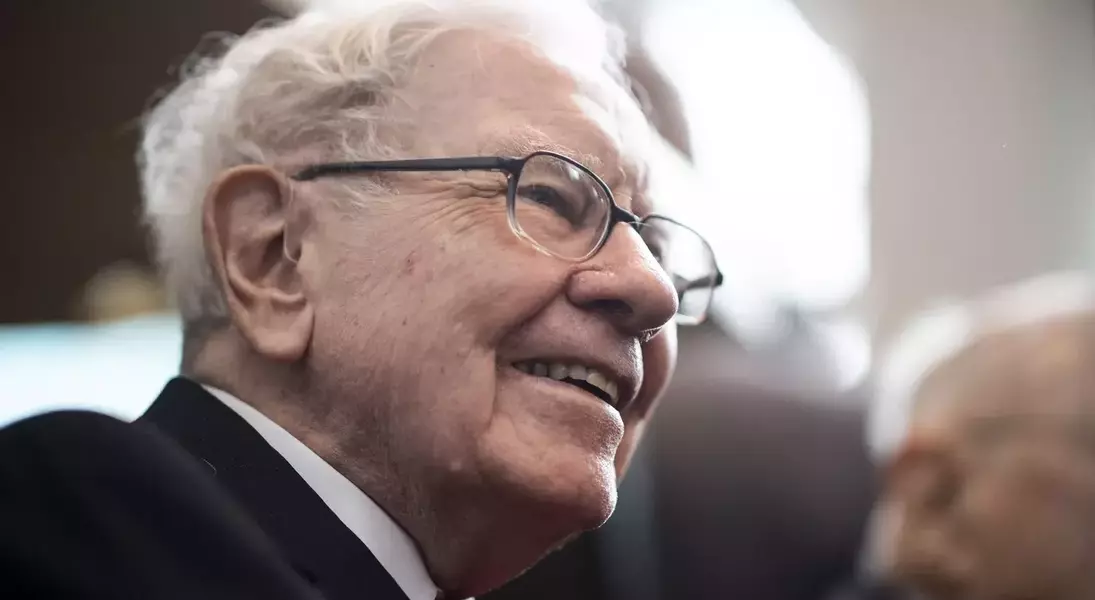
Warren Buffett's investment philosophy has consistently outperformed the market, emphasizing a disciplined and patient approach to navigating economic downturns. His success is built on a set of core principles that enable him to transform market crises into lucrative opportunities. These principles include maintaining composure during panic, leveraging fear to make strategic acquisitions, focusing on the intrinsic value of businesses, resisting the urge to time the market, and judiciously maintaining cash reserves for opportune moments.
Since 1965, Berkshire Hathaway, under Buffett's leadership, has achieved an average annual return of 19.9%, significantly surpassing the S&P 500's performance over the same period. This remarkable track record stems from a straightforward yet powerful strategy: acquiring high-quality companies at reduced prices when other investors are succumbing to panic and selling off their assets. Buffett's ability to remain calm and analytical amidst market turmoil is a cornerstone of his legendary investment prowess.
A critical tenet of Buffett's strategy is to 'be fearful when others are greedy, and greedy when others are fearful.' This principle highlights his contrarian approach to market sentiment. While most investors retreat during periods of market instability, Buffett actively seeks out undervalued assets. A notable example occurred during the 2008 financial crisis, when he invested $5 billion in Goldman Sachs. This strategic move, which included preferred shares and warrants, ultimately generated over $3 billion in profit for Berkshire Hathaway, showcasing his ability to capitalize on widespread fear.
Buffett also places immense importance on focusing on the fundamental strength of a business rather than short-term stock fluctuations. He evaluates companies based on their enduring value, questioning whether a temporary dip in stock price truly alters the long-term prospects of a business. His investment in the Washington Post in 1973, during a severe market decline, exemplifies this. Despite a further drop in its stock price, Buffett recognized the underlying strength of the company. His patience was rewarded, with the initial $10.6 million investment growing to over $200 million by 1985, demonstrating that a deep understanding of business fundamentals can lead to substantial long-term gains.
Furthermore, Buffett strongly advises against attempting to predict short-term market movements, a practice he refers to as a "fool's game." His long-standing investments in companies like Coca-Cola, held for 36 years, and American Express, since the 1960s, underscore his commitment to a buy-and-hold strategy, demonstrating that enduring value is realized over extended periods, not through speculative timing.
Finally, Buffett views cash reserves not as idle assets but as "financial ammunition" to be deployed during market downturns. While many financial advisors advocate for fully invested portfolios, Berkshire Hathaway consistently maintains substantial cash holdings. This strategic liquidity, often criticized during bull markets, becomes a significant advantage during crises, enabling Buffett to seize rare investment opportunities when they arise. His formalization of a $10 billion cash reserve policy in 2010, after significant deployments during the financial crisis, highlights his calculated readiness for future market dislocations. As of the mid-2020s, Buffett continues to maintain a record cash stockpile, positioning Berkshire Hathaway to capitalize on potential market shifts.
In essence, Buffett's investment approach emphasizes a rational, disciplined mindset, prioritizing fundamental business strength over emotional reactions to market volatility. His consistent success underscores the value of patience, contrarian thinking, and strategic preparedness, offering a powerful model for investors seeking long-term growth.
