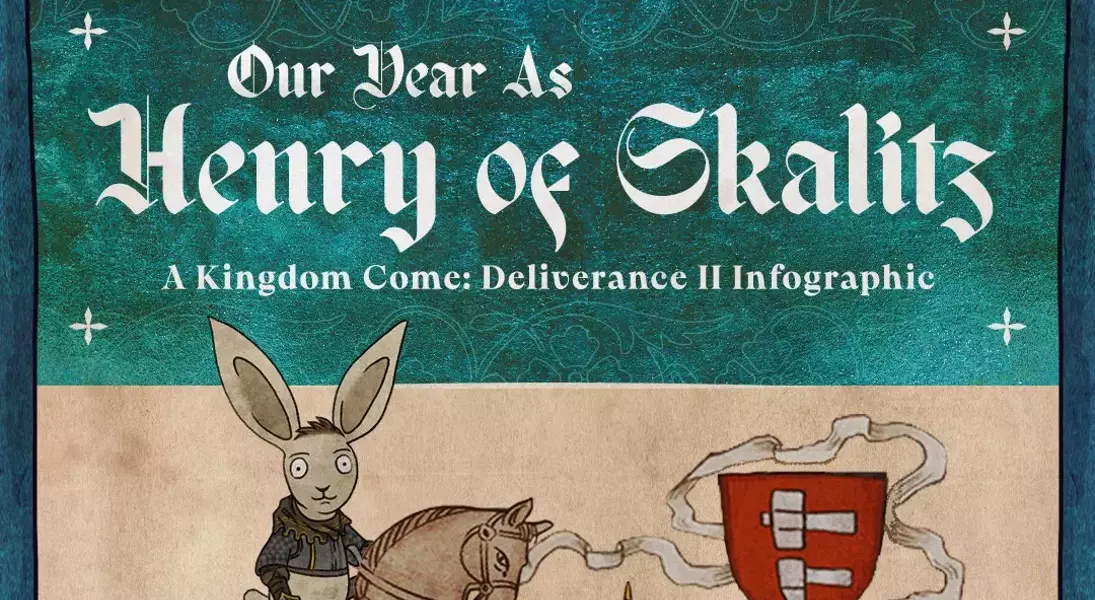
Warhorse Studios recently marked the first anniversary of their acclaimed title, Kingdom Come: Deliverance II, by unveiling a collection of captivating player data. This release, presented in the game's distinctive medieval aesthetic, offers a unique glimpse into the collective experiences of players over the past year. The statistics highlight the profound impact of player choices and in-game mechanics on the overall gameplay narrative, revealing both the brutal realities of medieval combat and the often-humorous consequences of Henry's more unconventional actions.
Among the most striking revelations are the sheer scale of player activity, from widespread combat and diplomatic encounters to the surprisingly common phenomenon of engaging in battles while intoxicated. These figures not only reflect the depth and complexity of the game's world but also underscore the unique freedom players have to shape their own adventure. From the staggering number of enemies vanquished to the mundane yet vital acts of sustenance, the data paints a vivid picture of a vibrant and active player base deeply immersed in the world of Bohemia.
The Dual Nature of In-Game Combat and Mercy
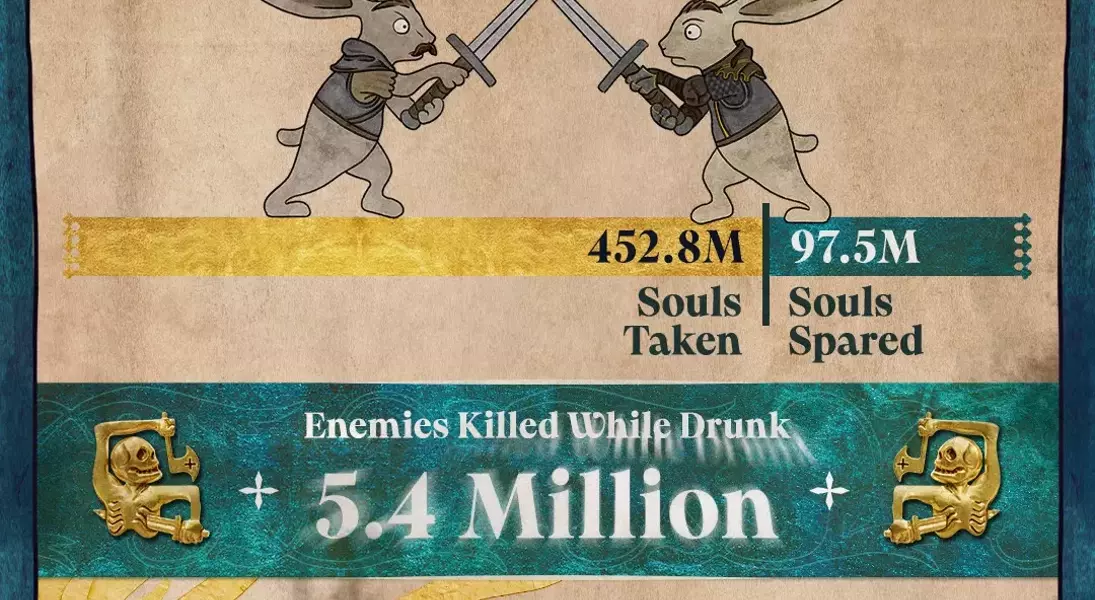
Warhorse Studios' anniversary infographic for Kingdom Come: Deliverance II provides a detailed look into player combat statistics, revealing that protagonist Henry of Skalitz has been responsible for a staggering 452.8 million enemy eliminations, while 97.5 million foes were spared. This contrast suggests a blend of ruthless efficiency and strategic clemency among players. A particularly amusing detail highlights that 5.4 million adversaries met their end while Henry was under the influence of alcohol, pointing to an intriguing aspect of the game's mechanics where intoxication, surprisingly, can offer tactical advantages. This unique system encourages players to explore the benefits and drawbacks of in-game drinking, making it a surprisingly impactful skill tree that enhances various attributes from combat prowess to stealth.
The decision to offer mercy, as depicted in the game, often arises from less formidable opponents, such as bandits or common brawlers who capitulate during skirmishes. Many players opt to let these characters live after acquiring their valuables, showcasing a pragmatic approach to conflict resolution. The game's extensive drinking skill line, featuring 13 distinct perks, further emphasizes the strategic depth of this mechanic. While being inebriated can bolster Henry's fighting capabilities, stealth, and even luck, excessive consumption can lead to severe hangovers that negatively affect stats. Despite these drawbacks, the accessibility and low cost of in-game alcohol make it a readily available buff, though players must navigate the visual and physical disorientation that comes with overindulgence to truly leverage its benefits effectively in combat.
Beyond the Battlefield: Player Engagement and World Exploration
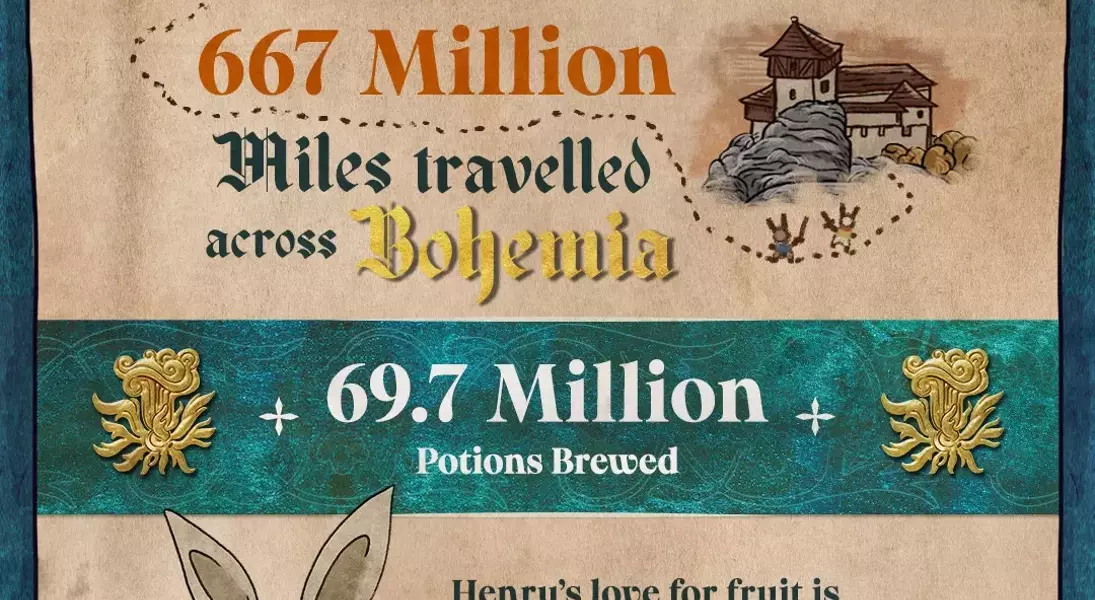
Beyond combat, the anniversary data from Kingdom Come: Deliverance II sheds light on the broader spectrum of player activities, illustrating the rich interactive environment Warhorse Studios has crafted. Players have collectively executed an impressive 1.6 billion perfect blocks, brewed 69.7 million potions, and consumed 48.8 million apples, indicating deep engagement with the game's crafting, survival, and combat systems. The vast distances covered by players, totaling 667 million miles, further underscore the expansive nature of Bohemia. This mileage likely encompasses both on-foot exploration and the use of fast travel, reflecting varying player preferences for traversing the detailed landscape, from diligent exploration to efficient quest completion.
The extensive statistics also reveal the enduring appeal of the game's intricate mechanics and its immersive world. While the provided data offers a comprehensive overview, it also sparks curiosity for additional insights, such as the total number of pockets picked, valuables stolen, the most frequently romanced characters, or instances where Henry successfully navigated social encounters to avoid legal repercussions. These unexplored metrics hint at the game's multifaceted design, where player choices extend beyond combat to influence a wide array of social interactions and strategic decisions. The depth of these systems is a testament to the game's quality, allowing players to fully embody the life of Henry of Skalitz and engage with the world on their own terms.
