This review examines Warhammer Survivors, an auto-battler game that draws inspiration from the highly popular Vampire Survivors. Developed by Auroch Digital with collaborative input from Poncle, the original creator of Vampire Survivors, this title immerses players in the rich lore of both Warhammer 40,000 and Warhammer: Age of Sigmar. The game introduces a distinctive follower system, allowing players to strategically utilize additional characters with unique weaponry. However, initial gameplay experiences reveal challenges with early-game weapon mechanics, which can impede the immediate enjoyment found in its predecessor. While dedicated fans of the Warhammer universe may find much to appreciate, the game struggles to fully capture the instant gratification and fluid progression that made Vampire Survivors a classic.
The Auto-Battler Experience: A Deep Dive into Warhammer Survivors
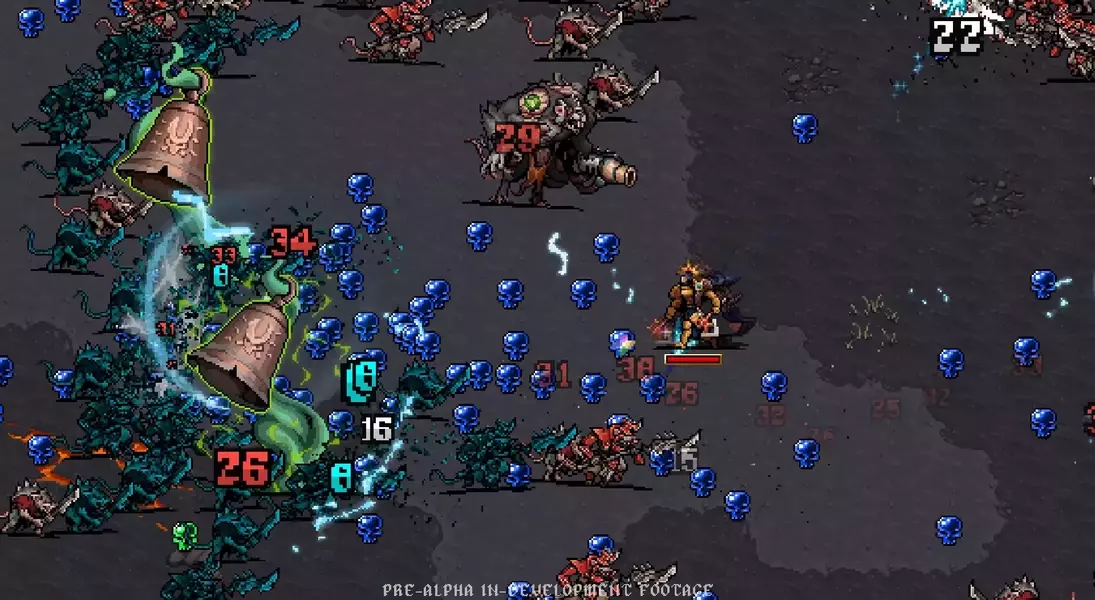
In the expansive universe of gaming, a new auto-battler titled Warhammer Survivors has emerged, seeking to carve its niche by blending the frantic, wave-based combat of Vampire Survivors with the grimdark aesthetic of the Warhammer franchise. Developed by Auroch Digital, the studio behind Warhammer 40,000: Boltgun 2, and featuring direct collaboration with Poncle, the visionary creator of Vampire Survivors, this game aims to deliver an engaging experience for both seasoned fans and newcomers alike. It uniquely combines elements from two distinct Warhammer eras: the futuristic, sci-fi battles of Warhammer 40,000, and the epic, fantasy conflicts of Warhammer: Age of Sigmar.
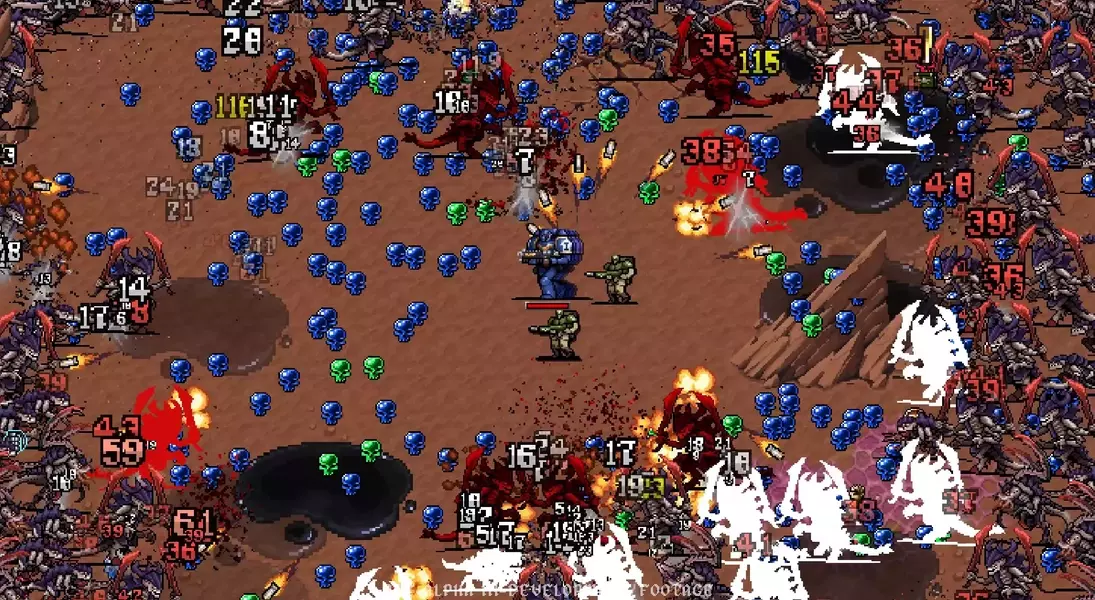
The core gameplay loop, familiar to fans of the auto-battler genre, involves players navigating their chosen character through relentless hordes of enemies while their weapons automatically engage targets. As adversaries fall, they often drop experience points, which players collect to level up and enhance their equipped arsenal. This progression system is central to the genre, enabling characters to gradually transform into formidable engines of destruction. Warhammer Survivors distinguishes itself by featuring unique characters, weapons, and objectives tailored to each of its Warhammer settings, providing a dual experience within a single title.
One of the most notable innovations in Warhammer Survivors is its follower mechanic. Unlike its progenitor, where a single character typically wields a diverse array of weapons, this game introduces allied characters who can be summoned or rescued to fight alongside the protagonist. These followers, each belonging to different factions, bring their distinct weapon sets to the battlefield, adding a layer of strategic depth and reflecting the large-scale conflicts characteristic of the Warhammer universe. However, this feature, while conceptually intriguing, primarily serves to expand the player's weapon options rather than fundamentally altering the strategic landscape.
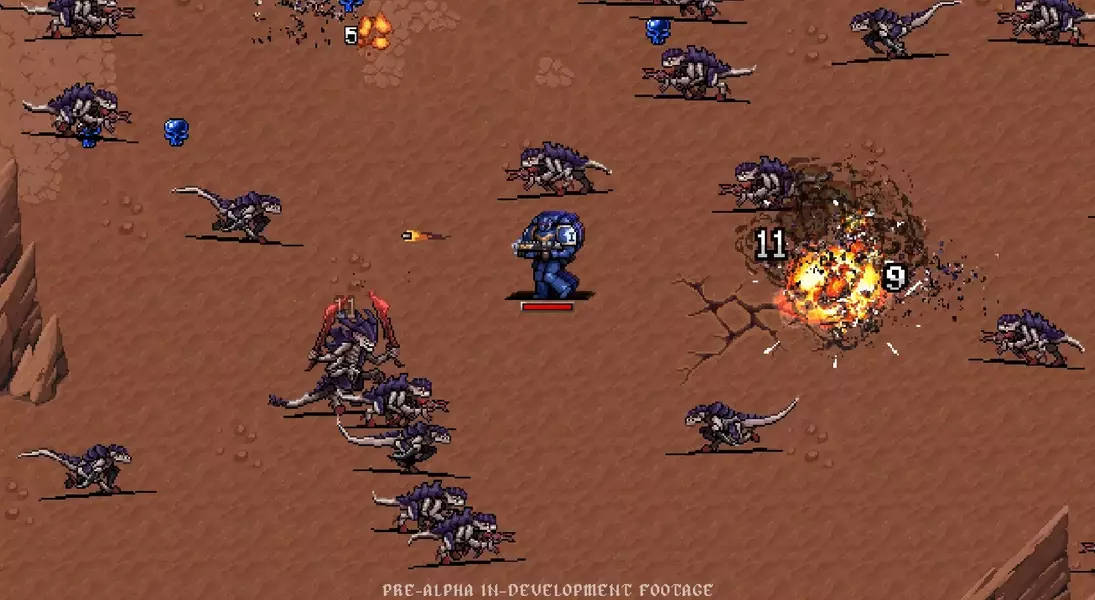
Despite its ambitious fusion of established mechanics with a beloved franchise, Warhammer Survivors faces some initial hurdles. Early-game weapons, such as the Boltgun, often lack auto-aim capabilities, forcing players to meticulously position themselves to maximize their attacks. This design choice can lead to moments of frustration, as players may find themselves shooting away from the main enemy clusters while attempting to evade incoming threats. The lack of immediate satisfaction from early weapon upgrades means it takes a considerable amount of time for the game to reach its chaotic and visually spectacular peak, a point where characters truly feel powerful and capable of dominating the battlefield.
While Warhammer Survivors confidently delivers on its premise of being Vampire Survivors set in the Warhammer universe, it occasionally struggles to match the seamless flow and instant gratification of its inspiration. Dedicated Warhammer enthusiasts, especially those unfamiliar with the auto-battler genre, are likely to revel in its detailed portrayal of the universe and its diverse roster of characters and creatures. However, for those already deeply invested in Vampire Survivors, the new iteration may not entirely supersede the original's polished and consistently rewarding experience, despite its commendable efforts to innovate within the genre.
From a player's perspective, Warhammer Survivors offers a compelling blend of strategic depth and fan service, particularly for those deeply immersed in the Warhammer lore. The game's innovative follower system and dual-setting approach provide fresh mechanics within the auto-battler genre. However, the initial learning curve, particularly concerning weapon efficacy, suggests that players need to invest more time to truly unlock the game's full potential and experience the satisfying power progression that makes these titles so addictive. It stands as a testament to the versatility of the Vampire Survivors formula, proving that it can be successfully adapted to new universes, even if the journey to ultimate power is not always as smooth or immediate as its pioneering predecessor.