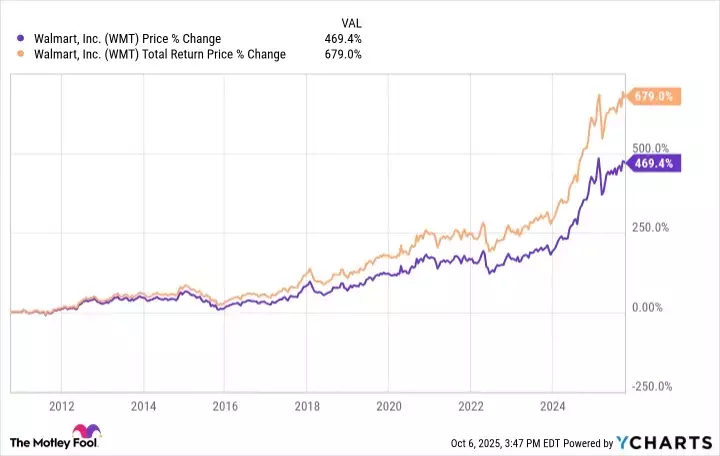
Walmart, a company traditionally associated with physical retail, is undergoing a profound digital transformation that positions it for a significant financial milestone. Over the past 15 years, the company's stock has seen a remarkable 470% increase, with even greater returns for investors who reinvested dividends, reaching an impressive 680% gain. To achieve a valuation of one trillion dollars by 2026, Walmart's stock needs to climb approximately 22% from its current market capitalization of $820 billion, an objective that appears increasingly attainable due to strategic shifts in its business model.
The primary catalysts for Walmart's projected growth lie in its expanding digital ventures, which are proving to be its most lucrative. While traditional retail sales remain foundational, the company's e-commerce sector is experiencing explosive growth, with a 25% year-over-year revenue increase in the second quarter, significantly outpacing its overall revenue growth of 5%. This robust digital expansion is not only boosting sales but also unlocking substantial opportunities in high-margin areas such as digital advertising and membership fees, which are becoming increasingly influential on the company's operating income. The recent acquisition of connected-TV company Vizio further amplifies Walmart's advertising capabilities, allowing it to harness vast consumer shopping data to create more targeted and effective campaigns.
These converging trends suggest that Walmart's strategic focus on digital innovation and high-profit revenue streams is effectively driving its financial performance. The company's advertising revenue, for instance, surged by 46% in the second quarter, partly due to the Vizio acquisition but also reflecting organic growth in this promising area. As these profitable segments continue their upward trajectory, Walmart's overall profitability is expected to rise, providing the necessary momentum for its stock price to reach the trillion-dollar mark. While the exact timing remains to be seen, the underlying business strategy and growth indicators point strongly towards Walmart's eventual entry into this exclusive financial club.
Walmart's journey towards a trillion-dollar valuation is a testament to its adaptive business strategy and its ability to innovate within a competitive market. By embracing digital transformation and focusing on high-margin revenue streams, the company is not only securing its future growth but also demonstrating how established enterprises can reinvent themselves for continued success in the modern economy. This strategic evolution highlights the importance of foresight and adaptability in achieving ambitious financial goals.
