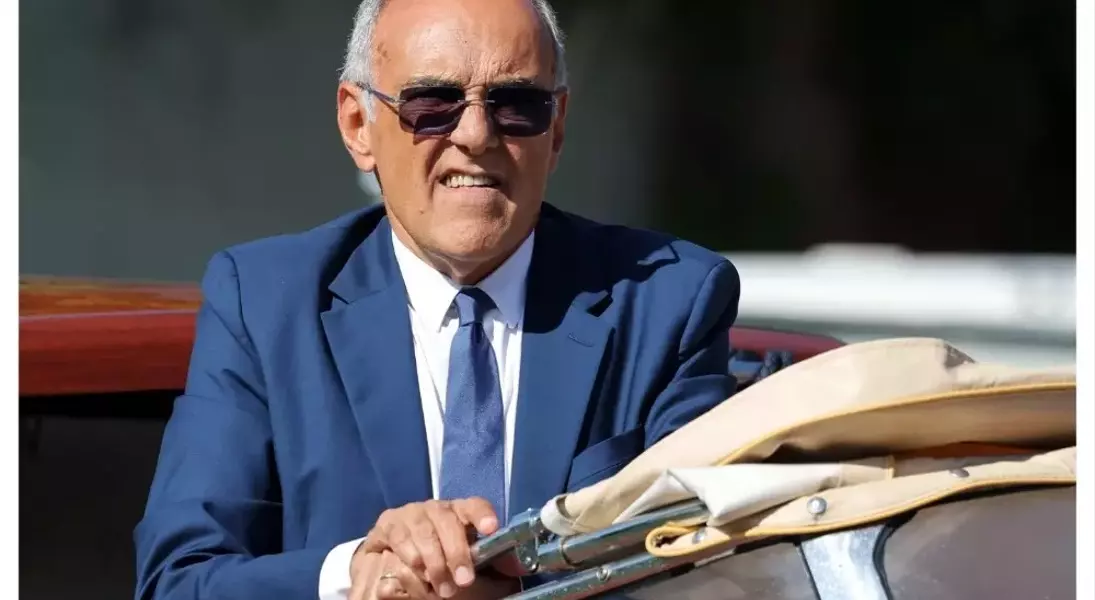
Alberto Barbera, the esteemed director of the Venice Film Festival, has managed to curate an exciting lineup this year, despite a notable decrease in films from American studios and streaming platforms. His remarks offer a candid look into the current state of the film industry, highlighting the challenges faced by major studios and the festival's commitment to quality over quotas, particularly concerning gender representation.
Venice Film Festival Navigates Industry Shifts and Welcomes 'Primetime' Amidst U.S. Studio Downturn
On July 23, 2026, Alberto Barbera, the director of the Venice Film Festival, shared insights into the festival's programming decisions and the evolving landscape of the global film industry. Speaking from the Lido, Barbera addressed the conspicuous absence of numerous films from major U.S. studios and streaming services. He clarified that this reduction was not due to a diminishing interest in the Venice Festival, but rather stemmed from an internal 'identity crisis' currently gripping American studios, characterized by mergers and a struggle to redefine their promotional strategies for auteur films.
Barbera highlighted the spontaneous addition of Robert Pattinson's latest film, 'Primetime,' to the festival's roster. This high-profile acquisition was secured at the eleventh hour, primarily due to Pattinson's last-minute confirmation of availability to attend the festival, despite his ongoing filming commitments in London. Barbera emphasized the significance of Pattinson's presence for the film's promotion, underscoring the trust placed in Venice by the film's distributors, A24. This trust is particularly noteworthy given the lukewarm reception of A24's 'Smashing Machine' at the previous year's festival, which Barbera attributed to flawed marketing rather than the festival's platform.
Beyond 'Primetime,' Barbera also revealed the surprise inclusion of the Oasis reunion documentary, 'Don’t Look Back in Anger,' supported by Disney. The festival director expressed his delight at securing this musical film and the confirmed attendance of the Gallagher brothers. Additionally, Searchlight Pictures' 'Wild Horse Nine,' directed by Martin McDonagh, was a planned submission, further illustrating that not all major studios have completely withdrawn their participation. Barbera reiterated that the current situation is a 'contingency factor,' and he remains optimistic about future collaborations as studios find their footing.
Addressing a pertinent concern about gender representation, Barbera acknowledged the presence of only one female director, May El-Toukhy, in this year's competition. He firmly denied any bias against women directors, pointing to the festival's historical record of awarding numerous female filmmakers. Barbera explained that a lower submission rate of women-directed fiction films this year (24% compared to 30% last year), coupled with a perceived dip in quality among submissions, led to fewer inclusions. He staunchly defended the festival's commitment to selecting films based solely on merit, asserting that choosing films based on gender would be 'humiliating' for female directors and that quality remains the 'only rigid criterion.'
This year's Venice Film Festival serves as a microcosm of the dynamic and often unpredictable nature of the global film industry. It showcases the resilience of film festivals in adapting to shifting industry landscapes, while reaffirming their crucial role as platforms for artistic expression and cinematic discovery. Barbera's insights offer valuable perspective on the challenges and opportunities that lie ahead for both creators and curators in the world of cinema.
This year's Venice Film Festival, under Alberto Barbera's discerning leadership, offers a compelling reflection on the intricate dance between artistic vision and commercial realities within the global film industry. The festival's ability to attract significant films like 'Primetime' and the Oasis documentary, despite a downturn in U.S. studio participation, underscores its enduring prestige and appeal. Barbera's candid analysis of the studios' 'identity crisis' resonates deeply, highlighting the profound shifts occurring in content creation and distribution. It prompts us to consider the future role of film festivals as essential launchpads and cultural touchstones in an era where traditional models are constantly being re-evaluated. Moreover, his firm stance on prioritizing quality over quotas in addressing gender representation, while potentially sparking debate, invites a broader conversation about how true inclusivity can be fostered without compromising artistic integrity. Ultimately, the Venice Film Festival continues to demonstrate its vital importance as a barometer for the health and direction of cinema worldwide, navigating complexities with a steadfast commitment to cinematic excellence.
