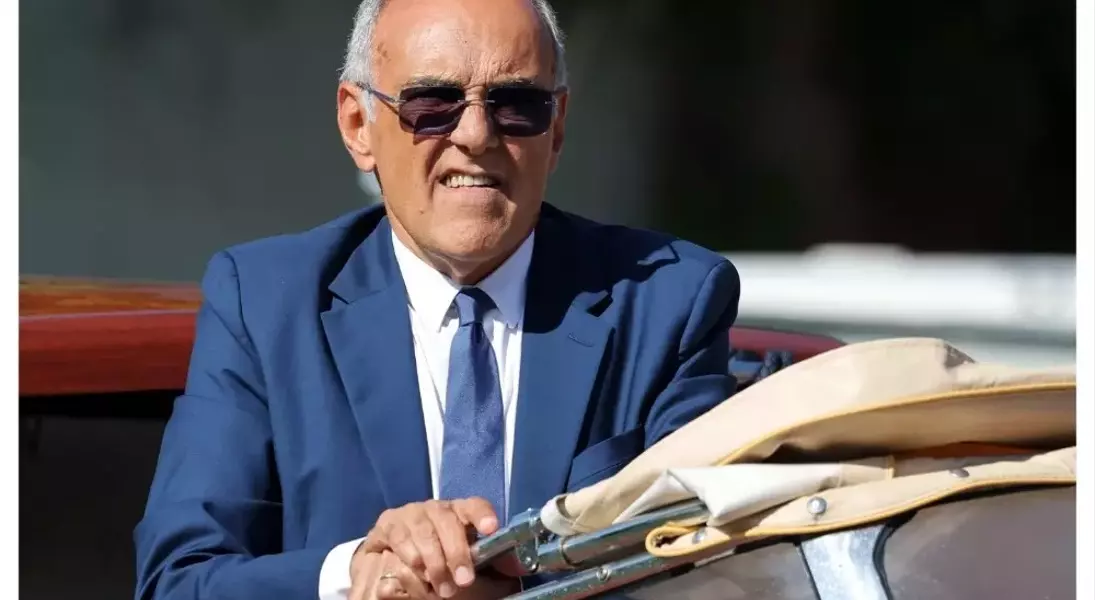
The upcoming 82nd Venice Film Festival, under the leadership of artistic director Alberto Barbera, is poised to be a significant event, featuring a curated selection of highly anticipated cinematic works and a constellation of renowned stars. Despite the enthusiasm surrounding the program, Barbera remains cautiously optimistic, acknowledging the inherent risks associated with elevated expectations. He candidly addresses various pressing issues that could influence the festival's narrative, including the potential for social activism on the Lido, the ongoing debate concerning female representation in filmmaking, and the practical challenges posed by escalating accommodation expenses. His reflections provide a comprehensive insight into the intricate balance required to orchestrate a world-class film festival in a dynamic global environment.
As the curtains prepare to rise on the cinematic spectacle, Barbera's primary apprehension revolves around managing the heightened anticipations generated by the festival's impressive lineup. He highlights a crucial distinction: while a wealth of buzz-worthy films is a boon, it concurrently elevates the potential for audience disappointment if not every entry meets the lofty standards of a 'masterpiece.' This sentiment underscores the delicate tightrope walk inherent in curating a major film festival, where critical and public reception can be profoundly shaped by pre-event hype. Moreover, Barbera confirms that despite the usual last-minute uncertainties, the majority of the prominent actors associated with the selected films are expected to attend, with only a few exceptions due to scheduling conflicts.
The intersection of cinema and sociopolitical discourse is also a prominent theme. Barbera anticipates the likelihood of pro-Palestinian demonstrations on the Lido, noting that such activism is a global phenomenon that would naturally extend to an international platform like the Venice Film Festival. While the festival aims to avoid becoming a partisan stage, it acknowledges the right to expression. A notable film addressing the plight of Gazans, Kaouther Ben Hania's 'The Voice of Hind Rajab,' is included in the competition, underscoring the festival's commitment to showcasing diverse narratives. Additionally, Jude Law's portrayal of Vladimir Putin in Olivier Assayas' 'The Wizard of the Kremlin' is highlighted for its impressive physical transformation and compelling performance.
Another significant point of discussion concerns the representation of female directors. While Women in Film reports a 26% female director ratio (excluding Venice Immersive), Barbera contends that including Venice Immersive brings the figure closer to 30%, aligning with the global percentage of female filmmakers. He reiterates his stance against quotas, arguing that selection should be based on merit rather than gender, and expresses optimism for increased female participation in the future, particularly among young producers. He also addresses criticisms regarding the all-male Italian competition selection, asserting that the curatorial team, composed equally of men and women, made choices based on artistic merit, and invites critics to evaluate the films after they have been screened.
Finally, Barbera touched upon the practical challenges facing attendees, particularly the soaring costs of accommodation on the Lido. He acknowledges the valid complaints regarding unjustified price increases, attributing them to the fundamental economic principle of supply and demand, where a growing number of attendees meets a static supply of housing. Looking ahead, the anticipated renovation of the Hotel Des Bains, projected for completion around 2030, offers a glimmer of hope for alleviating hospitality issues, promising a significant increase in high-end accommodation options. Regarding his own tenure, which concludes after the 2026 edition, Barbera maintains a professional distance, indicating that the decision rests solely with the Biennale board of directors, aligning with the tradition of accepting, rather than applying for, such a prestigious role.
