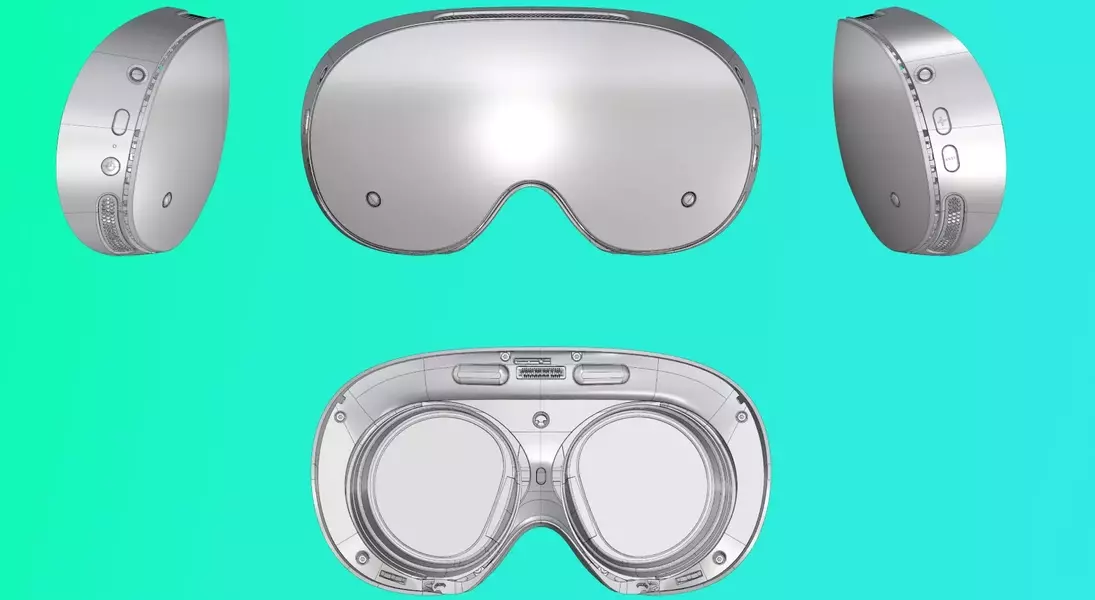
Valve has officially released the Computer-Aided Design (CAD) files for its Steam Frame virtual reality headset, opening the door for a wave of community-driven innovation. This strategic move provides designers and modders with the essential blueprints to create personalized accessories and modifications for the VR device.
The released files encompass a wide array of components ripe for customization, including the light blocker, which rests between the user's nose and the headset, as well as the head strap, battery compartment, and facial interface. Moreover, the core module and controllers are also included in this comprehensive release. Valve had previously announced its development of an enhanced head strap featuring interchangeable batteries and off-ear speakers, slated for a near-future release. This open-source approach to hardware design could encourage third-party manufacturers to develop additional complementary products, further enriching the Steam Frame ecosystem.
Beyond physical modifications, the documentation also outlines the process for interacting with the expansion port, referred to as the auxiliary port. Positioned at the front of the headset, this port allows for the integration of powered accessories, such as the Arcturus Vision RGB camera, which has already demonstrated its potential for advanced functionality. With a Gen4 PCIe lane, power delivery, and camera capabilities fully detailed in the provided documents, there's significant potential for developers to harness this port for diverse and imaginative applications. This release aligns with Valve's consistent practice of providing CAD files for its hardware, including the Steam Deck, Steam Machine, and Steam Controller, thereby cultivating an environment of collaboration and continuous improvement within its user base.
By embracing an open-source hardware philosophy, Valve fosters a collaborative community where innovation flourishes. This approach not only enhances the user experience through greater customization options but also democratizes technology, empowering individuals to contribute to the evolution of VR hardware. Such initiatives exemplify a forward-thinking vision that benefits both creators and consumers, driving progress and pushing the boundaries of what is possible in the gaming and tech industries.