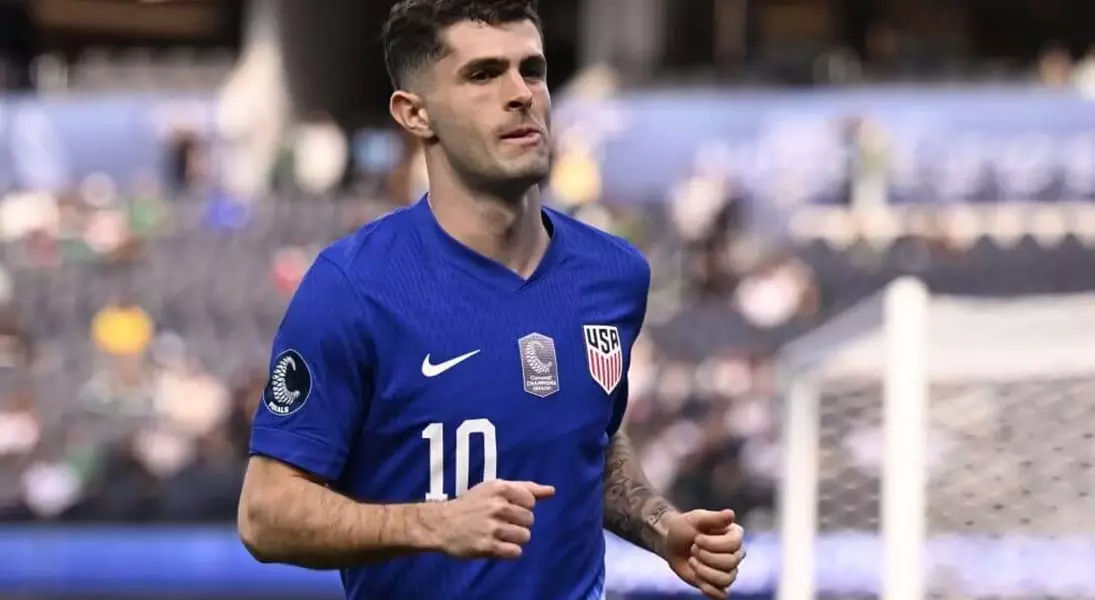
The United States Men's National Team (USMNT) has revealed its lineup for the upcoming September international fixtures against South Korea and Japan, marking a significant moment with the reintegration of star forward Christian Pulisic. This roster also signals a strategic shift from head coach Mauricio Pochettino, as several prominent players, including Weston McKennie and Yunus Musah, are notably absent. The squad aims to blend experienced players with promising new faces, all while preparing for competitive matches that will test their cohesion and tactical adaptability. This period will be crucial for players to impress the coaching staff, particularly with an eye towards future major tournaments.
Pochettino's selections reflect a deliberate approach to team building, considering both current form and potential. The return of Pulisic, despite previous public exchanges, underscores his importance to the team's attacking prowess. Meanwhile, the omissions of established midfielders like McKennie highlight the competitive nature within the squad and the coach's willingness to explore new combinations. Injuries have also played a role in shaping the roster, creating avenues for other players to step up and demonstrate their capabilities. These friendly matches are more than just exhibition games; they are vital opportunities for the team to refine its strategies, build chemistry, and assess individual performances under pressure.
Strategic Roster Decisions and Player Dynamics
The latest USMNT roster for the September friendlies against South Korea and Japan reflects head coach Mauricio Pochettino's strategic vision, notably with the return of Christian Pulisic and the omission of key figures such as Weston McKennie and Yunus Musah. Pulisic's comeback signals a resolution to previous tensions, emphasizing his critical role in the team's offensive plans. The absence of McKennie, despite his availability, underscores a move towards evaluating other midfield options, possibly due to his limited club minutes. This roster also sees several players sidelined by injury, opening doors for emerging talents and those seeking to make a stronger impression on the coaching staff. The blend of seasoned players and newcomers aims to foster a dynamic team environment ahead of competitive international play.
Pochettino's selection process for the September friendly matches against South Korea and Japan illustrates a clear strategic direction for the U.S. Men's National Team. The most prominent feature is the return of Christian Pulisic, who had previously opted out of the Gold Cup, indicating a renewed focus on integrating his experience and skill into the squad's attacking scheme. Conversely, the decision to exclude midfielders like Weston McKennie and Yunus Musah, despite their established presence, suggests a desire to assess the depth and versatility of the midfield pool. This could be influenced by their current club situations or a need to provide opportunities for other players to demonstrate their capabilities. Additionally, the absence of players like Antonee Robinson, Malik Tillman, and Ricardo Pepi due to injury has necessitated the inclusion of new faces, such as goalkeeper Jonathan Klinsmann and young defender Noahkai Banks, who are eager to seize their chance on the international stage. These choices highlight Pochettino's commitment to building a competitive and adaptable team, continuously evaluating individual form and potential within the broader squad context. The upcoming matches will serve as crucial proving grounds for these strategic adjustments.
Emerging Talents and Positional Deep Dives
The USMNT's September roster introduces a mix of fresh faces and offers detailed insights into the depth across various positions. Notable call-ups include Jonathan Klinsmann, son of a former USMNT coach, and 18-year-old center back Noahkai Banks, signaling a commitment to youth development. The goalkeeping position is highly contested, with Roman Celentano, Matt Freese, and Klinsmann all vying for a spot, as key veterans recover from injuries. In defense, the absence of Antonee Robinson creates opportunities for players like Sergiño Dest to adapt to new roles, while new center-back options are being explored. Midfield sees a shake-up with new players stepping up in the absence of established figures, and the forward line welcomes the return of Christian Pulisic, who is expected to significantly bolster the attack alongside other in-form strikers.
An in-depth look at the USMNT's positional breakdown for the September friendlies reveals several intriguing developments. In goal, the competition is fierce, with Roman Celentano, Matt Freese, and Jonathan Klinsmann (the son of former coach Jürgen Klinsmann) all given a chance to impress, particularly as Zack Steffen and Matt Turner work their way back to full fitness. The defensive line faces challenges, especially at left-back, where Antonee Robinson's injury might see Sergiño Dest deployed in an unfamiliar role. New fullbacks like Max Arfsten, Alex Freeman, and Nathan Harriel will be under scrutiny to prove their defensive capabilities. For center-backs, Mauricio Pochettino continues to assess options beyond Tim Ream and Chris Richards, bringing in Tristan Blackmon and the promising Noahkai Banks to widen the player pool. The midfield, significantly impacted by the omissions of Weston McKennie and Yunus Musah, provides a vital platform for players such as Tyler Adams, Sebastian Berhalter, Luca de la Torre, Diego Luna, Jack McGlynn, and Sean Zawadzki to establish themselves. On the wings, the return of Christian Pulisic and Tim Weah promises to inject much-needed dynamism into the attack, with Alex Zendejas also back in the fold. Up front, with Ricardo Pepi and Folarin Balogun recovering, Damion Downs and the in-form Josh Sargent lead the line, providing options for the team's offensive strategy. These selections underscore a continuous effort to build depth and adaptability across all areas of the squad.
