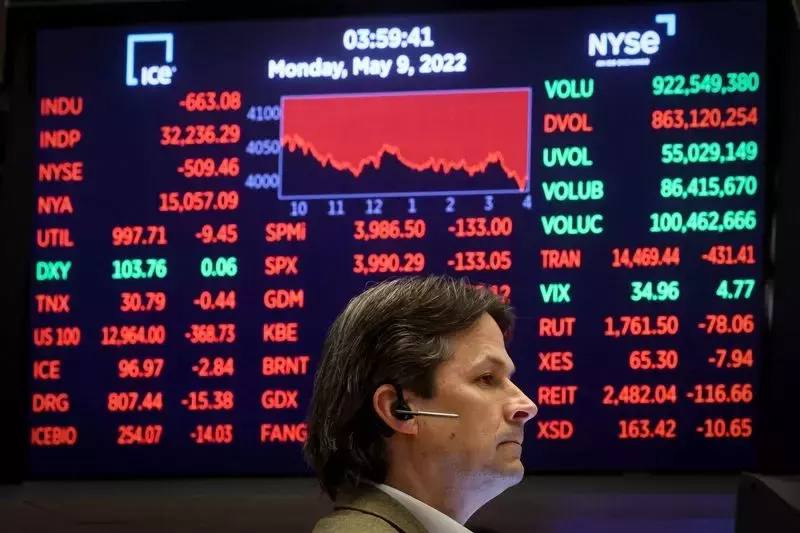
Markets have been closely observing the Fed's actions and signals. With the anticipation of a 25 basis point cut at the end of the Fed meeting on Wednesday, the focus now shifts to the long-term rate outlook. The Fed is expected to adopt a more cautious rate cut path after the December rate reduction.
Market Indicators and Futures Movements
S&P 500 Futures edged 0.1% lower to 6,119.0 points, while Nasdaq 100 Futures fell 0.3% to 22,252.25 points by 18:40 ET (23:38 GMT). Dow Jones Futures were relatively stable at 43,964.0 points after experiencing its longest losing streak since 1978 on Tuesday. These market indicators provide insights into the current market sentiment and expectations.Impact of Fed's Economic Projections
Market focus is squarely on the Fed's economic projections for the next year and the comments from Chair Jerome Powell. This will help investors gain a better understanding of the Fed's long-term rate outlook. In an environment where inflation remains stubborn and is expected to rise further under President Donald Trump, these projections become crucial. Investors expect the Fed to indicate a slower pace of rate cuts in 2025 due to persistent inflation and a strong labor market, which pose challenges for the Fed. 1: The Fed's economic projections play a significant role in shaping market expectations. They provide a roadmap for the future direction of interest rates and have a direct impact on various asset classes. Investors closely analyze these projections to make informed investment decisions. A slower rate cut path may indicate that the Fed is more concerned about inflation and the stability of the economy. 2: Additionally, the comments from Chair Jerome Powell carry weight in the market. His insights and guidance can influence market sentiment and investor behavior. Investors will be keenly listening to his words to understand the Fed's stance on rate cuts and the overall economic outlook.Data Insights and Retail Sales
Earlier in the day, data showed that retail sales rose by 0.7% in November, surpassing the 0.5% forecast. This stronger-than-expected retail sales data indicates that the economy remains strong and consumer spending remains robust. Despite challenges such as inflation and high interest rates, consumers are continuing to spend, driven by a solid labor market and steady household finances. 1: The increase in retail sales is a positive sign for the economy. It suggests that consumers have the confidence to spend and that the economy is not overly affected by the current economic conditions. This data provides further evidence of the resilience of the economy and may lead to increased optimism among investors. 2: However, it is important to note that inflation remains a concern. Higher retail sales can lead to increased demand and potentially drive up prices. The Fed will need to carefully monitor these trends and balance the need for economic growth with the control of inflation.Wall Street Indexes and Sector Performance
Wall Street indexes retreated on Tuesday, with the tech sector giving back some of its recent gains. Investors exercised caution ahead of the rate decision. NVIDIA Corporation (NASDAQ:NVDA) dropped 1.2%, while Alphabet (NASDAQ:GOOG) fell 0.5%. The S&P 500 fell 0.4% to 6050.61 points, and the NASDAQ Composite lost 0.3% to 20,108.30 points. The Dow Jones Industrial Average closed 0.6% lower at 43,449.90 points. 1: The performance of Wall Street indexes reflects the uncertainty and caution in the market. The tech sector, which has been a major driver of the market rally this year, is showing signs of weakness. This could be a sign that investors are reevaluating their positions and becoming more cautious. 2: However, it is important to look at the broader market trends. While the Dow has faced challenges and recorded its ninth consecutive daily decline, the S&P 500 and NASDAQ Composite have still managed to achieve significant gains this year. This indicates that there are still opportunities in the market, but investors need to be selective and cautious.You May Like