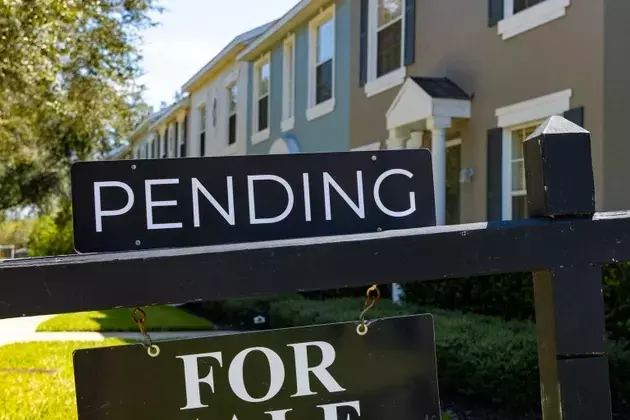
The United States housing market continues to navigate a challenging landscape, marked by persistent stagnation in pending home sales. While a modest uptick was observed in March compared to the previous month, the overall volume remains considerably below historical levels, signaling a prolonged period of suppressed activity. This enduring "deep freeze" in real estate transactions, now in its fourth year, is shaped by a complex interplay of factors, with regional variations highlighting the diverse experiences across the nation.
Analysis of recent housing data reveals a market grappling with both a significant drop in transaction volumes and the lingering effects of high prices and attractive legacy mortgage rates. This combination creates a unique environment where many existing homeowners are disincentivized from selling, thereby constricting supply and further dampening the pace of new sales. Understanding these dynamics is crucial for grasping the current state and future trajectory of the U.S. housing sector.
The Enduring Freeze in US Housing Transactions
The latest data on US pending home sales paints a picture of a market firmly entrenched in a multi-year slowdown. Despite a slight, seasonally adjusted increase in March from February, the overall trend remains starkly negative when viewed over a longer horizon. Compared to 2021, sales are down a substantial 35%, while also lagging 2019 by 30% and 2018 by 31%. This consistent decline over four years indicates a systemic issue rather than a temporary blip, highlighting a market that has yet to recover its previous momentum. The current environment is characterized by significantly reduced activity, impacting both potential buyers and sellers across the country.
This prolonged period of suppressed sales volume can be attributed to several critical factors. High home prices, which have seen considerable increases in recent years, coupled with elevated mortgage rates, have created an affordability crisis for many prospective buyers. Furthermore, a significant portion of existing homeowners are locked into historically low mortgage rates (around 3%), making them reluctant to sell and move, as doing so would mean trading their favorable rates for much higher current rates. This "lock-in effect" severely constricts the inventory of available homes, exacerbating the sluggishness in the market and preventing a healthy churn of properties.
Regional Divergence in Housing Market Performance
While the national picture reflects a generalized stagnation, a closer look at regional performance reveals interesting variations in the housing market's dynamics. In March, pending home sales showed a modest increase in the South and Northeast regions. This slight recovery, even from previously low levels, suggests that certain localized factors or market conditions might be offering a glimmer of renewed activity. Such upticks could be influenced by a range of elements, including specific economic conditions, population shifts, or perhaps localized improvements in affordability, making these regions somewhat more resilient to the broader market downturn.
Conversely, the West and Midwest regions experienced further declines in pending home sales during the same period. These regional disparities underscore the importance of a nuanced understanding of the housing market, as national trends do not always translate uniformly across different geographies. Factors contributing to the continued downturn in the West and Midwest could include a more pronounced impact of affordability challenges, stricter lending conditions, or perhaps less attractive economic prospects for potential homeowners in those areas. The diverging regional performances indicate that while the overall housing market remains in a deep freeze, the specific temperatures vary significantly from one part of the country to another.
