

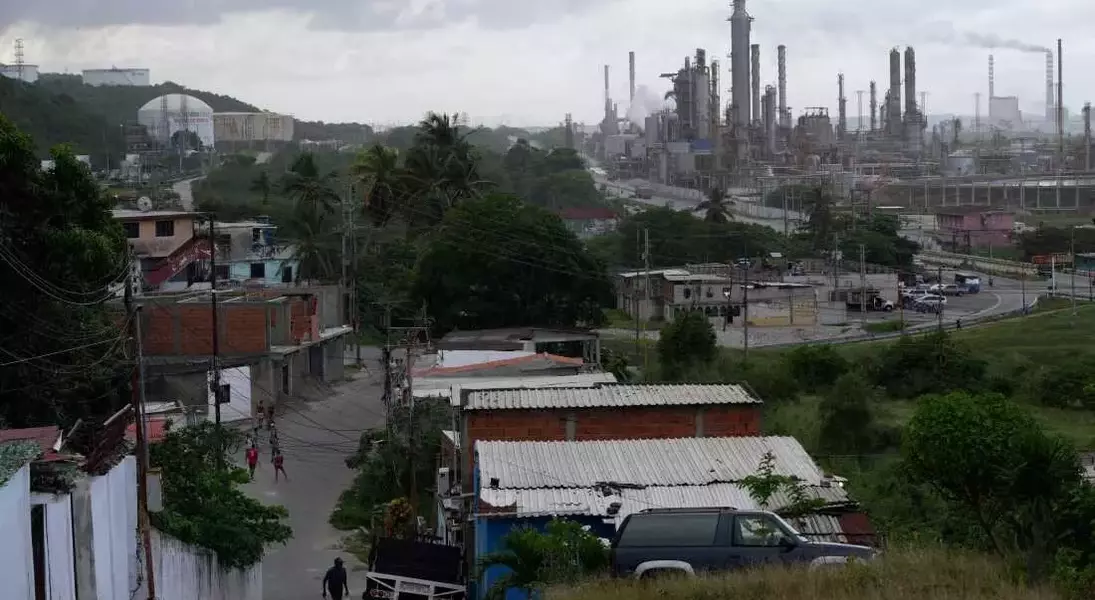
Former President Trump has signaled a strategic shift towards Venezuela's oil sector, aiming to integrate American petroleum giants into the country's industry following the apprehension of its leader, Nicolás Maduro. This initiative seeks to revive Venezuela's struggling oil production, which holds vast reserves but has seen output dramatically decline. The proposed involvement of US companies is presented as a means to boost global oil supply and benefit both nations, despite a history of complex relations and an already saturated global oil market. The potential for such an endeavor is underscored by Venezuela's significant oil resources, yet complicated by its past contractual disputes with foreign firms and a volatile political landscape. The broader context includes the rising influence of neighboring Guyana as a new oil frontier and the lingering concerns about political stability and its impact on long-term investment viability in Venezuela.
The current global energy scenario, marked by an oversupply of crude and a gradual pivot towards renewable energy and electric vehicles, casts a shadow over the long-term demand for oil. This makes any significant investment in a high-risk region like Venezuela a calculated gamble for American corporations. Moreover, the historical precedent of US interventions in the region and the Middle East often results in unforeseen challenges, prompting skepticism from industry experts. The unique characteristics of Venezuelan oil—heavy, dense, and more polluting—further add to the operational and environmental considerations. The narrative emphasizes the need for a stable political environment and robust legal frameworks to attract and secure sustained foreign investment, without which the ambitious plans for Venezuela's oil renaissance may remain just that—plans.
The Geopolitical Chessboard: US Interests and Venezuelan Oil
Following the significant development of Venezuelan President Nicolás Maduro's capture, former President Trump articulated a clear vision: to integrate American oil corporations into Venezuela's energy framework. This strategic move, announced after a pivotal meeting with leading US oil executives at the White House, is designed to jumpstart Venezuela's oil production, which has severely declined from its peak of over 3 million barrels daily to approximately one million. Trump emphasized that the collaboration would not only bolster global oil supply but also provide substantial economic advantages for the United States and the Venezuelan populace. This initiative, however, unfolds against a backdrop of historical US interventions in Latin America and the Middle East, which have often been fraught with complications and unfavorable outcomes, raising questions among experts about the long-term success and stability of such an undertaking.
Venezuela, despite possessing some of the world's largest oil reserves, presents a challenging investment landscape. Its past nationalization policies under former President Hugo Chávez led to contentious renegotiations of contracts with international oil companies, prompting giants like ExxonMobil and ConocoPhillips to exit the country, leading to billions in arbitration claims. While Chevron chose to remain, operating under difficult conditions and contributing a quarter of Venezuela's current output, the broader industry remains wary. The global oil market's current state of oversupply, coupled with a shift towards cleaner energy sources and electric vehicles, adds another layer of complexity. Experts highlight that Venezuela's heavy, dense crude is more environmentally taxing to process, contributing significantly to global warming. Therefore, any move to scale up production requires not only substantial financial and managerial overhaul but also a careful navigation of the geopolitical sensitivities and historical grievances that define the US-Venezuela relationship.
Revitalizing Venezuela's Oil Sector: Challenges and Prospects
The ambition to rejuvenate Venezuela's oil industry faces considerable hurdles, primarily stemming from the country's turbulent political history and its fraught relationship with international oil companies. While Venezuela's vast, proven oil reserves offer a clear incentive for investment, the legacy of nationalization under Hugo Chávez and the subsequent legal battles with firms like ExxonMobil and ConocoPhillips have instilled a deep sense of caution within the industry. The potential return of these companies, particularly for those with outstanding arbitration awards, could offer a pathway to recovering past losses. However, the current global energy market dynamics, characterized by an excess supply of oil and a burgeoning interest in sustainable energy, mean that increasing Venezuelan production might not be as straightforward or as immediately profitable as it once was. The unique properties of Venezuelan crude, being heavy and more challenging to refine, further complicate its market integration and environmental footprint, presenting both logistical and ecological concerns for potential investors.
Adding to the complexity is the emergence of Guyana, Venezuela's neighbor, as a significant player in the global oil arena. With discoveries of over 10 billion barrels of lighter, less polluting crude and a more favorable tax regime, Guyana offers a more attractive investment environment, exemplified by ExxonMobil's substantial operations there. This contrast underscores the challenges Venezuela faces in attracting foreign capital, especially given its ongoing territorial disputes with Guyana, which have, at times, involved military posturing. Experts emphasize that the success of any revitalized Venezuelan oil industry hinges critically on political stability and the establishment of robust, trustworthy legal frameworks. Without clear governance and predictable contractual assurances, international companies will remain hesitant to commit the massive investments required to modernize and expand Venezuela's oil infrastructure. The path to recovery is long and arduous, requiring not just capital, but also a fundamental shift in political stability and a commitment to international business norms.
