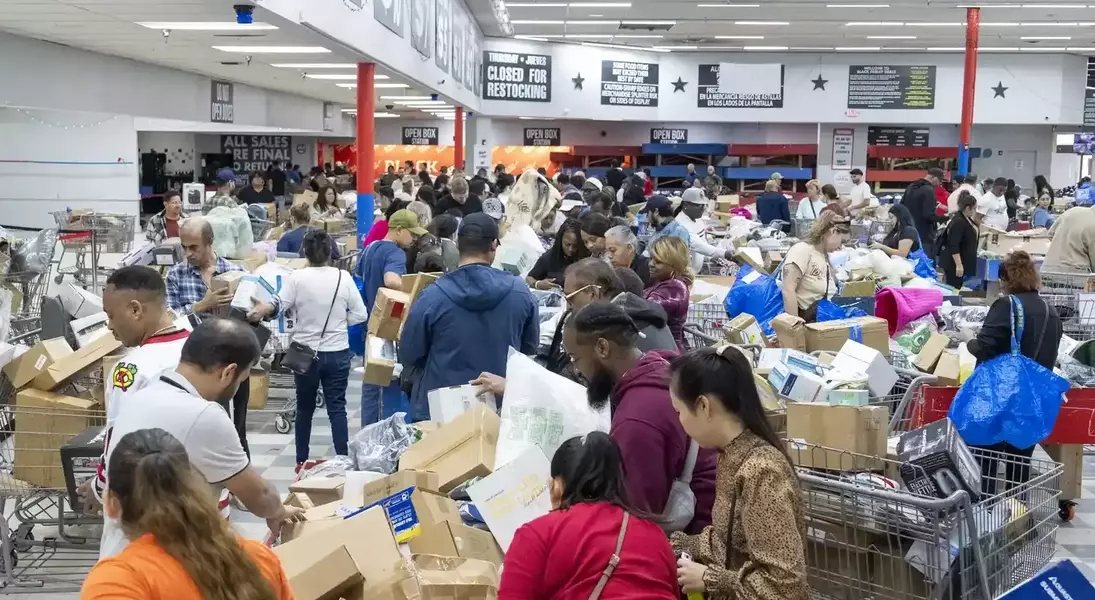
November saw a significant surge in US retail sales, indicating a strong start to the holiday shopping period despite underlying concerns about the job market. This robust consumer activity also presents a nuanced situation for the Federal Reserve's upcoming interest rate decisions. While inflation shows signs of cooling, sustained strong spending could influence the Fed's stance on further rate cuts, highlighting the delicate balance between economic growth and monetary policy.
The latest government data reveals a vibrant consumer sector, with retail sales exceeding expectations. This continued spending, even with a weakening labor market, underscores consumer resilience. However, this strength could complicate the Federal Reserve's efforts to manage interest rates, as it weighs the need to support economic growth against controlling inflation. The interplay between strong retail performance and the Fed's monetary policy will be a key factor in the economic outlook for the coming months.
Robust Holiday Shopping Fuels Economic Confidence
Following a subdued October, American consumers returned to stores with enthusiasm in November, boosting retail sales figures above analyst predictions. The U.S. Census Bureau reported a 0.6% rise in November retail sales, reaching $735.9 billion, a more substantial increase than the 0.4% economists had anticipated. This positive trend, which indicates a confident and resilient consumer base, was particularly evident in categories like sporting goods, construction materials, and automobiles. Additionally, a notable increase in spending at restaurants and bars suggests a willingness among consumers to engage in discretionary purchases, further reinforcing the optimistic outlook for the holiday season.
The strong performance in November is a crucial indicator for the overall economic health, as consumer expenditure forms the backbone of the U.S. economy. Analysts, such as Brett Kenwell from eToro U.S., view these results as a hopeful sign of continued consumer buoyancy leading into the critical year-end shopping period. Wells Fargo economists also highlighted that the control group's 0.4% increase, which excludes volatile sales categories, suggests that holiday sales are on track to meet or even exceed their growth targets of 3.5%-4%. This sustained momentum in consumer spending, despite various economic uncertainties, paints a picture of a resilient American consumer, providing a positive signal for retailers and the broader economy.
Consumer Resilience Amidst Job Market Challenges and Fed Decisions
The impressive retail sales performance in November comes at a time when the U.S. labor market is showing signs of weakening, raising questions about consumer resilience. Despite a slowdown in employment growth and dynamism, the unemployment rate remains low, and gains in equity prices continue to bolster the spending power of middle- and upper-income households. This sustained spending, even as labor market worries grow, underscores the complex dynamics at play in the current economic landscape. Economists are closely monitoring these trends, as consumer spending accounts for a significant portion—more than two-thirds—of U.S. economic activity, making it a critical barometer of overall economic health.
This robust consumer activity presents a challenge for Federal Reserve officials as they deliberate on future interest rate adjustments. While recent data suggests a moderation in inflationary pressures, the strong retail sales figures could make it harder for the Fed to justify further rate cuts. BMO Chief U.S. economist Scott Anderson noted that these sales numbers support the narrative of economic resilience, potentially leading the market to anticipate a pause in Fed rate cuts at the upcoming January Federal Open Market Committee (FOMC) meeting. With market participants currently pricing in a low likelihood of a rate cut at the next meeting, the Fed faces a delicate balancing act: nurturing economic growth while carefully managing inflation expectations, all against a backdrop of confident consumer spending and a fluctuating job market.
