
A recent court decision has delivered a significant financial boost to Apple, affirming the legality of its lucrative deal with Google regarding default search engine placement. This ruling safeguards a substantial annual income stream for the tech giant. However, this positive development comes amidst growing concerns about Apple's position in the rapidly evolving artificial intelligence landscape. While the court's verdict reinforces a key profit driver, it also highlights the urgent need for Apple to innovate and establish its relevance in the AI era to ensure sustained growth and maintain its market leadership. The future trajectory of Apple's stock and its influence in the tech world will heavily depend on its ability to navigate these emerging technological shifts and successfully integrate advanced AI capabilities into its ecosystem.
Judicial Approval Secures Apple's Lucrative Search Revenue Amidst Evolving Tech Landscape
In a pivotal decision announced on September 2nd, the United States court system rendered a verdict that significantly impacts the financial landscape for Apple. During a protracted monopoly lawsuit against Google Search, the judge determined that while Google had indeed engaged in anticompetitive practices, Apple's receipt of payments for making Google Search the default on its devices was permissible, provided these were not exclusive arrangements. This ruling was a major relief for Apple, effectively preserving a critical revenue stream estimated at over $20 billion annually, a substantial portion of its operating earnings. The announcement instantly propelled Apple's stock up by 4%, underscoring the market's positive reaction to the safeguard of this profitable partnership.
This judicial endorsement means Apple can continue to benefit from its vast user base, comprising over 2 billion active computing devices. This network, particularly popular among high-income demographics in Western nations, represents an unparalleled opportunity for software developers and, crucially, for search engine dominance. The long-standing agreement with Google and its parent company, Alphabet, for Google Search to be the default engine on Apple's Safari browser has blossomed into a formidable income source, significantly contributing to Apple's consolidated operating earnings of $130 billion. Despite the iPhone remaining its primary profit driver, this single licensing fee from Google accounts for more than 15% of Apple's annual operating income, solidifying its importance.
However, as the dust settles on this legal victory, a more profound challenge casts a shadow over Apple's future: its perceived lag in the burgeoning field of artificial intelligence. While shareholders breathe a collective sigh of relief over the Google deal, industry observers and investors are increasingly concerned about Apple's 'Apple Intelligence' offerings, which have reportedly underperformed, and the tepid reception of its AI-powered hardware, such as the Vision Pro. Compounding this, Apple has reportedly seen key AI talent depart for competitors like OpenAI, XAI, and Alphabet, potentially widening the innovation gap. In response, Apple appears to be reverting to its historical strategy of technology licensing, with reports suggesting a potential collaboration with Alphabet to integrate Gemini, Alphabet's AI chatbot, into Siri. The financial implications of such a partnership remain ambiguous, particularly concerning whether Apple will need to bear part of the substantial development and deployment costs associated with cutting-edge AI. The core question for Apple's long-term trajectory lies in its ability to adapt and lead in the AI era, rather than merely relying on legacy licensing agreements.
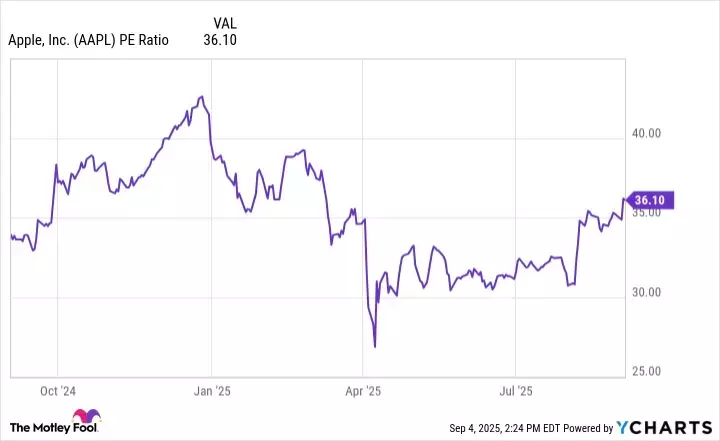
While the immediate future for Apple's search revenue appears secure following the U.S. court's ruling, the larger narrative for the tech titan revolves around its strategic positioning in the AI revolution. The preservation of the Google Search licensing deal, though financially significant in the short term, may offer only a temporary reprieve from the overarching challenges posed by rapid advancements in AI and evolving consumer behaviors. As artificial intelligence fundamentally reshapes how users interact with information and technology, the traditional search engine market, a cornerstone of Apple's lucrative agreement, could face significant disruption from innovative AI chatbots like ChatGPT and Gemini. Therefore, the long-term appreciation of Apple's stock hinges not on past victories but on its proactive engagement with the future of computing. Investors must critically assess Apple's capacity to integrate AI seamlessly across its hardware and software ecosystems, ensuring it remains the preferred platform for accessing both the internet and AI capabilities. The current valuation, with a seemingly high price-to-earnings ratio, already reflects substantial growth expectations, yet the uncertainty surrounding Apple's AI leadership suggests a cautious approach for potential investors at this juncture.
