
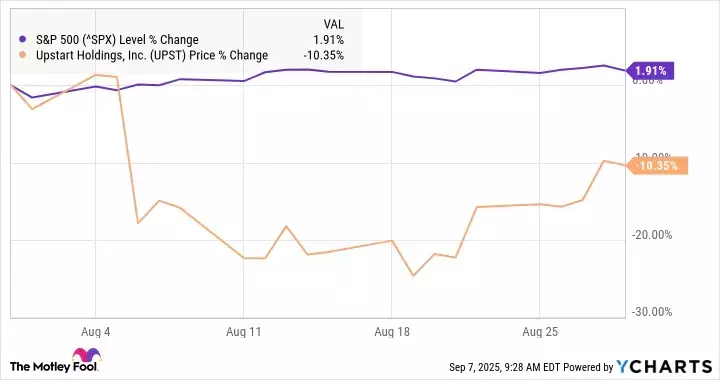
Upstart Holdings, a prominent artificial intelligence-powered consumer lending platform, recently reported robust second-quarter financial results. Despite these positive figures, the company's stock experienced a significant downturn in the past month. This decline was primarily attributed to various market concerns, including a decrease in the company's take rate, broader inflationary pressures affecting the economy, and ongoing debates about the stock's valuation. These factors collectively overshadowed the strong earnings performance and led to a sell-off following the quarterly report.
However, the latter part of the month brought some relief for Upstart's stock. Hints from the Federal Reserve about potential interest rate reductions sparked renewed optimism among investors. Such cuts would generally be favorable for lending platforms like Upstart, as they tend to encourage increased borrowing activity. Additionally, a positive reassessment from J.P. Morgan, upgrading the stock's rating, further bolstered investor confidence. These developments suggest a potentially brighter future for Upstart, despite the recent fluctuations in its stock price.
Navigating Market Headwinds and Q2 Achievements
Despite delivering impressive second-quarter figures, Upstart Holdings faced a challenging period in the market, with its stock pulling back by over 10% last month. The company's revenue saw a remarkable 102% increase, reaching $257.3 million, significantly surpassing analyst expectations. Loan transaction volumes also surged by 159%, totaling 372,599 loans, with a notable improvement in conversion rates. This strong operational performance, however, was tempered by investor concerns regarding a declining take rate, which, at 8.6%, reflected pressure from the growth in newer, less mature business segments like home and auto loans. The company's progress towards profitability was evident with reported GAAP and adjusted profits per share exceeding consensus, yet these positive financial aspects were initially overshadowed by macro concerns and a high valuation.
Following its earnings release, Upstart's stock initially dropped by 19% on August 6th. The market's reaction was primarily driven by worries about the firm's take rate and the broader economic environment, particularly inflation. Nevertheless, the stock began to recover some of its losses later in the month. This rebound was partly due to comments from the Federal Reserve Chairman hinting at possible interest rate cuts, which would benefit loan origination platforms by stimulating borrowing. Furthermore, J.P. Morgan's decision to upgrade Upstart's rating to overweight, citing favorable credit trends and attractive risk-reward dynamics compared to peers, played a crucial role in improving investor sentiment and helping the stock regain some of its lost ground.
Future Outlook: Growth and Interest Rate Impact
Upstart's future trajectory appears promising, despite the recent market volatility. The company's management has already adjusted its full-year guidance upward, projecting total revenue of $1.055 billion, an increase from the previous forecast of $1.01 billion. Moreover, the adjusted EBITDA margin is expected to improve from 19% to 20%, indicating continued operational efficiency and profitability. These revised forecasts underscore the company's confidence in its business model and its ability to maintain strong performance in the coming quarters. The strategic focus on expanding into new loan categories, while initially impacting the take rate, is anticipated to contribute to long-term growth and diversification of revenue streams.
A key factor that could significantly influence Upstart's performance moving forward is the potential for lower interest rates. A more accommodative monetary policy would likely stimulate demand for consumer loans, directly benefiting Upstart's AI-powered lending platform by increasing transaction volumes and overall revenue. The company's ability to execute its strategy effectively, combined with a favorable interest rate environment, positions it well for future growth. While the stock's immediate reaction to the Q2 report was a sell-off, the underlying business fundamentals and the improving macroeconomic landscape suggest a positive outlook. The combination of robust internal execution and external tailwinds from potential rate cuts paints a bright picture for Upstart's continued expansion and market presence.
