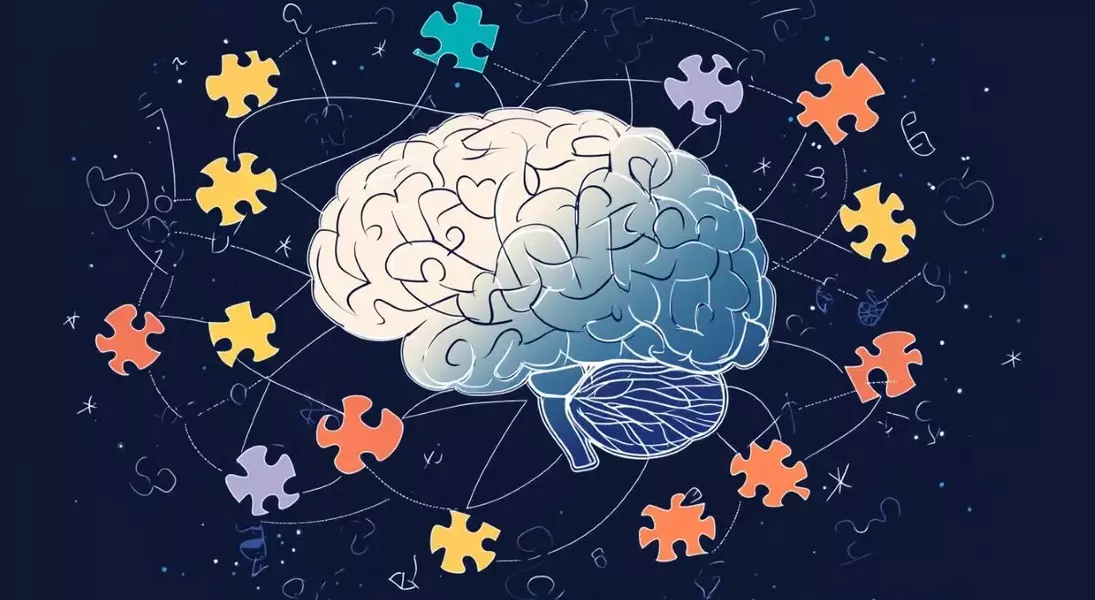
Recent discoveries in neuroscience have shed light on how our brains streamline complex social interactions using fundamental mental frameworks. This groundbreaking research conducted by University College London (UCL) and the University of Oxford highlights how specific brain regions process and interpret social information efficiently, allowing us to navigate intricate social landscapes with ease.
Decoding the Mechanisms Behind Efficient Social Navigation
The ability to manage and decode complex social dynamics is a cornerstone of human cognition. By understanding these processes, we unlock insights into the very fabric of interpersonal communication.Social Frameworks: The Building Blocks of Human Interaction
The concept of simplified mental patterns emerges as a critical component in managing the complexities of social settings. Rather than meticulously tracking each individual separately, our brains rely on pre-established templates that encapsulate essential group behaviors. These cognitive shortcuts are particularly evident in the prefrontal cortex, an area renowned for its role in decision-making and social aptitude.In various scenarios, such as team collaborations or competitive environments, the brain synthesizes overarching interaction patterns rather than focusing on isolated actions. For instance, during a strategic game involving multiple participants, the brain amalgamates the performance metrics of teammates and opponents into cohesive units, reducing cognitive load significantly.Moreover, this mechanism extends beyond immediate contexts, influencing long-term social competencies. As individuals encounter recurring interaction types, these experiences solidify into ingrained building blocks, which subsequently recombine to form comprehensive understandings of diverse social milieus.Dual Information Processing: Simultaneous Tracking of Individuals and Sequences
An intriguing aspect of this research involves the dual processing capabilities of the brain. It not only monitors individual players but also captures the sequential flow of their engagements. This simultaneous processing ensures a holistic grasp of evolving social situations.Consider a scenario where a participant must assess the relative success of their alliance against opposing forces. The brain integrates both the standalone achievements of each member and the chronological progression of their collaborative efforts. Such integration facilitates accurate predictions and informed decision-making, enhancing overall performance within dynamic social environments.Furthermore, this dual-tracking capability underscores the adaptability of the human mind. By accommodating both discrete elements and continuous sequences, the brain maintains flexibility while preserving precision in its interpretations. This adaptability proves invaluable in navigating the unpredictable terrain of human relationships.Prefrontal Cortex: The Epicenter of Social Comprehension
Central to this phenomenon is the pivotal role of the prefrontal cortex. This region exhibits distinct activity patterns corresponding to specific interaction templates, demonstrating its integral function in encoding and retrieving social information.Studies employing functional magnetic resonance imaging (fMRI) reveal heightened activations in the prefrontal cortex when subjects engage in tasks requiring social discernment. These activations correlate directly with the recognition and utilization of established interaction blueprints. Consequently, the prefrontal cortex serves as a repository and processor of these vital cognitive constructs.Additionally, the prefrontal cortex's involvement transcends mere storage; it actively participates in the reassembly of these components to address novel social challenges. Through sophisticated neural networks, it orchestrates the seamless transition from familiar to unfamiliar social terrains, ensuring consistent effectiveness across varied circumstances.Implications for Social Neuroscience and Beyond
The ramifications of these findings extend far beyond theoretical implications, impacting practical applications in social neuroscience and related disciplines. By identifying the foundational structures underlying social cognition, researchers can refine therapeutic interventions aimed at enhancing social skills among individuals facing neurological challenges.For example, individuals diagnosed with autism spectrum disorder may benefit from targeted therapies designed to strengthen their capacity for recognizing and utilizing these interaction templates. Similarly, educational strategies could incorporate techniques that leverage these natural cognitive processes to foster more effective learning environments.Moreover, these insights contribute to broader discussions concerning artificial intelligence and machine learning. Understanding how human brains simplify complex data offers valuable lessons for designing algorithms capable of mimicking similar efficiencies. This knowledge fosters advancements in creating systems that interact more naturally and intuitively with humans, bridging gaps between technological innovation and human experience.You May Like