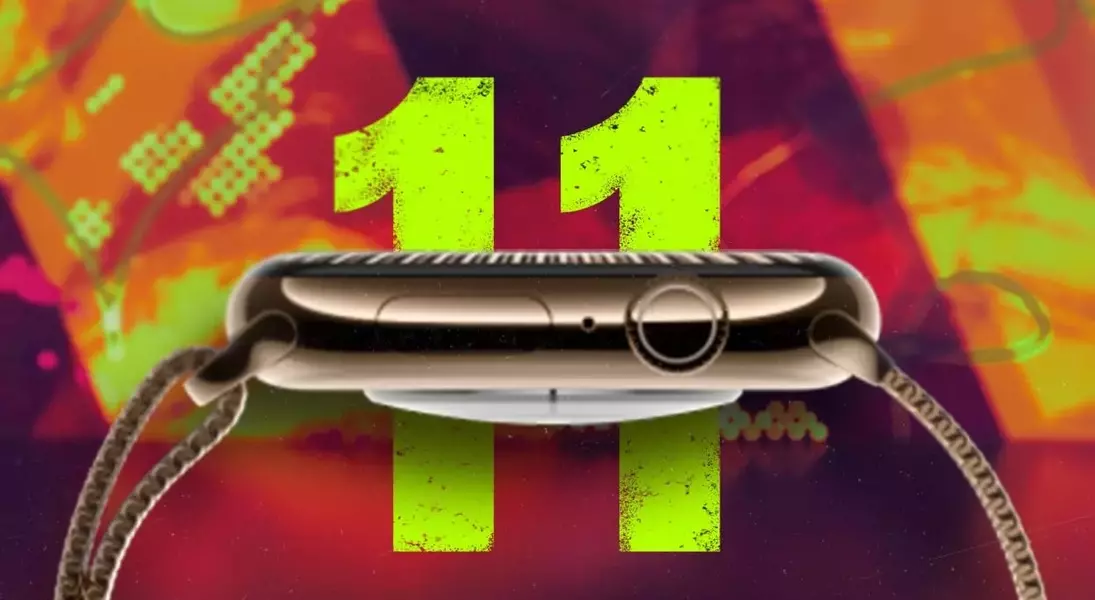
The tech world eagerly awaits Apple's annual September showcase. While the iPhone 17 garners significant attention, the Apple Watch Series 11 also stands poised for its debut. This forthcoming model, building upon its predecessor's foundation, promises a refined user experience rather than a radical transformation.
Experience Evolution, Not Revolution: The Apple Watch Series 11
Anticipating the Next Generation: A Familiar Trajectory for Apple's Wearable
As Apple's major September unveiling draws near, much of the discourse centers on the iPhone 17. However, the Apple Watch, another flagship product from Cupertino, has generated less discussion. Last year's Apple Watch Series 10 presented a modest enhancement, leaving some users wanting more, despite its rapid charging capabilities. Based on information from leaks and supply chain reports, the upcoming Series 11 appears to continue this trend, offering another iterative refinement rather than a complete overhaul.
Projected Investment: Understanding the Price Point of the Series 11
For a relatively minor upgrade, what can consumers expect to pay? Drawing from historical pricing patterns, industry experts foresee the Apple Watch Series 11 beginning at $399 for the 42mm aluminum variant and $429 for the larger 46mm model. As customary, premium features such as stainless steel construction, sapphire crystal, or LTE connectivity will elevate the overall cost. At present, trade duties are not anticipated to impact the pricing of either the Watch or the iPhone series. Nevertheless, if Apple adheres to its established strategy, the Series 11 will align with its predecessor's pricing structure, firmly positioning it within the high-end smartwatch segment.
The Imminent Arrival: Pinpointing the Launch of the Apple Watch Series 11
Mirroring its pricing, Apple typically follows a highly consistent launch strategy. The company rarely deviates from this pattern, and industry insiders anticipate the unveiling of this year's Apple Watch Series 11 on Tuesday, September 9. Should this timeline hold, pre-orders would likely commence on Friday, September 12, with devices becoming available in stores the subsequent Friday, September 19. While no information is official until confirmed by Apple, this established release rhythm remains the most probable outcome for Apple's significant September event.
Crafting and Displaying Innovation: The Design and Screen Enhancements
Apple's new collaboration with Corning signifies that the Series 11's glass will be domestically produced in America—a detail undoubtedly highlighted in marketing efforts. Beyond this, the design itself is expected to retain the sleek, flat-edged aesthetic introduced with the Series 10. The primary point of interest stems from rumors suggesting Apple might transition the Series 11 to a more energy-efficient LTPO or micro-LED display, a departure from OLED technology. This shift could result in a brighter screen and extended battery life. Furthermore, there's speculation from Bloomberg's Mark Gurman regarding an AI-powered integrated camera, though he indicates its more likely arrival in a future model, potentially the Series 12. Currently, no Apple Watch supports FaceTime video calls; thus, the introduction of this feature would be a significant selling point. If Apple were to surprise consumers this year, the camera would almost certainly be subtly integrated into the watch's casing. However, all current indications point to the Series 11 representing a moderate advancement, with more substantial innovations reserved for later releases.
Under the Hood: The Hardware Specifications of the Apple Watch Series 11
Internally, the Series 11 is projected to feature the new S11 chip. However, those anticipating substantial performance gains might need to temper their expectations. Reports suggest that Apple inadvertently disclosed details indicating the S11 will utilize the same T8310 architecture found in the S9 and S10 chips, which powered the Series 9 and Series 10 models. This implies that the Series 11 is unlikely to deliver dramatic processor improvements, instead relying on efficiency optimizations and software enhancements to ensure smooth operation. Despite this, even without cutting-edge technology by Apple's standards, the device remains more than adequately powerful for a smartwatch.
Software and Intelligence: Exploring watchOS 26 and AI Capabilities
The Apple Watch Series 11 will ship with watchOS 26, which introduces a new “liquid glass” user interface and a collection of enhanced health and productivity features. A notable addition is Workout Buddy, an AI-driven evolution of Apple's Workout application, designed to offer more insightful feedback and dynamic coaching during exercise routines. Apple is also in the process of testing a context-aware Siri, which would enable the assistant to better comprehend user activities in real time. However, the exact timeline for its implementation remains uncertain. Additionally, on-device language translation is slated for watchOS 26, allowing international travelers to receive immediate translations without requiring an iPhone connection. Health features continue to be a primary focus, with speculation that the blood oxygen sensor might return after its previous deactivation in some regions due to regulatory concerns. New functionalities include Sleep Score, which condenses sleep quality into a single metric, and hypertension detection, capable of alerting users to early indicators of high blood pressure. Furthermore, 5G connectivity is rumored, further reducing the Watch's reliance on the iPhone. While Apple continues its pursuit of non-invasive blood glucose monitoring, this technology is reportedly not ready for the Series 11, but remains a potential feature for future iterations.
