This comprehensive report delves into the unexpected yet profound connection between the pioneering psychological research on pigeons and the transformative advancements in artificial intelligence. It highlights how the seemingly simplistic associative learning mechanisms, meticulously studied in avian subjects, have ironically provided the bedrock for some of the most sophisticated AI systems today. The journey from mid-20th-century behavioral experiments to cutting-edge machine learning algorithms is meticulously traced, underscoring a paradigm shift in understanding intelligence, both artificial and natural.
The Avian Architects of Artificial Intelligence: A Detailed Chronicle
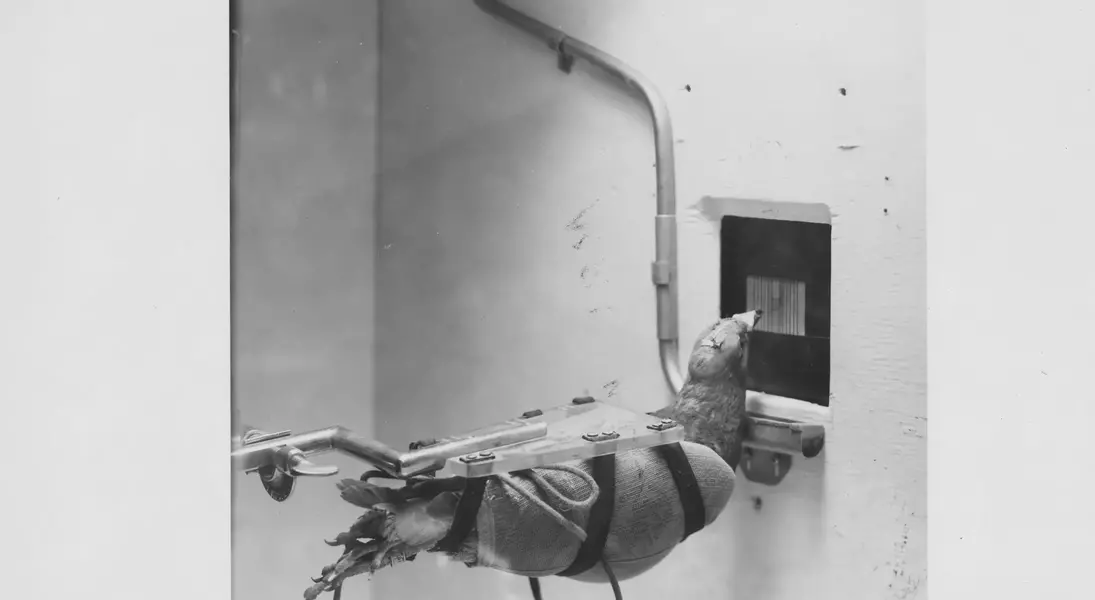
In the tumultuous year of 1943, as the world grappled with global conflict, American psychologist B.F. Skinner embarked on a clandestine government initiative, not to craft more potent armaments, but to refine the precision of existing ones. His audacious vision, sparked by the elegant flight of birds outside a train window, conceived of using pigeons as living guidance systems for missiles. This endeavor, dubbed \"Project Pigeon,\" saw ordinary pigeons (Columba livia) become unlikely collaborators, meticulously trained to identify targets on projected images for food rewards. Although Skinner's \"kamikaze pigeons\" never saw combat, his experiments profoundly convinced him of their reliability as instruments for studying learning processes, famously stating in 1944 that pigeons, though not inherently intelligent, could be transformed into "machines" for scientific inquiry.
While many trace the origins of artificial intelligence to science fiction narratives or theoretical concepts like the Turing test, an equally crucial, albeit less recognized, precursor lies in Skinner's mid-20th-century avian studies. Skinner's core belief in association—the trial-and-error linking of actions with consequences—as the fundamental building block of all behavior, from pigeons to humans, laid the groundwork. Though his "behaviorist" theories eventually waned in the psychological community by the 1960s, they found a fertile new ground in computer science. This rediscovery by computer scientists, notably Richard Sutton and Andrew Barto, who received the prestigious 2024 Turing Award, directly led to the development of reinforcement learning, a cornerstone of modern AI from titans like Google and OpenAI.
Contemporary machine learning increasingly incorporates reinforcement principles derived directly from Skinner's psychological framework. This approach has empowered computers to master complex tasks such as autonomous driving, intricate mathematical problem-solving, and defeating grandmasters in strategic games like chess and Go. Crucially, this success stems not from mimicking human cognitive intricacies, but from supercharging the basic associative processes observed in the pigeon brain. Sutton himself has termed this a \"bitter lesson\" of seven decades of AI research: that human intelligence models have proved less effective than the humble principles of associative learning in powering algorithms that now simulate or even surpass human capabilities.
This unforeseen triumph of pigeon-inspired AI has, in turn, prompted a re-evaluation within animal research. Johan Lind, a distinguished biologist at Stockholm University, highlights the \"associative learning paradox\": a mechanism often dismissed by biologists as too simplistic for complex animal behaviors is lauded for generating human-like intelligence in machines. This suggests not only a greater role for associative learning in sophisticated animals like chimpanzees and crows but also a previously underestimated complexity in creatures like the common pigeon.
Richard Sutton, upon entering the field of AI, recognized his unique advantage stemming from his undergraduate psychology studies, allowing him to mine the rich psychological literature concerning animal learning. The roots of associative learning trace back to Ivan Pavlov's late 19th-century experiments on classical conditioning, where dogs learned to associate neutral stimuli with food. Skinner expanded these principles, focusing on \"operant conditioning\"—the reinforcement of voluntary actions with desirable outcomes. He famously trained rats to manipulate objects and pigeons to play rudimentary tunes, believing this trial-and-error process formed the basis of all behavior. Despite critiques, particularly from Noam Chomsky regarding human language, Skinner steadfastly maintained that psychology should focus solely on observable and measurable behaviors.
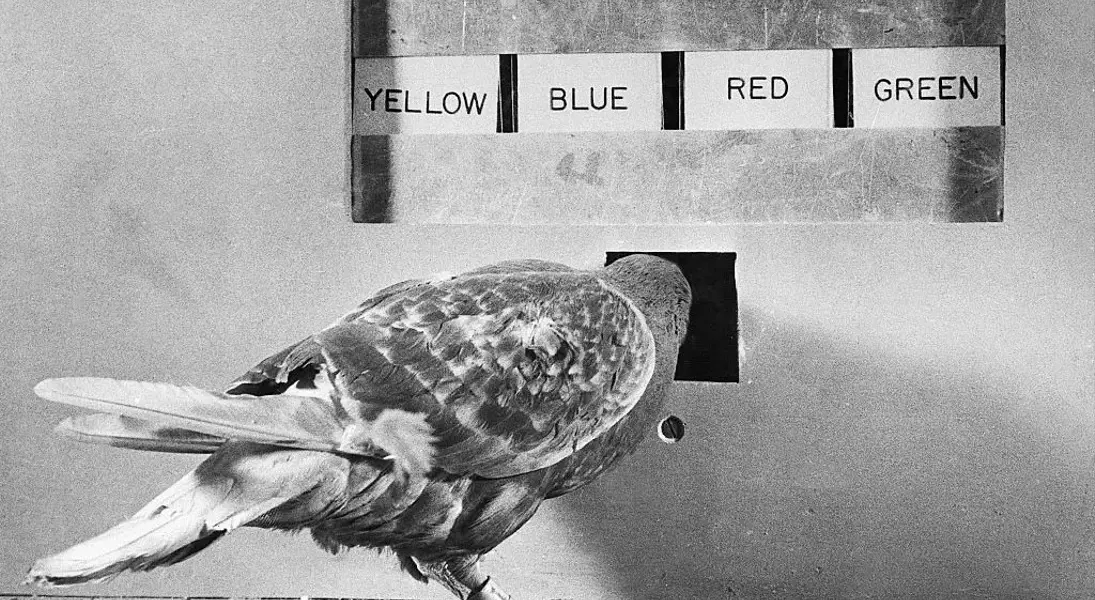
By the 1970s, as psychologists gravitated towards innate cognitive abilities, many dismissed Skinner's pigeon research as outdated. However, Sutton found profound insights within these forgotten experiments, recognizing a significant gap in engineering for instrumental learning. Early AI models often attempted to mimic human intelligence through complex, symbolic programming, yet struggled with basic pattern recognition. This led to the realization that a rule-based approach was inherently limited. Conversely, pigeon research, exemplified by a 1964 study showing pigeons could discriminate between photographs with and without people through mere association, hinted at a more effective path: learning concepts and categories without explicit rules.
In the late 1970s, Sutton and Barto collaborated to create intelligent agents capable of exploring and interacting with their environment, much like pigeons or rats. Their concept, dubbed \"reinforcement learning,\" relied on two fundamental functions: search (to explore actions) and memory (to link actions with rewards). Their seminal work, \"Reinforcement Learning: An Introduction,\" published in 1998, laid the theoretical groundwork. With exponential increases in computing power over the subsequent decades, AI systems could undergo millions of trials, leading to breakthroughs. In 2017, Google DeepMind's AlphaGo Zero, built entirely on reinforcement learning, achieved \"superhuman performance\" in Go, not by emulating human strategies, but by autonomously discovering novel ones, demonstrating the immense power of this associative approach.
Today, reinforcement learning is increasingly integrated into consumer-facing AI products. While earlier generative AI models like OpenAI's GPT-2 and GPT-3 primarily used supervised learning, reinforcement learning has been crucial for fine-tuning their results. OpenAI's recent \"reasoning\" models, and DeepSeek's R1, explicitly leverage reinforcement learning, claiming to foster advanced problem-solving strategies without explicit instruction. However, some computer scientists, including Sutton, dismiss these claims of \"reasoning\" as marketing, arguing that these models primarily rely on search and memory, not complex cognitive mechanisms. Yet, Sutton, along with Silver and others, contends that the pigeon's associative learning method is sufficient to drive most, if not all, abilities seen in both natural and artificial intelligence, including the full richness of human language. Their April paper further posits that current technology, with refined reinforcement learning algorithms, can rapidly propel AI towards truly superhuman agents by building systems that prioritize experiential data over human input and prejudgments.
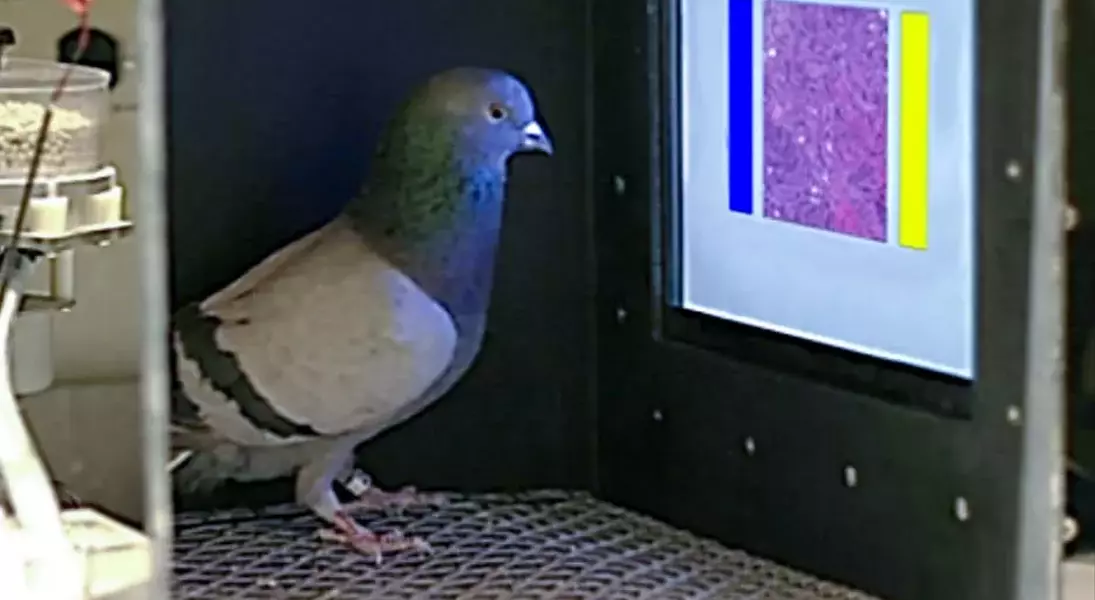
This renewed appreciation for pigeon intelligence has sparked curiosity among animal researchers. Ed Wasserman, a psychologist at the University of Iowa, has demonstrated pigeons' remarkable ability to excel at complex categorization tasks where human undergraduates failed. His experiments showed pigeons could discern intricate patterns and even accurately detect cancerous tissue and heart disease symptoms in medical scans, rivaling experienced doctors. Wasserman, like Sutton, pursued behaviorist psychology when it was out of vogue, steadfastly believing in the profound power of rudimentary learning rules. Johan Lind also underscores the irony that associative learning, often deemed too simple for biological intelligence, underpins AI's impressive achievements. He argues that even complex animal behaviors, traditionally attributed to cognitive mechanisms, could be explained through associative learning, where behaviors become associated with rewards, leading to chains of actions. This perspective challenges the \"low standard\" often seen in animal cognition studies, as demonstrated by the ability of simple reinforcement learning models to explain seemingly complex crow behaviors.
Skinner, who maintained his behaviorist stance until his death in 1990, would likely feel vindicated by these developments. His post-Project Pigeon endeavors, such as the \"Air Crib\" for simplified infant care and his utopian novel \"Walden II,\" reflected his conviction that environmental variables determined human behavior, rejecting the notion of free will. While a revival of behaviorist theory might concern animal rights advocates, it does not equate to viewing animals as mere stimulus-response machines. Scientists like Lind and Wasserman acknowledge the role of internal forces like instinct and emotion. Their central argument is that associative learning is a far more powerful and \"cognitive\" mechanism than previously believed, capable of producing complex, flexible behaviors. The work of psychologist Robert Rescorla in the 1970s and 80s further solidified this view, suggesting that association is not a low-level mechanical process but a primary means by which organisms represent the structure of their world.
This perspective opens a window into the inner lives of animals, a concept Skinner and many early psychologists dismissed. Pigeons, for instance, are used in drug-discrimination tasks, accurately identifying substances based on their internal states, suggesting a form of introspection. While AI might struggle with such nuanced tasks, it serves as a crucial reminder: sentience extends beyond mere behavioral learning. A pigeon, capable of experiencing pain and suffering, demands ethical consideration as a living creature, a distinction that sets it apart from even the most advanced AI chatbots. The substantial investments in AI research now necessitate similar dedication to understanding animal cognition and behavior. This undertaking would not only illuminate technology and the animal kingdom but also deepen our understanding of ourselves, as human learning, even in its most refined forms, often relies on the same ancient associative mechanisms shared with pigeons and countless other creatures, driving some of humankind's most impressive achievements.
