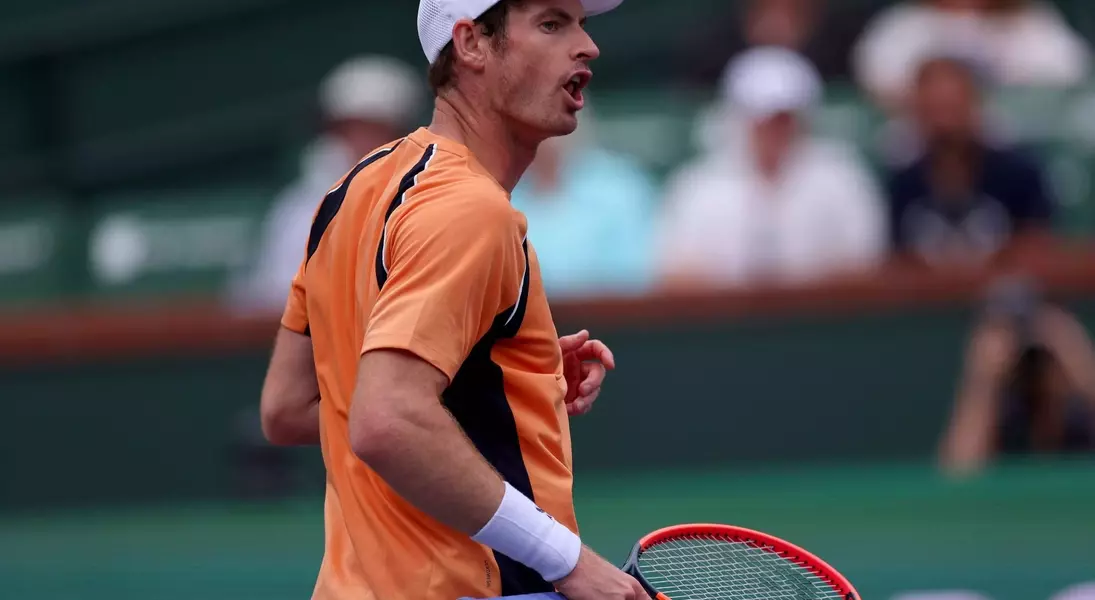
Behind every champion lies a story of unwavering dedication, not just from the athlete, but often from those who nurtured their dreams. This holds profoundly true for Andy Murray, whose illustrious tennis career, marked by multiple Grand Slam titles and Olympic gold medals, was built upon a foundation of profound financial sacrifice made by his devoted family. His mother, Judy Murray, recently shed light on the economic hardships they navigated, particularly in the formative years of his training, revealing a powerful testament to familial support and belief in an extraordinary talent.
The Cost of Greatness: A Mother's Financial Burden in Andy Murray's Early Career
In a candid disclosure reported by the English media, Judy Murray recounted the significant financial hurdles faced by her family as her son, the future tennis luminary Andy Murray, embarked on his path to professional tennis stardom. The most formidable challenge materialized in the year 2002. At this pivotal juncture, a then 15-year-old Andy, already recognized as one of Europe's promising young talents, required advanced training in a more rigorous environment. This led to a crucial opportunity in Barcelona, Spain, a hub for elite tennis development. However, this specialized training was not without its formidable cost, demanding an estimated £30,000 to £35,000 per year.
For Judy, a national-level coach whose annual salary in 1995 was a modest £25,000, this sum represented a colossal burden, far surpassing her entire income. She openly discussed the significant personal financial strain this period imposed, including her belated focus on pension contributions due to the immediate need to fund Andy's burgeoning career. This poignant detail underscores the depth of commitment and the difficult choices made to ensure Andy had every chance to realize his potential on the global tennis stage. The substantial investment, made under considerable duress, ultimately paved the way for Andy Murray to become the first British male player in the Open Era to clinch a Grand Slam title, along with securing two Wimbledon championships and two Olympic gold medals, culminating in a career valued at over £100 million.
This compelling narrative serves as a powerful reminder that success, particularly in the demanding world of professional sports, is rarely an individual endeavor. It is often the culmination of collective effort, unwavering belief, and considerable sacrifice by those who stand in the shadows, providing the essential support structure. The Murray family's journey exemplifies the profound impact that a supportive, albeit financially strained, environment can have on shaping a champion. It challenges us to look beyond the dazzling victories and acknowledge the unseen battles fought and won off the court, battles that are just as vital to the narrative of triumph.
