


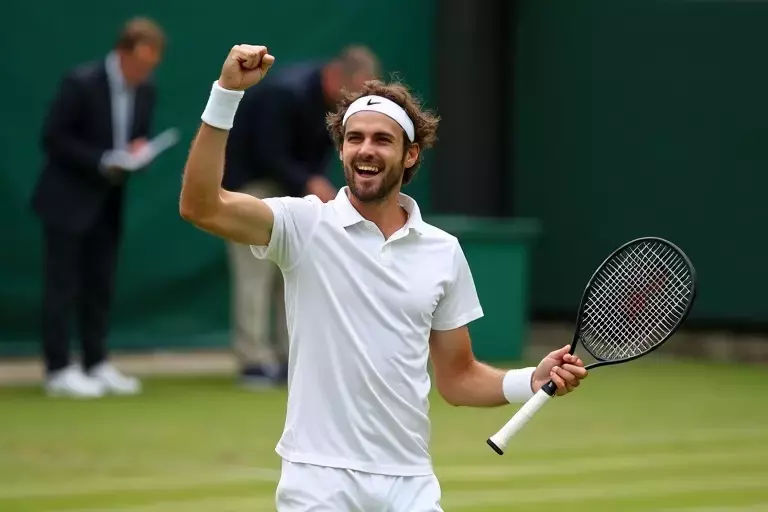
This article explores the substantial financial hurdles professional tennis players encounter, particularly those not ranked among the ATP's elite. It delves into the daily operational costs and strategic sacrifices athletes make to sustain their careers in a highly competitive and economically demanding sport.
Beyond the Glamour: The Hidden Costs of Chasing Grand Slam Dreams
The Soaring Expense of a Tennis Career: More Than Just Equipment
Tennis is widely known as a sport that demands considerable financial investment. While the cost of premium equipment and access to diverse court types in various regions can quickly accumulate, these are merely the initial expenditures. The true economic strain often emerges as players strive to establish themselves professionally.
Taro Daniel's Candid Revelation: Life Outside the ATP's Top 100
Japanese tennis professional Taro Daniel recently offered a revealing look into the financial difficulties inherent in pursuing a tennis career, especially when a player is outside the ATP's top 100 rankings. Speaking to the Financial Times, Daniel recounted the extreme frugality he practiced in his earlier career, even forgoing small luxuries to save money. He emphasized that excessive cost-saving measures can, paradoxically, hinder a player's on-court performance.
Navigating the Financial Labyrinth: Player as an Enterprise
Currently competing in the Wimbledon 2025 qualifying rounds, where he secured his spot in the second stage by defeating Edas Butvilas in straight sets, Daniel elaborated on the complexities of managing a professional tennis player's support team and associated costs. He characterized a tennis player's operation as akin to a 'small company.' While tournament organizers typically cover the player's accommodation, the responsibility for the coaching staff's lodging falls entirely on the player.
The Unrelenting Bills: A Monthly Expenditure of Tens of Thousands
Daniel further detailed the overwhelming financial burden, stating, \"My credit card statement, it's at least $20,000 (£14,702) a month on just operational expenses of hotel, food, flights and not including the salaries I pay to my team.\" He estimated that even a basic coach, not highly experienced, would cost a player at least $100,000 (£73,518) per season. He noted a significant shift from a decade ago, when many players would travel alone due to lower standards and expectations. Today, it is exceptionally rare for a player to attend a Grand Slam without a coach or trainer, underscoring the escalating demands and costs. This financial reality means that even at a Grand Slam, many players might not turn a profit, barely breaking even.
