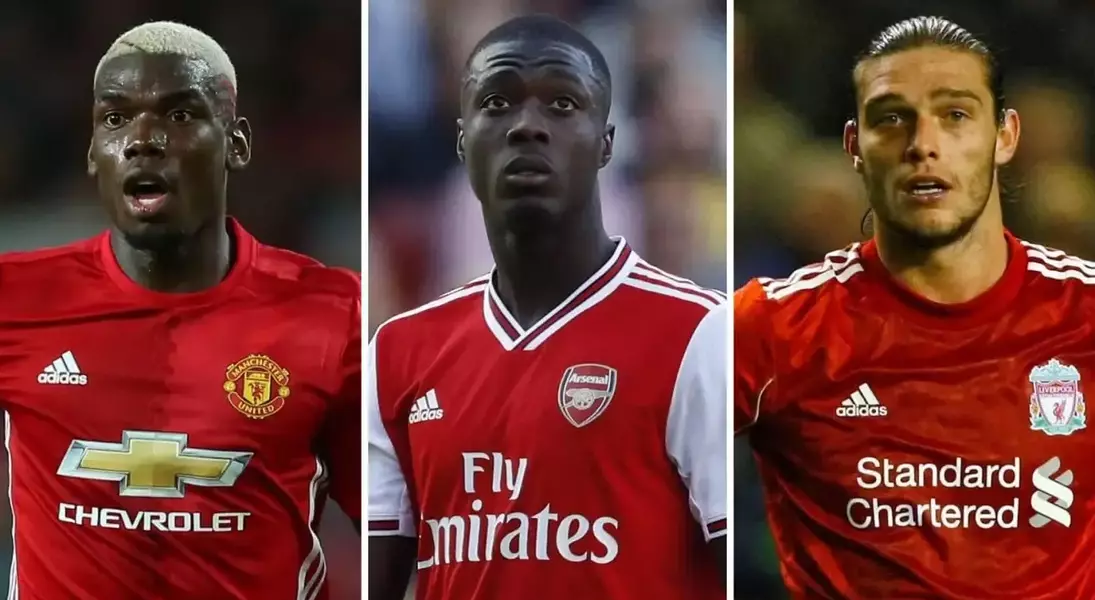
Over the last decade, the landscape of Premier League club spending on player transfers has undergone a dramatic transformation. This report meticulously examines the five most recent record-breaking signings for several prominent clubs, offering a unique perspective on their individual financial journeys and strategic decisions. While some clubs have consistently shattered their own transfer ceilings, others have adopted a more conservative stance, revealing diverse approaches to team building and financial management within England's top football division.
Premier League Clubs' Shifting Transfer Dynamics
In the bustling world of English football, the summer and winter transfer windows consistently bring a flurry of activity as clubs vie for top talent. A deep dive into the transfer histories of Premier League teams reveals fascinating patterns in their pursuit of new players and their willingness to break financial barriers.
For instance, at the illustrious Emirates Stadium, Arsenal's transfer progression has been marked by significant escalations in expenditure. Starting with Mesut Ozil's £42.5 million move from Real Madrid in September 2013, the Gunners steadily increased their outlays, culminating in the monumental £100 million plus add-ons acquisition of Declan Rice from West Ham in July 2023. This upward trend highlights a clear intent to compete at the highest level, though the club has also faced the challenge of integrating these high-cost players effectively.
Similarly, Aston Villa, operating from Villa Park, has seen a remarkable surge in its transfer spending. From Wesley Moraes's £22 million transfer in June 2019, they advanced to securing Amadou Onana for £50 million from Everton in July 2024. This aggressive spending reflects Villa's ambition to solidify their position among the league's elite, even as financial fair play regulations loom large.
On the south coast, Bournemouth, based at the Vitality Stadium, has also made notable strides in their transfer expenditures. Their journey from signing Benik Afobe for £10 million in January 2016 to bringing in Evanilson for a potential £39.5 million from Porto in August 2024, showcases a growing financial muscle, particularly after strategic player sales.
In West London, Brentford's Gtech Community Stadium has witnessed a rapid increase in transfer fees. The club's record progression from Keane Lewis-Potter's £16 million move in July 2022 to Dango Ouattara's £37 million acquisition in August 2025 illustrates their commitment to strengthening the squad with promising talent.
At the Amex Stadium, Brighton & Hove Albion, renowned for their astute transfer dealings, have shown a willingness to invest significantly when the right opportunity arises. While known for developing players, their record transfer progression from Jurgen Locadia's £14 million in January 2018 to Georginio Rutter's £40 million move from Leeds United in August 2024 demonstrates a shift towards securing established talents.
Meanwhile, Burnley, based at Turf Moor, has also redefined its transfer strategy. Historically conservative, their record has moved from Robbie Brady's £13 million in January 2017 to Lesley Ugochukwu's £25 million transfer from Chelsea in August 2025, signaling a new era of investment aimed at securing their Premier League status.
At Stamford Bridge, Chelsea's spending has consistently pushed boundaries. From Alvaro Morata's £58 million in July 2017 to Enzo Fernandez's staggering £106.8 million from Benfica in February 2023, the Blues have been at the forefront of high-stakes transfers, albeit with mixed success in terms of on-field impact.
At Selhurst Park, Crystal Palace has seen a steady rise in their transfer outlays. From Dwight Gayle's £4.5 million in July 2013 to Christian Benteke's £27 million from Liverpool in August 2016, the Eagles have strategically invested in players to maintain their Premier League presence.
Everton, residing at Goodison Park, has also engaged in substantial spending, albeit with cautionary tales. Their record progression from Yakubu Aiyegbini's £11.3 million in August 2007 to Gylfi Sigurdsson's £45 million in August 2017 highlights a period of ambitious investment that didn't always yield the desired returns.
At Craven Cottage, Fulham has demonstrated an increasing willingness to spend big after their promotions to the top flight. From Edwin van der Sar's £7 million move in August 2001 to Emile Smith Rowe's potential £34 million transfer from Arsenal in August 2024, the Cottagers are now making significant financial commitments.
At Elland Road, Leeds United's transfer history spans decades, with periods of both aggressive spending and quietude. Their journey from Michael Bridges's £5.6 million in July 1999 to Georginio Rutter's £35.5 million in January 2023 reflects the club's fluctuating fortunes and ambitions.
At Anfield, Liverpool's transfer record progression showcases a remarkable ability to blend high-cost acquisitions with consistent success. From Luis Suarez's £22.7 million in January 2011 to Florian Wirtz's colossal £100 million plus add-ons in June 2025, the Reds have consistently made impactful signings that have contributed to their trophy haul.
Across Manchester, at the Etihad Stadium, Manchester City has mastered the art of high-value transfers. From Aymeric Laporte's £57.2 million in January 2018 to Jack Grealish's £100 million in August 2021, City's sustained investment has underpinned their domestic dominance.
Conversely, Manchester United, at Old Trafford, presents a unique case. Their last record-breaking signing was Paul Pogba for £89.3 million from Juventus in August 2016. This long-standing record suggests a period of more cautious spending compared to their rivals, perhaps influenced by the mixed outcomes of previous big-money moves.
At St. James' Park, Newcastle United's transfer history reflects periods of both ambition and constraint. From Alan Shearer's £15 million in July 1996 to Alexander Isak's potential £63 million in August 2022, the Magpies have seen their transfer ceiling rise, especially under new ownership.
In Nottingham, at the City Ground, Nottingham Forest has made significant financial commitments upon their return to the Premier League. Their progression from Taiwo Awoniyi's £17.2 million in June 2022 to Elliot Anderson's £35 million from Newcastle United in July 2024 signifies their determination to secure their top-flight status.
In the North East, Sunderland, now back in the Premier League, has also broken its transfer record recently. From Darren Bent's £10 million in August 2009 to Habib Diarra's £27 million from Strasbourg in July 2025, the Black Cats are investing to rebuild.
At the Tottenham Hotspur Stadium, Tottenham Hotspur's transfer record progression has been marked by some significant, albeit sometimes challenging, acquisitions. From Erik Lamela's £29 million in August 2013 to Dominic Solanke's potential £65 million from Bournemouth in August 2024, Spurs continue to invest in attacking talent.
Finally, at the London Stadium, West Ham United's transfer record has climbed steadily. From Andre Ayew's £20.7 million in August 2016 to Lucas Paqueta's £51 million from Lyon in August 2022, the Hammers have shown a commitment to bringing in high-caliber players.
At Molineux, Wolves' transfer activity has also seen an increase in scale. Their progression from Adama Traore's £18 million in August 2018 to Matheus Cunha's £44 million from Atletico Madrid in July 2023 demonstrates a clear upward trajectory in their investment in talent.
This detailed look at each club's most expensive signings underscores the dynamic nature of the Premier League transfer market, where financial muscle, strategic vision, and a touch of calculated risk intertwine to shape the future of teams.
The intricate dance of player transfers in the Premier League serves as a vivid illustration of modern football's economic realities. The sheer scale of money involved, coupled with the varied outcomes of these high-stakes investments, offers a fascinating case study. It highlights not only the ambition of clubs but also the inherent risks associated with such colossal financial commitments. From a fan's perspective, this constant flux of talent, driven by record-breaking fees, fuels endless debate and anticipation, reminding us that in football, the pursuit of glory often comes with a hefty price tag and an unpredictable payoff.
