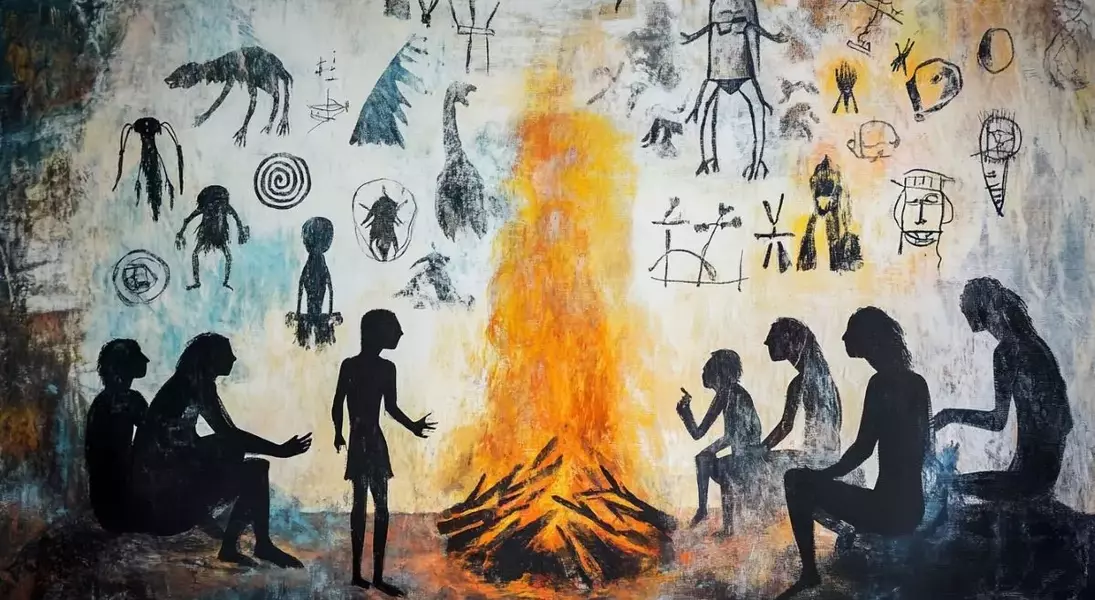
In a groundbreaking study, researchers have uncovered new insights into when human language first emerged. By analyzing data from 15 genetic studies, scientists estimate that language initially developed as an internal cognitive ability around 135,000 years ago. This was followed by its widespread social use approximately 35,000 years later. The findings suggest that early human populations began to geographically diverge roughly 135,000 years ago, coinciding with the origin of language. Archaeological evidence also points to a significant increase in symbolic behavior around 100,000 years ago, reinforcing the hypothesis that language transitioned from a cognitive capacity to a vital tool for communication.
The Genesis of Human Communication
In the distant past, during a pivotal moment in human history, a remarkable transformation occurred. Around 135,000 years ago, early Homo sapiens populations began to separate geographically, setting the stage for the development of language. Researchers, including Shigeru Miyagawa from MIT and collaborators from institutions worldwide, meticulously analyzed genomic data spanning diverse populations. Their work revealed that all modern human languages share a common origin, tracing back to this critical period. Furthermore, archaeological records indicate a surge in symbolic activities—such as art and toolmaking—around 100,000 years ago, aligning with the broader adoption of language for communication.
This timeline suggests that language initially functioned as an internal cognitive system before evolving into a social communication tool. The integration of genetic and archaeological evidence paints a vivid picture of how early humans harnessed their cognitive abilities to navigate an increasingly complex world.
From a journalistic perspective, these findings offer profound implications for understanding human evolution. They challenge previous assumptions about the gradual development of language and instead propose a more abrupt emergence tied to specific evolutionary milestones. As we reflect on this research, it becomes clear that language not only shaped our ancestors' interactions but also fueled innovation and cultural advancement. This discovery underscores the transformative power of communication in driving human progress, reminding us of its enduring significance in shaping our shared heritage.
