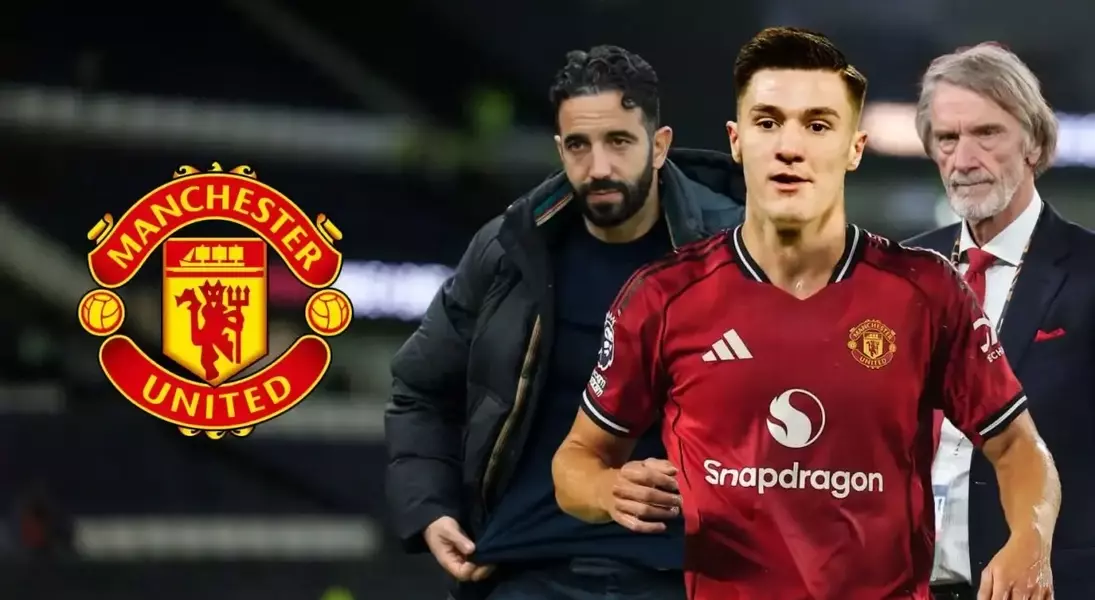
Recent media discussions have heavily emphasized Manchester United's purported resurgence, driven by substantial transfer investments and a comprehensive restructuring under Sir Jim Ratcliffe. This piece critically dissects these claims, delving into the financial implications of their summer spending and the ambitious rebuilding endeavors. It challenges the often-exaggerated portrayals of the club's financial woes and the alleged strategic masterminding, particularly when considering the consistent high levels of expenditure seen each summer. The article scrutinizes the comparison of United's new attacking lineup with successful historical precedents and questions the immediate impact of new player integrations, especially based on limited pre-season showings. Furthermore, it casts a discerning eye on Arsenal's recent transfer activities and the sometimes-dubious nature of predictive analytics in football, exemplified by a 'supercomputer's' Golden Boot forecast.
Dissecting the Summer's Grand Narratives: Manchester United's Ambitious Transformations and Arsenal's Strategic Moves
As the summer transfer window unfolds, the footballing world has been buzzing with reports and analyses, particularly focusing on two Premier League giants: Manchester United and Arsenal. At Old Trafford, under the burgeoning influence of Sir Jim Ratcliffe, the narrative has been one of dramatic transformation. Media outlets have enthusiastically declared United's 'return' to prominence, highlighting a substantial financial outlay that has seen them acquire key talents like Benjamin Sesko, and a comprehensive 'rebuilding' of the club's operational structure. This includes a reported new 'players' charter, the integration of an F1 data specialist, and the implementation of Ruben Amorim's strategic insights, alongside a significant revamp of the training facilities and a 'supercharged' transfer department. The portrayal is one of a rapid shift from a 'toxic' environment to a burgeoning force, underpinned by significant investments and strategic appointments. However, a closer look reveals that while spending has been considerable, it aligns with the club's historical transfer patterns, and the true impact of these changes remains to be seen once the competitive season properly commences. Pre-season victories, often against less formidable opposition, offer only a glimpse and should not be over-interpreted as definitive proof of a complete rebuild.
Meanwhile, across London, Arsenal has also been making headlines with its own significant transfer expenditures, exceeding £200 million for new acquisitions, including Viktor Gyokeres. Despite these substantial investments, some critical assessments suggest the team still resembles a 'one-trick pony,' raising questions about the immediate impact of these new signings on their tactical approach. It's noted that many of these new players have seen limited minutes during pre-season, making it premature to judge their influence. The debate centers on whether Arsenal's transfer strategy is truly proactive, addressing long-standing needs to propel them beyond their consistent runner-up finishes, or if it's merely a reactive response to past injury concerns. The expectation that a few new faces, with minimal collective playing time, should instantly transform the team's attacking prowess might be overly ambitious. The 'minuscule' chance given to Gyokeres by a 'supercomputer' for the Golden Boot, despite his position as a top-three favorite, further highlights the often-contradictory nature of pre-season predictions and the complex interplay of data and on-field performance.
From a journalist's perspective, this period offers a fascinating lens through which to examine the intersection of sports, media, and finance. The relentless hype machine surrounding transfer windows often creates a narrative that outpaces reality. While significant investments and strategic changes are undoubtedly underway at clubs like Manchester United and Arsenal, it's crucial to maintain a critical distance. The immediate declaration of a 'rebuild' or a 'rising force' based on pre-season results and transfer spending can be misleading. True transformation is a gradual process, measured by sustained performance and tangible success on the pitch, not just by the numbers on a balance sheet or the pronouncements of optimistic headlines. As fans and analysts, our role is to look beyond the fanfare, to question the hyperbole, and to patiently await the true test of the season's unfolding drama. Only then can we genuinely assess the efficacy of these grand strategies and the wisdom of the substantial investments made.
