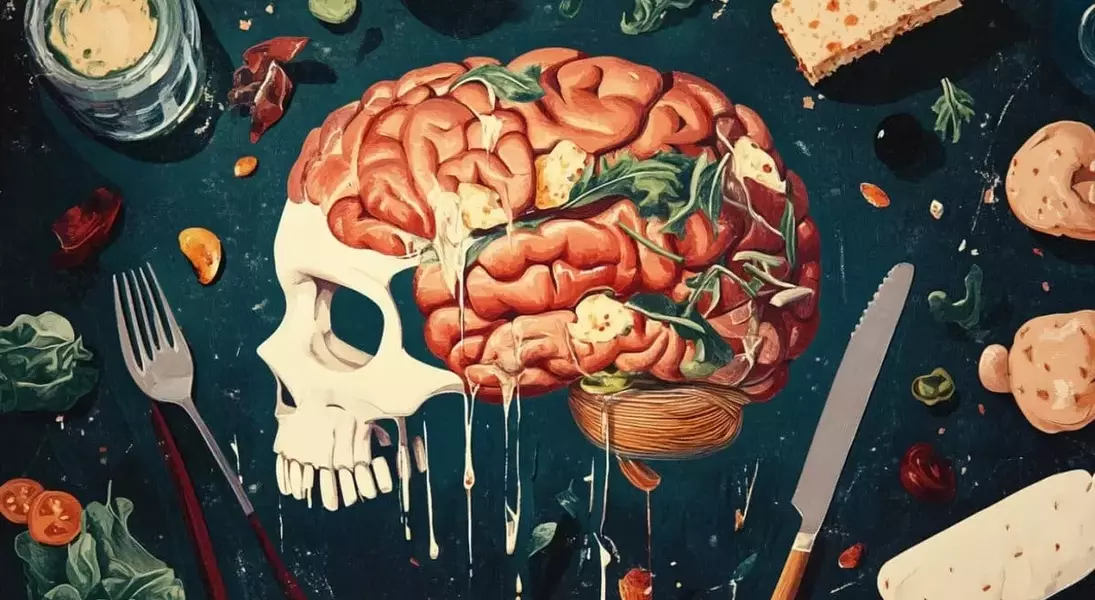
A groundbreaking study conducted by researchers at Princeton University has unveiled the intricate process through which a single instance of food poisoning can create enduring aversive memories in the brain. By focusing on mice, the scientists identified the central amygdala as the key region responsible for encoding and retrieving these unpleasant food-related memories. The research highlights how this brain area plays a pivotal role in "one-shot" learning, where even a 30-minute delay between consuming a novel flavor and experiencing illness still results in a strong aversion. This discovery not only sheds light on how our brains connect distant events but also offers potential insights into conditions like PTSD.
The Central Role of the Amygdala in Memory Formation
In an innovative experiment led by Dr. Christopher Zimmerman, postdoctoral fellow at the Princeton Neuroscience Institute, mice were introduced to a previously unfamiliar flavor—grape Kool-Aid. After enjoying this new taste, the rodents received an injection that mimicked food poisoning symptoms. Remarkably, two days later, the mice exhibited a pronounced avoidance of the once-enticing beverage, opting instead for plain water. Further investigation revealed that the central amygdala, located deep within the brain and associated with fear and emotion, was actively engaged during both the tasting phase and the subsequent illness period. This activation persisted when the mice later recalled their negative experience, underscoring its critical function in linking cause and effect despite the temporal gap.
Dr. Zimmerman's team further explored how signals from the gut reach the brain by identifying specialized cells in the hindbrain containing the protein CGRP. These cells directly connect to the central amygdala, enabling them to trigger the same aversion response as genuine food poisoning when stimulated artificially. Additionally, the researchers discovered that neurons activated by the initial exposure to Kool-Aid reactivated during the illness phase, suggesting that novel flavors effectively "tag" certain brain cells, keeping them sensitive to illness signals for hours afterward.
This fascinating interplay between sensory input and delayed feedback provides valuable clues about how the brain forms connections between events separated by significant time intervals. Such understanding could pave the way for advancements in treating trauma-based memory disorders.
From a journalistic perspective, this study underscores the remarkable adaptability of the human brain. It challenges us to rethink traditional notions of learning, emphasizing the importance of considering long-delayed outcomes in various contexts beyond just food aversions. As we continue to unravel the complexities of neural mechanisms, there is immense potential for developing therapeutic strategies aimed at mitigating the impact of traumatic experiences on mental health.
