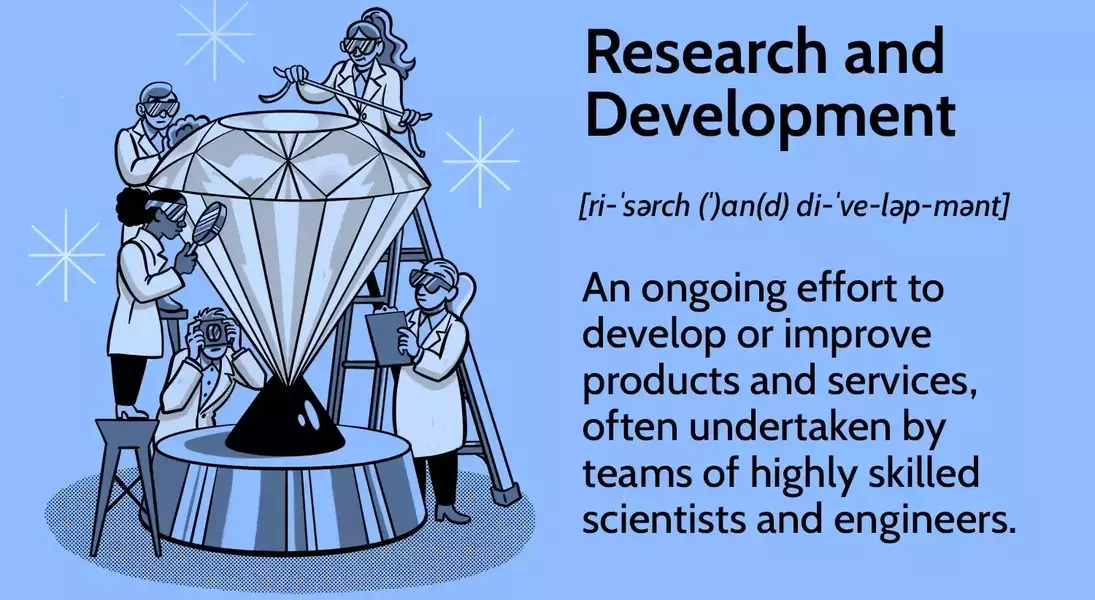
Research and development (R&D) forms the backbone of innovation for both businesses and governmental bodies, driving progress through dedicated exploration and advancement. It involves a systematic approach to discovering and creating new products, services, or improving existing ones. While R&D demands significant upfront investment and doesn't promise instant returns, it is essential for long-term profitability and competitive advantage. By investing in R&D, organizations can secure intellectual property, enhance their market position, and expand their talent pool. This strategic commitment ensures that companies remain at the forefront of technological progress and market evolution.
The process of R&D encompasses various forms, from fundamental scientific inquiry to targeted development of new applications. These activities are not without risks, including substantial financial outlay and the uncertainty of market acceptance. However, the potential for groundbreaking discoveries, improved productivity, and economic growth underscores its importance. Companies must carefully weigh the costs against the potential benefits, often seeking tax incentives and strategic partnerships to mitigate financial burdens and leverage external expertise. Ultimately, R&D is a forward-looking endeavor that shapes the future of industries and economies.
The Core Role of Research and Development in Business
Research and development, often abbreviated as R&D, represents the concerted efforts by organizations to pursue scientific and technological breakthroughs, aiming to achieve a significant competitive advantage. This crucial phase is integral to an organization’s long-term sustainability and growth, focusing on either creating entirely new offerings or substantially improving existing ones. It is distinct from routine operational tasks, as its primary goal is not immediate financial gain but rather to lay the groundwork for future market leadership and enhanced profitability. By engaging in R&D, companies can frequently secure valuable intellectual property, such as patents and trademarks, further solidifying their market position and protecting their innovations from competitors.
Companies that commit to establishing and nurturing dedicated R&D departments typically allocate considerable financial resources to these endeavors. This investment carries inherent risks, given the absence of guaranteed immediate returns and the uncertain nature of innovation. Organizations must meticulously assess the potential, risk-adjusted returns on their R&D spending, recognizing that successful outcomes are not always certain. However, the benefits, including the potential for market disruption and the ability to dictate industry standards, often outweigh these risks. Outsourcing R&D can be a viable alternative for smaller entities or those lacking specialized in-house expertise, allowing them to tap into external knowledge and resources efficiently.
Strategic Approaches and Financial Implications of R&D
R&D is broadly categorized into basic research, applied research, and development research, each serving distinct purposes. Basic research involves fundamental inquiry, often supported by business incubators and accelerators, to foster general scientific understanding that may eventually lead to commercial applications. Applied research focuses on gaining knowledge with specific objectives, such as developing new products or refining processes. Development research then utilizes these findings to create or enhance products and operational methodologies. This structured approach allows organizations to systematically advance their technological capabilities and market offerings.
While R&D is a powerful engine for progress, it also presents notable challenges. The significant financial investment required, encompassing departmental setup, talent acquisition, and extensive testing, can be a major hurdle. Furthermore, the inherent time-consuming nature of R&D means that products and services can take years to move from conception to market, risking misalignment with rapidly shifting consumer trends. However, the long-term advantages, such as fostering continuous innovation, expanding employee skill sets, and driving economic growth, often justify these considerable investments. Strategic accounting practices are also vital, as R&D costs can significantly impact a company’s financial statements, necessitating careful management and potentially leveraging tax credits designed to encourage innovation.
