The narrative explores how specific environmental factors, particularly temperature accumulation, profoundly influence corn crop development, helping farmers understand and predict growth stages, even for late-planted fields.
Harnessing Nature's Energy: Corn's Rapid Growth Explained by Accumulated Heat
Understanding the Surge in Corn Growth: A June Heatwave's Impact
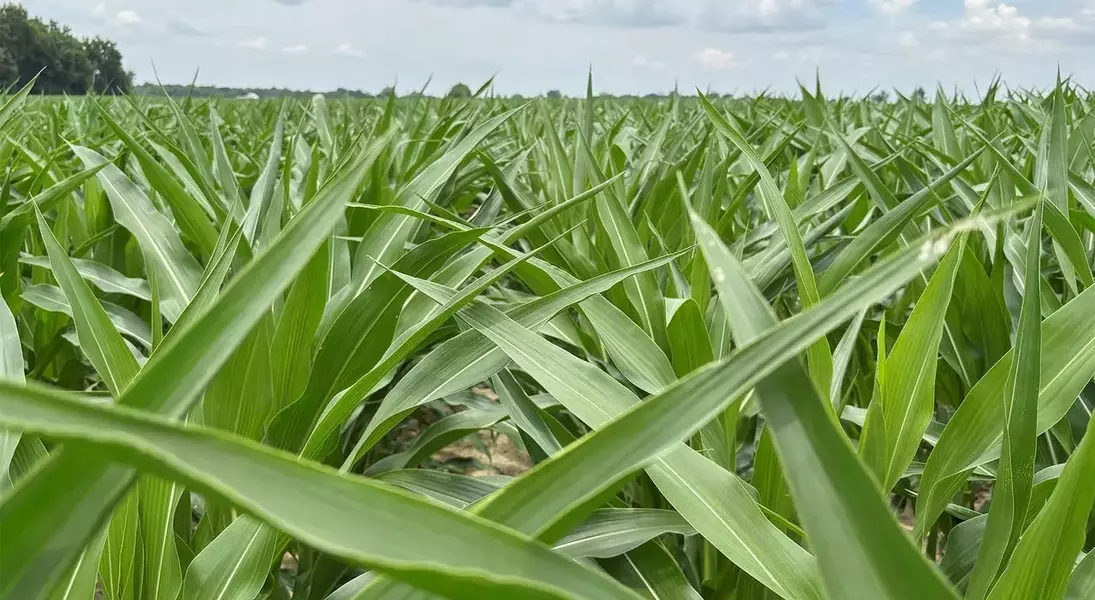
During a recent county fair, a local farmer's mother expressed astonishment at her son's corn, remarking, \"Despite being planted so late, I never thought it would reach knee-height by the fair.\" Chris Parker, a retired Extension educator from Morgantown, Indiana, promptly clarified, attributing this remarkable progress to the persistent warm days experienced throughout June. He noted that the continuous accumulation of heat units, or growing degree days (GDDs), played a pivotal role in accelerating corn development, especially for those crops that were initially behind schedule.
The Science Behind Speedy Development: Growing Degree Days Demystified
Matt Montgomery, an agronomist and education lead at Beck's, echoed Parker's sentiments. Monitoring the 'Corn Commentary' field in south-central Indiana remotely, Montgomery observed that despite a May 19 planting date and a sluggish start due to cool post-planting weather, the abundance of heat and moisture in June and early July propelled the corn into vigorous growth. He emphasized that corn development is intrinsically linked to accumulated heat units, commonly quantified as growing degree days. Montgomery explained that GDDs are invaluable for forecasting various corn growth stages, from leaf emergence to reproductive phases.
Delving Deeper into GDDs: Historical Context and Calculation Nuances
Insights from Bob Nielsen, a former Purdue Extension corn specialist, shed further light on the significance of GDDs. Nielsen's extensive research, documented in the Purdue Corn and Soybean Field Guide, highlights that the rate of corn development directly correlates with the daily accumulation of GDDs. The formula for calculating GDDs, developed by the National Oceanic and Atmospheric Administration, incorporates 'modified' factors, setting temperature limits to accurately reflect biological reality. For instance, daily high temperatures exceeding 86 degrees Fahrenheit are capped at 86, and lows below 50 degrees Fahrenheit are adjusted to 50. These adjustments ensure that the calculations truly represent the temperature range conducive to optimal corn growth, as temperatures outside these bounds do not typically stimulate further development or significantly impede it beyond a certain point.
Practical Application of GDDs: Real-World Scenarios in 2025
Montgomery elucidated the practical application of GDD calculations with several examples. For a day with a high of 80 degrees and a low of 55, 17.5 GDDs would accumulate. In contrast, a hotter day in Des Moines, Iowa, reaching 94 degrees high and 70 degrees low, would still only yield 28 GDDs due to the 86-degree cap. Conversely, a cool late-May day in western Ohio, with a high of 68 and a low of 41, would accumulate merely 9 GDDs. These examples starkly illustrate why corn planted in late May experienced delayed emergence, while the subsequent heatwaves in June and early July enabled rapid catch-up across much of the U.S. The Purdue guide further details that corn typically requires 90 to 120 GDDs for emergence, followed by approximately 82 GDDs per leaf collar up to V10 stage, and then about 50 GDDs per new leaf from V10 to the final leaf stage under normal planting conditions.
